
A flat glass factory power cable supplier should understand the consequence of interruption on a continuous hot line. Melting, forming, annealing, inspection and cutting must stay coordinated because a small downstream failure can affect a long section of product.
Cable evaluation should therefore include shared cooling, drives, controls and inspection systems, not only the furnace and other obvious loads.
The structure below starts with common misconceptions and uses a continuity playbook to connect every stage.
Four flat glass factory planning myths
These familiar shortcuts can move the bottleneck downstream or weaken handover records.
Misconception: Only the furnace is process-critical
What to use instead: Cooling, drives, controls and inspection can stop acceptable output.
Misconception: Small motors have small production consequence
What to use instead: A low-power conveyor or fan may interrupt the complete line.
Misconception: One indoor route description is enough
What to use instead: Temperature and mechanical conditions change along the line.
Misconception: Cutting can be expanded later without interfaces
What to use instead: Inspection, rejects, handling and packing move with cutting capacity.
Replace isolated equipment assumptions with complete-product evidence.
flat glass factory production gates and cable evidence
This table follows material through the areas that create accepted finished glass sheets. It prevents a large upstream load from hiding a smaller downstream constraint.
| Area | Production constraint | Evidence for the cable scope |
|---|---|---|
| Batch preparation | Accurate feed and continuous supply | Conveyors, mixers and dust controls |
| Melting and refining | Heat continuity and furnace auxiliaries | Approved duty and hot routes |
| Forming | Coordinated drives and cooling | Line sections and shared systems |
| Annealing | Temperature profile and fan continuity | Lehr zones and controls |
| Inspection and cutting | Defect removal and product sizing | Sensors, drives and packing handoff |
Priority should follow production consequence, route conditions and approved operating duty rather than connected load alone.
Protect continuous glass flow from batch house to packing
A useful flat glass factory power cable supplier begins with batch preparation, melting, refining, forming, controlled cooling, annealing, optical inspection, cutting, edge handling and packing. The cable schedule should connect each group with production flow, process stability or final release before buyers compare construction and commercial terms.
A glass melting furnace cable belongs to a hot, continuous process whose auxiliaries and controls must be identified with equal care.
A float glass line cable and glass annealing lehr cable serve long coordinated drives, fans and control sections where a local interruption can create product loss far upstream.
flat glass factory project handoff playbook
Each stage needs an owner and a usable output before the next group commits infrastructure.
| Work stage | Primary owner | Required output |
|---|---|---|
| Define the product envelope | Product engineering | Record thickness, width, quality grades and normal campaigns. |
| Map continuous dependencies | Production planning | Link furnace auxiliaries, cooling, drives and controls. |
| Divide the long line | Project engineering | Assign stable forming, lehr, inspection and cutting zones. |
| Prove recovery strategy | Quality team | Document isolation, standby and restart assumptions. |
| Close production records | Maintenance team | Update labels and as-built schedules after stable operation. |
The playbook keeps technical decisions, delivery groups and final records synchronized.
Scenario: faster forming overloads inspection and cutting
Situation: A flat glass producer raises line speed for a high-volume thickness range.
Finding: The hot line remains stable, but inspection processing, reject handling and cutting queues reduce packed output.
Decision: The project expands the affected downstream cable groups and preserves clear long-line zone identities.
Expected result: More formed glass becomes classified, cut and packed product.
Evidence scorecard for flat glass factory cable scope
Use the same questions and requested evidence for every supplier response.
| Criterion | Question | Evidence to request |
|---|---|---|
| Control 1 | Which systems must never lose coordinated operation? | List furnace, cooling, drive and control dependencies. |
| Control 2 | How are long-line zones named? | Use stable boundaries that maintenance teams can locate. |
| Control 3 | Which product campaigns change line duty? | State thickness, width and coating assumptions. |
| Control 4 | What inspection evidence releases glass? | Map sensors, data, reject handling and records. |
A strong response makes assumptions visible and connects records with real factory zones.
Warning signs in a flat glass factory cable offer
These omissions usually mean that the quotation cannot be traced to complete production and release.
Red flag: Furnace auxiliaries use generic labels
Why it matters: fault tracing becomes slow during continuous operation Better requirement: Use permanent system identities.
Red flag: Cooling appears outside production scope
Why it matters: temperature and drive stability depend on it Better requirement: Map served sections and redundancy.
Red flag: Inspection is treated as a small final load
Why it matters: defective or unclassified sheets cannot ship Better requirement: Include sensors, data and reject handling.
Red flag: Long routes have no section boundaries
Why it matters: maintenance cannot isolate the affected zone Better requirement: Name line segments consistently.
Correcting the warning signs improves price comparison, installation planning and later maintenance.
RFQ details for flat glass continuous production
The request should make line continuity and zone boundaries clear.
- System voltage and frequency
- Load or cable schedule
- Motor ratings and starting method
- Route length and installation method
- Actual wet, dusty, hot, outdoor or mechanical conditions
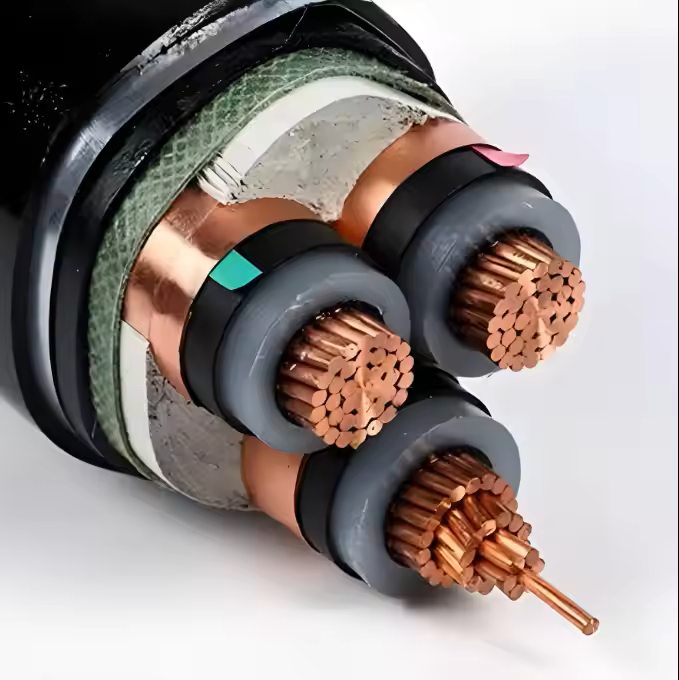
- Required conductor, insulation, sheath and armor details
- Destination, delivery stages and required records
- glass thickness, width and product campaigns
- batch house and furnace auxiliaries
- forming, cooling and annealing sections
- inspection, reject handling and cutting
- long-line identities, standby assumptions and records
For flat glass factory projects, references such as IEC 60502, IEC 60228 and IEC 60332 can help both sides use consistent terminology. They do not replace the approved specification or the buyer's responsibility to confirm the design.
How JINCHUAN Cable supports flat glass factory decisions
For flat glass producers, process engineers and continuous-plant project teams evaluating the flat glass factory power cable supplier, JINCHUAN Cable can review hot, continuous-line and downstream finishing cable groups against buyer-approved flat glass data.
The response can document construction and route assumptions while furnace, process and product-quality responsibility remains with qualified specialists.
Buyers can review JINCHUAN Cable products and learn more about the JINCHUAN Cable company. Share the project purpose, critical loads, route conditions, quantities, destination and expected records to create a stronger basis for technical and commercial comparison.
Share the flat glass line and continuity map to obtain a quotation aligned with packed output.
FAQ
What should buyers expect from a flat glass factory power cable supplier?
Buyers should expect the proposal to connect cable construction with continuous furnaces, long-line drives, hot routes, cooling, inspection, cutting and production continuity, not merely repeat conductor sizes from a schedule.
Which part of the flat glass factory should be mapped first?
Start with batch preparation, melting, refining, forming, controlled cooling, annealing, optical inspection, cutting, edge handling and packing. This shows which supporting loads can interrupt more than one production stage.
How should quotations for the flat glass factory be compared?
Compare the stated route assumptions, operating duty, included records, delivery grouping and exclusions beside price. That exposes scope differences before approval.
Which route conditions matter in a flat glass factory?
The inquiry should distinguish batch houses, furnace zones, continuous forming lines, hot and cooling sections, annealing lehrs, inspection systems, cutting areas and warehouse routes. Broad labels such as indoor or industrial are rarely precise enough for a useful review.
What hidden risk deserves attention in this project?
A common hidden risk is treating small drives, cooling or inspection systems as secondary even though one failure can stop or spoil continuous output. Its production consequence may be greater than the connected load suggests.
Should future changes be discussed before ordering?
Yes. new glass thicknesses, coated products, wider sheets, upgraded inspection and additional cutting automation can affect route capacity, circuit names, distribution space and the value of today's approval records.
Which records help after installation?
Useful records include line, furnace, cooling, drive, inspection and cutting identities, product ranges, hot-zone routes and as-built revisions. They help receiving, installation and maintenance teams connect each cable with its purpose.
Which technical references may support the discussion?
IEC 60502, IEC 60228 and IEC 60332 may provide common terminology, while the approved project specification remains the final design basis.
What should be sent with the first RFQ?
Send the cable or load schedule plus project details such as glass thickness, width and product campaigns, batch house and furnace auxiliaries, forming, cooling and annealing sections, inspection, reject handling and cutting, long-line identities, standby assumptions and records. Clear inputs allow suppliers to identify assumptions instead of guessing.
How can JINCHUAN Cable support the flat glass factory?
JINCHUAN Cable can review the schedule, routes, operating conditions, quantities and required records against the result the buyer needs to protect: stable melting, continuous forming, controlled annealing, accurate cutting and dependable packing flow.