
A pneumatic equipment factory power cable supplier should be assessed through clean assembly and verified product performance. Individual valve or cylinder stations may use little power, yet one air, washing or leak-test interruption can hold many finished components.
The practical task is to separate ordinary machine circuits from shared utilities and quality gates. This gives small but high-consequence loads the attention they deserve.
The following sections challenge common assumptions and build a more useful purchasing path.
Four misconceptions that weaken pneumatic factory cable plans
These assumptions appear reasonable until production and quality dependencies are mapped.
Misconception: Small machines create small risks
What to use instead: Shared air, washing or test systems can stop several cells and prevent release of completed products.
Misconception: Compressed air is only a utility
What to use instead: Air quality, pressure and availability are part of the approved functional and leak-test process.
Misconception: Clean assembly has ordinary indoor routes
What to use instead: Room boundaries, cleaning practice and instrument separation still need precise description.
Misconception: One spare feeder solves future growth
What to use instead: The spare must be located where the next cell or bench can physically connect and operate.
Replacing these assumptions with explicit process information improves both engineering review and commercial comparison.
A quality-gate table for pneumatic products
The table shows where a modest support circuit can carry a large release consequence.
| Area | What it protects | RFQ detail |
|---|---|---|
| Washing | Clean components entering assembly | Pumps, heaters, chemistry and line capacity |
| Assembly | Correct build and traceability | Cell names, tools and model changes |
| Functional checks | Movement and control response | Air pressure, instruments and cycle time |
| Leak testing | Product acceptance | Bench range, simultaneous tests and air quality |
| Calibration and packing | Final release and customer configuration | Room supply, records and product mix |
Use the table to rank circuits by the quality decision they enable.
From first layout to repeatable test capacity
A staged review prevents clean-room and test assumptions from being added after equipment arrives.
Stage 1: Define the product families
Record valve, actuator or preparation-unit ranges and the expected model mix.
Stage 2: Map clean and ordinary areas
Show machining, washing, assembly, instruments and packing as distinct route zones.
Stage 3: Build the air and test map
Identify compressors, dryers, receivers, regulators and benches serving each quality gate.
Stage 4: Release labels and evidence
Agree cell names, test records, cable data and expansion revisions before production.
The sequence gives suppliers consistent inputs and leaves the factory with records that survive model changes.
The product path is short, but the quality gates are strict
A useful pneumatic equipment factory power cable supplier begins by mapping precision machining, washing, clean assembly, functional checks, leak testing, calibration and packing. The purpose is to connect each cable group with a production, quality or release consequence before construction and price are compared.
A pneumatic valve assembly cable may support torque tools, feeders, conveyors and inspection stations inside a clean production cell. Stable cell names help teams rearrange models without losing electrical records.
A leak test bench cable and compressed air test rig cable should be reviewed with air quality, pressure range, instruments and expected simultaneous tests. Their shipment consequence is larger than their connected load may suggest.
Supplier scorecard for a clean assembly project
Score the proposal on evidence that can be checked, not on broad claims.
| Criterion | Question | Evidence to request |
|---|---|---|
| Intent match | Does the offer address clean assembly and release testing? | Marked process map and circuit grouping |
| Utility visibility | Are shared air and washing systems connected with affected cells? | Dependency list and standby assumptions |
| Route precision | Are clean, wet, instrument and ordinary spaces separated? | Route-condition statement |
| Handover value | Will records remain useful after model changes? | Labels, drum plan and revision method |
A proposal with a slightly higher price can offer better value when assumptions and handover responsibilities are complete.
Scenario: more assembly cells overwhelm one leak-test room
Situation: A component maker adds flexible assembly cells for several new valve sizes.
Finding: Assembly capacity rises, but the existing air preparation and leak-test benches remain the same, creating a queue before packing.
Decision: The project measures accepted parts per shift and adds air, test and instrument dependencies to the expansion cable scope.
Expected result: The investment is compared through released product rather than the number of installed workstations.
Limits and risks that belong in the proposal
A credible offer states what still requires approved project information.
- Final compressed-air quality and pressure come from the product test specification.
- Instrument routing and separation require coordination with the control-system design.
- Clean-room practices differ by factory and should not be assumed from the industry name.
- Test-bench simultaneous duty must reflect the production mix, not every theoretical maximum.
- Very small workshops may use simpler zone records, but shared air and acceptance testing remain visible.
These limits make the remaining engineering tasks clear without weakening the usefulness of the cable proposal.
Information that makes a pneumatic equipment RFQ useful
The supplier needs the product range, clean-area boundaries and approved test conditions to understand the real factory task.
- System voltage and frequency
- Load or cable schedule
- Motor ratings and starting method
- Route length and installation method
- Actual wet, dusty, hot, outdoor or mechanical conditions
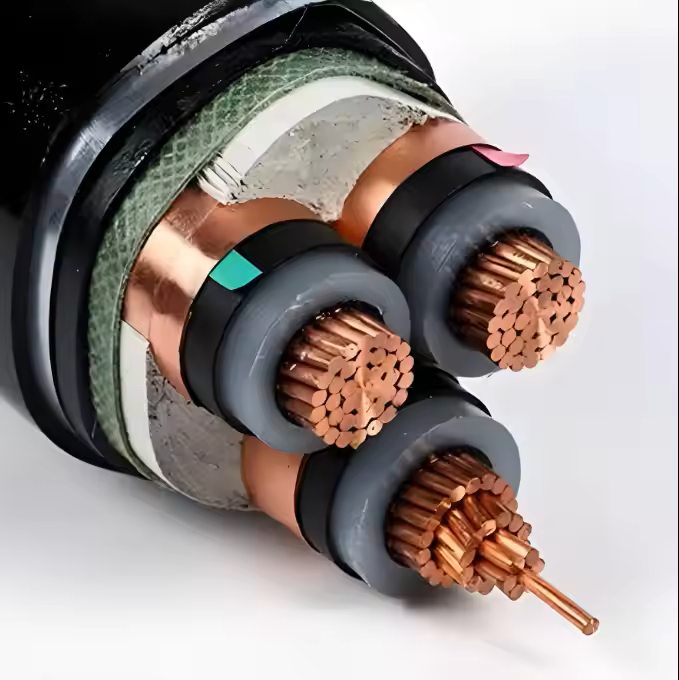
- Required conductor, insulation, sheath and armor details
- Destination, delivery stages and required records
- product families and daily mix
- assembly-cell and washing layout
- compressed-air source and quality requirements
- leak-test pressure, duration and simultaneous benches
- instrument, label and record requirements
For pneumatic equipment factory projects, references such as IEC 60502, IEC 60228 and IEC 60332 can help both sides use consistent terminology. They do not replace the approved specification or the buyer's responsibility to confirm the design.
How JINCHUAN Cable supports pneumatic equipment factory decisions
For pneumatic component manufacturers, automation engineers and factory planners evaluating the pneumatic equipment factory power cable supplier, JINCHUAN Cable can review cable groups around clean assembly, shared air systems and acceptance benches using the buyer's approved operating inputs.
The response can make route, construction, identification and evidence visible without inventing product-test requirements or final protective settings.
Buyers can review JINCHUAN Cable products and learn more about the JINCHUAN Cable company. Share the project purpose, critical loads, route conditions, quantities, destination and expected records to create a stronger basis for technical and commercial comparison.
Share the quality-gate map and test-bench schedule so the quotation can be evaluated against accepted pneumatic products and future cell flexibility.
FAQ
What should buyers expect from a pneumatic equipment factory power cable supplier?
Buyers should expect the proposal to connect cable construction with clean production, shared compressed air, instrument stability, test throughput and model flexibility, not merely repeat conductor sizes from a schedule.
Which part of the pneumatic equipment factory should be mapped first?
Start with precision machining, washing, clean assembly, functional checks, leak testing, calibration and packing. This shows which supporting loads can interrupt more than one production stage.
How should quotations for the pneumatic equipment factory be compared?
Compare the stated route assumptions, operating duty, included records, delivery grouping and exclusions beside price. That exposes scope differences before approval.
Which route conditions matter in a pneumatic equipment factory?
The inquiry should distinguish machining areas, washing zones, clean assembly rooms, instrument benches, compressed-air stations and packing cells. Broad labels such as indoor or industrial are rarely precise enough for a useful review.
What hidden risk deserves attention in this project?
A common hidden risk is assuming small component loads mean low production risk while shared air and leak-test systems control final acceptance. Its production consequence may be greater than the connected load suggests.
Should future changes be discussed before ordering?
Yes. new valve families, more assembly cells, automated inspection and additional leak-test benches can affect route capacity, circuit names, distribution space and the value of today's approval records.
Which records help after installation?
Useful records include cell and bench identities, air-system dependencies, instrument routes, approved cable data and calibration-support revisions. They help receiving, installation and maintenance teams connect each cable with its purpose.
Which technical references may support the discussion?
IEC 60502, IEC 60228 and IEC 60332 may provide common terminology, while the approved project specification remains the final design basis.
What should be sent with the first RFQ?
Send the cable or load schedule plus project details such as product families and daily mix, assembly-cell and washing layout, compressed-air source and quality requirements, leak-test pressure, duration and simultaneous benches, instrument, label and record requirements. Clear inputs allow suppliers to identify assumptions instead of guessing.
How can JINCHUAN Cable support the pneumatic equipment factory?
JINCHUAN Cable can review the schedule, routes, operating conditions, quantities and required records against the result the buyer needs to protect: clean assembly, stable compressed-air testing, accurate leak checks and flexible model changes.