
A winery power cable supplier should understand that harvest delays cannot be recovered after the fruit has arrived. A crusher, transfer pump or cooling failure can affect product before the main cellar equipment stops.
Cable planning should follow the grape from intake to bottle and rank circuits by product loss, shared-system consequence and seasonal repair difficulty.
This gives buyers a clear priority map for quotations, installation and maintenance before the harvest calendar removes the available time.
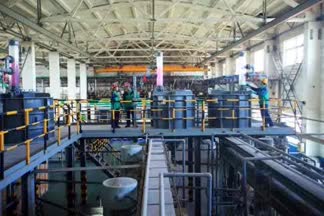
How to evaluate a winery power cable supplier before harvest
The most important circuits are those that protect intake, fermentation condition and finished-product flow.
Crushing protects the intake window
The grape crusher power cable supports crushers, destemmers, conveyors and pumps that must receive fresh grapes without delay. This is why its value should be judged by production consequence as well as electrical rating.
Clarify outdoor transitions, washdown, motor duty and the equipment that must restart together.
Tank systems depend on pumps and cooling
The fermentation tank cable connects agitation, temperature control and transfer equipment serving valuable batches. This is why its value should be judged by production consequence as well as electrical rating.
Use stable tank tags and show shared cooling or pump dependencies.
Bottling sets the commercial release rate
The wine bottling line cable serves fillers, cappers, labelers, inspection and packing after cellar processing. This is why its value should be judged by production consequence as well as electrical rating.
Include format changes, clean-area routes and planned seasonal output.
A larger press exposes the cellar cooling limit
A winery adds a higher-capacity press to shorten intake time during harvest.
More juice reaches fermentation sooner, increasing pump, tank and cooling demand that was not part of the press package.
JINCHUAN Cable can review the expansion through intake and cellar dependencies rather than quoting the press feeder alone.
Four decisions to finish before grapes arrive
Seasonal reliability improves when equipment and cable priorities are confirmed before production pressure begins.
Rank product-loss circuits
Identify which stop affects fresh grapes or active batches.
Mark shared cooling
Show which tanks depend on each chiller and pump group.
Confirm wet-route boundaries
Separate cellar washdown, outdoor intake and dry electrical spaces.
Align delivery with shutdowns
Group cable work around the short pre-harvest installation window.
Harvest production compresses a year of risk into a short window
The production path covers grape receiving, crushing, pressing, fermentation, temperature control, transfer, filtration and bottling. Pumps, chillers and handling equipment connect tanks and process stages while the incoming crop continues to arrive.
For wine producers, cellar engineers and harvest-expansion teams, the useful cable schedule connects those stages with stable area and equipment names. That makes installation scope easier to compare and gives maintenance teams records that reflect how the winery actually operates.
A harvest priority map for winery cable groups
Each area creates a different combination of time pressure, moisture and product consequence.
| Area or signal | Why it matters | What to clarify |
|---|---|---|
| Receiving and crushing | Fresh fruit cannot wait | Wet routes, motors and outdoor access |
| Fermentation cellar | Batch condition and cooling | Tank tags, shared chillers and pumps |
| Transfer and filtration | Several tanks depend on the route | Pump identity and cleaning |
| Bottling | Finished product release | Line speed, formats and expansion |
Information suppliers need before the harvest deadline
The inquiry should describe seasonal duty, tank dependencies and the production areas that cannot wait for repair.
- System voltage and frequency
- Load or cable schedule
- Motor ratings and starting method
- Route length and installation method
- Actual wet, dusty, hot, outdoor or mechanical conditions
- Required conductor, insulation, sheath and armor details
- Destination, delivery stages and required records
- Harvest dates and peak operating hours
- Tank, pump and cooling relationships
- Wet cellar and outdoor route boundaries
For winery projects, references such as IEC 60502, IEC 60228 and IEC 60332 can help both sides use consistent terminology. They do not replace the approved specification or the buyer's responsibility to confirm the design.
Harvest risks hidden in ordinary cable schedules
Normal-duty hours are assumed
Peak harvest operation may be longer and more demanding.
Tank labels are inconsistent
Maintenance teams cannot connect pumps and controls with the correct batch.
Cooling is listed as a general utility
Its effect on several tanks remains hidden.
Bottling changes are ignored
New formats can become the next production constraint.
Winery projects that need seasonal planning
The approach is valuable where harvest intake is concentrated, cellar cooling is shared or expansion must be complete before a fixed date.
- New wineries
- Crusher and press additions
- Fermentation-cellar expansions
- Bottling-line upgrades
A small tasting-room winery may use a shorter plan, but harvest-critical pumps and cooling circuits should remain explicit.
How JINCHUAN Cable supports winery projects
For wine producers, cellar engineers and harvest-expansion teams evaluating the winery power cable supplier, JINCHUAN Cable can connect winery intake, cellar and bottling cable groups with the seasonal risks the project must control.
Sharing harvest timing, tank tags and shared utilities helps JINCHUAN Cable prepare a response aligned with product protection and the available installation window.
Buyers planning winery projects can review JINCHUAN Cable products and learn more about the JINCHUAN Cable company. Sharing the project purpose, critical loads, route conditions, quantities, destination and expected records creates a stronger basis for the next discussion.
That information helps JINCHUAN Cable connect cable construction with reliable grape intake, stable fermentation, controlled cooling and predictable bottling, rather than responding with a catalog-only quotation.
FAQ
What should buyers expect from the winery power cable supplier?
Buyers should expect a discussion that connects cable construction with critical loads, route conditions, maintenance needs and future plans for the winery.
Why is cable planning important for winery projects?
Cable planning for the winery supports uptime by keeping shared systems, operating conditions and circuit identity visible before installation.
Is the lowest cable price always the best value?
No. Supplier comparison for winery projects should include operating fit, route assumptions, records, packing and the risk of changes after approval.
How can buyers make the first inquiry more useful?
Describe what must keep running in the winery, then provide load, voltage, route, environment, quantity and document information.
Can JINCHUAN Cable review this type of winery project?
Yes. JINCHUAN Cable can review the winery cable schedule, loads, routes, site conditions, quantities and expected approval records.
Why do equipment and route names matter?
In winery projects, they help engineering, receiving, installation and maintenance teams connect every cable with its actual purpose.
Should future expansion be discussed before ordering?
Yes. Known winery expansion stages can affect route space, distribution capacity, circuit naming and the value of today's records.
Which technical references may be discussed?
Teams working on winery projects may discuss IEC cable and conductor references, while the approved specification remains the final basis for the order.
What information makes a supplier reply more useful?
For the winery, provide the load list, voltage, route, installation environment, operating dependencies, quantities, destination and required records.
How does a clear cable plan support the buyer?
It connects the winery cable decision with uptime, maintenance and growth, giving the buyer a practical basis for comparing suppliers.