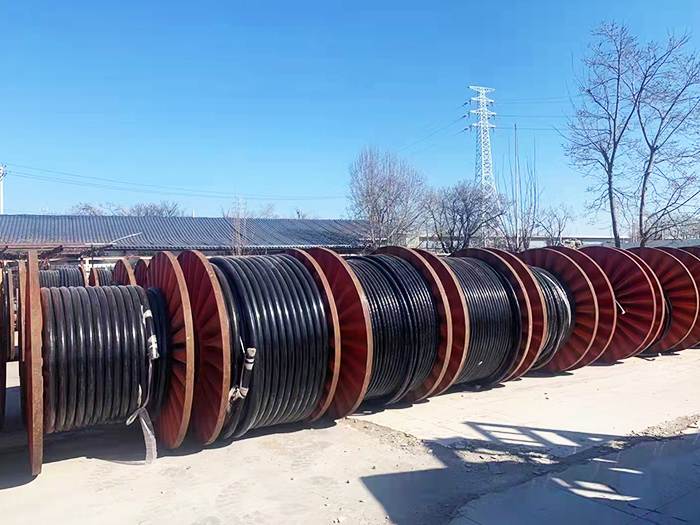

Cable drum return planning should be settled before the loaded reels leave the factory. The commercial terms need to say who owns each drum, whether a deposit applies, what condition is acceptable, who stores and loads it, and whether return, reuse or local recycling is practical.
An empty drum is bulky, site-specific and often still carries cable remnants or project markings. Cable drum return planning connects logistics with traceability so the project does not lose deposits, block work areas or move unidentified reels across sites.
This guide groups buyer prompts about returnable drums, deposits, export reels, pickup freight, condition photos, cable remnants, phased projects, storage, reuse, recycling and final commercial credit.

Hidden costs in empty-reel handling
The quoted price for a empty-drum logistics planning is meaningful only when route, quantity, testing, delivery and exclusions use the same basis.
Red flag: Deposit is outside unit price
Why it matters: Buyer may overlook tied-up value Better requirement: Show it separately.
Red flag: Return freight is undefined
Why it matters: Pickup can cost more than expected Better requirement: Assign transport.
Red flag: Storage is free in the plan
Why it matters: Reels consume secure site space Better requirement: Allocate zones.
Red flag: Damage criteria are vague
Why it matters: Credit disputes appear at pickup Better requirement: Photograph condition.
Red flag: Mixed ownership is unmanaged
Why it matters: Wrong reels may be returned Better requirement: Use drum identity.
A clear cable drum return planning agreement makes packing, freight and recovery costs comparable before award.
Logistics case: 28 empty reels block the next work front
Situation: A phased project finishes its first cable pulls and stacks empty drums beside the only crane access road.
Finding: The purchase order mentions returnable packing but does not assign storage, pickup freight or deposit closeout.
Decision: The buyer reconciles every drum number, separates reels with cable remnants and schedules a consolidated transfer under signed condition records.
Expected result: Cable drum return planning clears the work area and closes the commercial value without losing traceability.
Is return actually practical for this shipment?
A useful empty-drum logistics planning starts with a defined buyer, production outcome and project boundary. The following distinctions prevent a general factory inquiry from becoming an unqualified product request.
Who owns the reel after delivery?
Terms should distinguish supplier-owned, buyer-owned and deposit-backed drums.
How far must it travel back?
Return freight can outweigh reuse value on remote or export projects.
Can the site store it safely?
Empty drums still need stable ground, identification and damage control.
Is cable left on the drum?
Usable spare, scrap and empty status require different handling.
The decision is strongest when each answer is supported by project-specific evidence for the project cable drum return program.
Empty-Drum Commercial Decision Table
Use this specification table to compare each empty-drum logistics planning on the same approved project basis. Values are inputs to confirm, not assumptions for the supplier to invent.
| Specification item | Project input | Evidence to retain |
|---|---|---|
| Electrical system | Approved delivery terms, ownership, deposit, return window, transport and local disposal requirements | Approved single-line diagram and load schedule |
| Conductor and size | Buyer-defined material, cross-section and circuit duty | Cable schedule and engineering approval |
| Insulation and sheath | Project location, access, storage, pickup point, export boundary and recycling availability | Route map and environmental boundary |
| Mechanical protection | Drum remains stable, identifiable, loadable and within agreed condition | Installation method and risk review |
| Fire performance | Project-required performance and test reference | Approved specification and test documents |
| Identification | Order, drum number, size, cable item, owner, condition, location and status | Drum list, cable register and final revision |
A compliant schedule makes technical and commercial differences visible before the project cable drum return program cable order is released.
Drum-by-drum evidence audit
The construction review should connect materials and components with actual project cable drum return program routes.
- Ownership: Commercial title and deposit are explicit; retain quotation terms.
- Delivery: Condition and drum identity are recorded; retain receiving report.
- Empty status: Cable remnants and readiness are confirmed; retain site release.
- Closure: Pickup, recycling or credit is documented; retain commercial record.
Cable drum return planning works when each physical reel can be reconciled with one commercial status.
Return, reuse, recycle or retain?
Which branch protects accepted delivery and return plan that keeps cable drums identifiable, recoverable and commercially controlled while meeting the required delivery date?
Return is commercially practical
Prepare the agreed condition, consolidate pickup and close the deposit.
Local reuse is approved
Transfer ownership and safety responsibility in writing.
Recycling is the better route
Follow local requirements and retain disposal evidence.
Drum still holds usable cable
Move it into controlled spare inventory before deciding the reel's fate.
The best branch depends on ownership, condition, location and remaining cable, not a blanket waste rule.
From delivered reel to closed logistics record
Changing from a machine list to a complete-product view changes which cable groups receive priority.
Before: disconnected equipment assumptions
- Quotation is listed without showing drums described as packing.
- Receiving is listed without showing quantity counted only.
- Installation is listed without showing empty reels moved informally.
- Pickup is listed without showing requested by phone.
After: one traceable delivery and return plan that keeps cable drums identifiable, recoverable and commercially controlled flow
- Quotation is released with ownership, deposit and return terms.
- Receiving is released with number, condition and location captured.
- Installation is released with release status and storage zone.
- Pickup is released with scheduled load and signed transfer.
The logistics record closes physical custody and commercial value together.
Empty-drum closeout scorecard
Use this scorecard to test the quality evidence behind a empty-drum logistics planning. Certification names alone do not replace project-specific inspection and traceability.
| Criterion | Question | Evidence to request |
|---|---|---|
| Terms | Are ownership, deposit and freight responsibilities clear? | Purchase order |
| Identity | Can each reel be found in the drum register? | Site list |
| Condition | Is return readiness supported by photos and inspection? | Release record |
| Settlement | Are pickup and credit or disposal closed? | Commercial file |
Cable drum return planning is complete when no reel or deposit remains in an unexplained status.
Compare three drum supply arrangements
This comparison does not select a cable by industry label. It shows how three project cable drum return program project configurations change the evidence a supplier must review.
| Project configuration | Defining features | Main advantage | Best fit | Relative cost level |
|---|---|---|---|---|
| Supplier-returnable drum | Ownership or deposit supports return | Potential reuse | Domestic or consolidated projects | Medium |
| Buyer-owned project drum | Reel transfers with delivered cable | Simple commercial closure | Remote or export supply | Medium |
| One-way or recyclable reel | Designed for local disposition | Avoids return freight | Long-distance shipment | Varies |
Cable drum return planning should compare lifecycle logistics, not only the initial packing charge.
Drum-return fields to put in the purchase order
OEM and project customization should make the empty-drum logistics planning easier to approve, receive, install and maintain.
Ownership and deposit
State title, amount, return deadline and credit mechanism.
Condition standard
Define acceptable damage, cable remnants and required photos.
Site responsibility
Name storage, loading, pickup point and contact role.
Final disposition
Record return, reuse, recycling or buyer retention.
Information to include in a power cable RFQ
Suppliers can compare the same basis when the RFQ includes the following project inputs.
- System voltage and frequency
- Load or cable schedule
- Motor ratings and starting method
- Route length and installation method
- Actual wet, dusty, hot, outdoor or mechanical conditions
- Required conductor, insulation, sheath and armor details
- Destination, delivery stages and required records
- drum ownership, deposit and purchase-order terms
- drum type, size, number and cable-item identity
- delivery inspection, site storage and empty status
- return window, pickup, loading and freight responsibility
- reuse, recycling, deposit credit and closure records
For project cable drum return program projects, references such as IEC 60502, IEC 60228 and IEC 60332 can help both sides use consistent terminology. They do not replace the approved specification or the buyer's responsibility to confirm the design.
How JINCHUAN Cable supports project cable drum return program decisions
For industrial buyers, EPC engineers, utilities, contractors, commissioning teams and cable distributors evaluating the cable drum return planning, JINCHUAN Cable can review buyer-approved schedules, drum schedules, cable identity, packing records and commercial clarifications, quantities, identification and document requirements for the project cable drum return program.
The response can state assumptions, evidence and exclusions while final system design, protection, compliance approval and installation remain with qualified project teams responsible for the project cable drum return program.
Buyers can review JINCHUAN Cable products and learn more about the JINCHUAN Cable company. Share the project purpose, critical loads, route conditions, quantities, destination and expected records to create a stronger basis for technical and commercial comparison.
Send the approved schedule and drum ownership, delivery and return requirements to request a quotation with a traceable evidence package.
FAQ
What should buyers expect from a cable drum return planning?
Buyers should expect the proposal to connect cable construction with drum ownership, construction, deposit, freight, condition, storage, unloading, cable remnants, pickup, reuse and recycling, not merely repeat conductor sizes from a schedule.
Which part of the project cable drum return program should be mapped first?
Start with quotation terms, drum schedule, delivery inspection, cable use, empty-drum storage, return request, pickup and commercial closure. This shows which supporting loads can interrupt more than one production stage.
How should quotations for the project cable drum return program be compared?
Compare the stated route assumptions, operating duty, included records, delivery grouping and exclusions beside price. That exposes scope differences before approval.
Which route conditions matter in a project cable drum return program?
The inquiry should distinguish large projects, phased deliveries, remote sites, distributors and export shipments where empty reels occupy space and return freight can exceed expectations. Broad labels such as indoor or industrial are rarely precise enough for a useful review.
What hidden risk deserves attention in this project?
A common hidden risk is discussing empty drums only after installation, when ownership records are missing, reels are damaged, cable remnants remain and return transport is difficult. Its production consequence may be greater than the connected load suggests.
Should future changes be discussed before ordering?
Yes. phased installation, delayed pickup, damaged drums, mixed suppliers, border requirements, local recycling rules and leftover cable can affect route capacity, circuit names, distribution space and the value of today's approval records.
Which records help after installation?
Useful records include quotation terms, drum list, ownership, deposit, delivery condition, empty date, photos, storage, return request, pickup and credit. They help receiving, installation and maintenance teams connect each cable with its purpose.
Which technical references may support the discussion?
IEC 60502, IEC 60228 and IEC 60332 may provide common terminology, while the approved project specification remains the final design basis.
What should be sent with the first RFQ?
Send the cable or load schedule plus project details such as drum ownership, deposit and purchase-order terms, drum type, size, number and cable-item identity, delivery inspection, site storage and empty status, return window, pickup, loading and freight responsibility, reuse, recycling, deposit credit and closure records. Clear inputs allow suppliers to identify assumptions instead of guessing.
How can JINCHUAN Cable support the project cable drum return program?
JINCHUAN Cable can review the schedule, routes, operating conditions, quantities and required records against the result the buyer needs to protect: a delivery agreement that defines drum ownership, deposits, site care, return condition, pickup responsibility and final disposition.