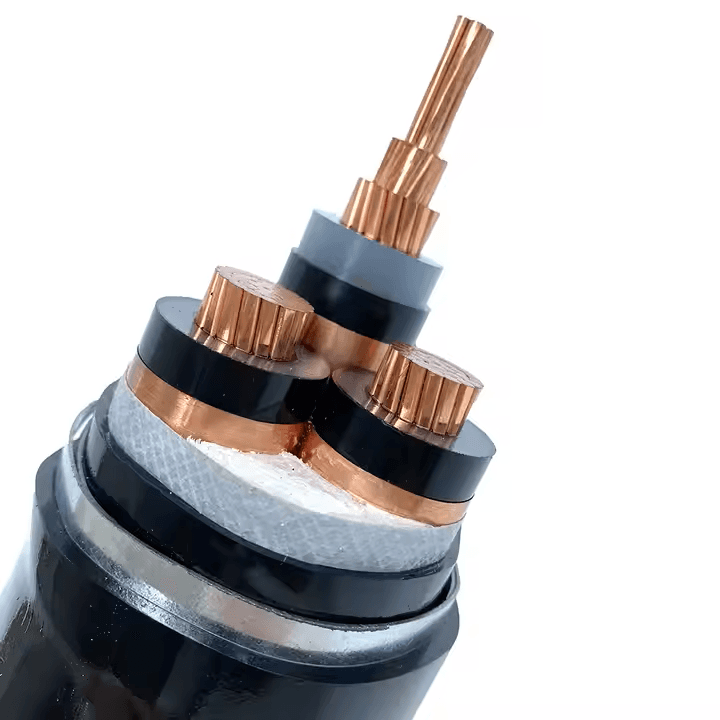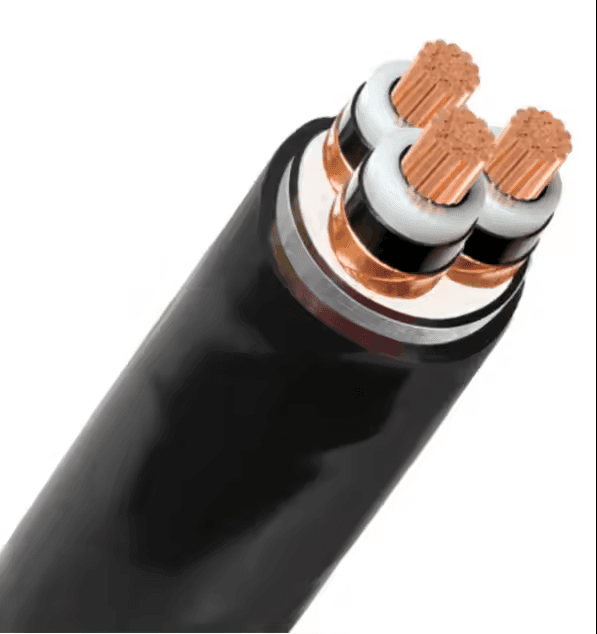

Cable pulling lubricant compatibility matters because the product can contact almost the entire sheath and remain inside a duct long after the pull. Reduced friction is useful, but not if the lubricant softens, swells, stains or otherwise affects the cable, accessories, duct or surrounding environment.
Contractors should review the exact cable sheath and lubricant technical data, then control temperature, dilution, application and cleanup. Cable pulling lubricant compatibility is a project approval, not a habit carried over from the last site.
This guide covers buyer questions about PVC, PE and LSZH sheaths, water-based lubricants, residues, wet ducts, cold weather, application quantity, friction assumptions, joint preparation, environmental controls and post-pull inspection.
Product-to-route evidence audit
The construction review should connect materials and components with actual duct and conduit cable pull routes.
- Cable sheath: Actual material and construction are identified; retain approved datasheet.
- Lubricant: Chemistry and use conditions are documented; retain technical data.
- Compatibility: The combination is accepted by responsible parties; retain written approval.
- Field use: Batch, quantity, route and observations are traceable; retain pull record.
Cable pulling lubricant compatibility should be proven for the exact material pair and work conditions.
Five compatibility questions before opening the container
A useful pulling-lubricant compatibility review starts with a defined buyer, production outcome and project boundary. The following distinctions prevent a general factory inquiry from becoming an unqualified product request.
Which sheath is being pulled?
Use the ordered construction rather than a generic power-cable label.
What is inside the duct?
Duct material, water, dirt and old residues can change performance.
At what temperature?
Viscosity and sheath behavior may differ from room-temperature data.
Will residue reach a joint?
Jointing surfaces need an approved cleaning and preparation method.
How is excess material contained?
Protect drains, soil, equipment and work areas under site rules.
Lubricant Compatibility Decision Table
Use this specification table to compare each pulling-lubricant compatibility review on the same approved project basis. Values are inputs to confirm, not assumptions for the supplier to invent.
| Specification item | Project input | Evidence to retain |
|---|---|---|
| Electrical system | Approved cable construction, route, pulling limits, environmental rules and manufacturer information | Approved single-line diagram and load schedule |
| Conductor and size | Buyer-defined material, cross-section and circuit duty | Cable schedule and engineering approval |
| Insulation and sheath | Duct material, diameter, bends, water, cleanliness, temperature and exit conditions | Route map and environmental boundary |
| Mechanical protection | Application equipment and pulling setup control force without damaging the sheath | Installation method and risk review |
| Fire performance | Project-required performance and test reference | Approved specification and test documents |
| Identification | Circuit, drum, sheath, lubricant product, batch, duct section, date and inspection | Drum list, cable register and final revision |
A compliant schedule makes technical and commercial differences visible before the duct and conduit cable pull cable order is released.
Turn a site consumable into a controlled installation input
Changing from a machine list to a complete-product view changes which cable groups receive priority.
Before: disconnected equipment assumptions
- Selection is listed without showing whatever is in the store.
- Calculation is listed without showing generic friction factor.
- Application is listed without showing unmeasured pouring.
- Exit is listed without showing residue left on cable ends.
After: one traceable installed cable whose sheath, joints and route remain compatible with the approved pulling lubricant flow
- Selection is released with approved product and batch.
- Calculation is released with route-specific documented assumption.
- Application is released with controlled placement and quantity.
- Exit is released with inspection and approved cleanup.
The controlled sequence makes the consumable visible to engineering, quality and future maintenance teams.
Installation case: the replacement lubricant arrives on pull day
Situation: A contractor receives a different water-based lubricant after the approved product is unavailable.
Finding: The container claims broad cable use, but the project has an LSZH sheath and delayed jointing in a wet chamber.
Decision: The pull is held until the exact product, sheath compatibility, residue and cleanup method are reviewed.
Expected result: Cable pulling lubricant compatibility is resolved before every meter of sheath is exposed to an unapproved substitute.
Post-pull compatibility scorecard
Use this scorecard to test the quality evidence behind a pulling-lubricant compatibility review. Certification names alone do not replace project-specific inspection and traceability.
| Criterion | Question | Evidence to request |
|---|---|---|
| Approval | Did the exact sheath and lubricant combination receive review? | Approval record |
| Use | Were batch, temperature and application controlled? | Site log |
| Condition | Was the sheath inspected at accessible points? | Inspection report |
| Closure | Were residue and jointing surfaces handled correctly? | Handover record |
Cable pulling lubricant compatibility is closed when the installed cable and work area show no unresolved material concern.
Compatibility controls during one cable pull
Capacity for a pulling-lubricant compatibility review should be checked against approved data, production windows and staged deliveries.
Stage 1: Before delivery
Approve sheath, lubricant and environmental requirements.
Stage 2: Before pulling
Inspect duct, temperature, product batch and equipment.
Stage 3: During application
Control quantity, location and crew observations.
Stage 4: At cable exit
Inspect surface, remove excess and protect ends.
Stage 5: Before jointing
Confirm cleaning and preparation requirements.
The evidence is easiest to capture while the product, crew and route remain available.
Quotation gaps around pulling lubricant
The quoted price for a pulling-lubricant compatibility review is meaningful only when route, quantity, testing, delivery and exclusions use the same basis.
Red flag: Lubricant is an unnamed allowance
Why it matters: Compatibility cannot be reviewed Better requirement: Name product and batch.
Red flag: Cleanup is excluded
Why it matters: Residue can affect jointing and housekeeping Better requirement: Define closure.
Red flag: Friction value is copied
Why it matters: Pulling-force confidence may be false Better requirement: State the basis.
Red flag: Duct condition is unknown
Why it matters: Water and debris change both force and residue Better requirement: Inspect route.
Red flag: Substitution needs no approval
Why it matters: Site supply changes can alter chemistry Better requirement: Use change control.
A complete cable pulling lubricant compatibility scope includes the product, application controls and post-pull condition.
Questions for the cable and installation teams
OEM and project customization should make the pulling-lubricant compatibility review easier to approve, receive, install and maintain.
Which sheath construction applies?
Reference the ordered cable item and revision.
Which lubricant is approved?
Record product, batch, use conditions and any dilution.
What happens at joints?
Define residue removal and surface preparation.
What evidence is retained?
Keep route, application, observations and inspection together.
JINCHUAN Cable can clarify supplied sheath construction while the installation authority approves the complete pulling method.
Compare three friction-control approaches
This comparison does not select a cable by industry label. It shows how three duct and conduit cable pull project configurations change the evidence a supplier must review.
| Project configuration | Defining features | Main advantage | Best fit | Relative cost level |
|---|---|---|---|---|
| Approved liquid lubricant | Applied during the pull | Practical for long ducts | Defined material combination | Medium |
| Factory-applied low-friction feature | Construction includes a friction-reducing surface | Consistent cable treatment | Repeat or high-volume pulls | Medium-high |
| Route redesign | More chambers or gentler bends reduce force | Less reliance on consumables | High-risk route | High |
Cable pulling lubricant compatibility is one part of the pulling plan; it should not compensate for an unworkable route.
Information to include in a power cable RFQ
Suppliers can compare the same basis when the RFQ includes the following project inputs.
- System voltage and frequency
- Load or cable schedule
- Motor ratings and starting method
- Route length and installation method
- Actual wet, dusty, hot, outdoor or mechanical conditions
- Required conductor, insulation, sheath and armor details
- Destination, delivery stages and required records
- cable construction and exact sheath material
- duct material, route, bends, water and temperature
- lubricant product, chemistry, batch and compatibility
- pull calculation, application and environmental controls
- post-pull inspection, cleanup and joint-preparation records
For duct and conduit cable pull projects, references such as IEC 60502, IEC 60228 and IEC 60332 can help both sides use consistent terminology. They do not replace the approved specification or the buyer's responsibility to confirm the design.
How JINCHUAN Cable supports duct and conduit cable pull decisions
For industrial buyers, EPC engineers, utilities, contractors, commissioning teams and cable distributors evaluating the cable pulling lubricant compatibility, JINCHUAN Cable can review buyer-approved schedules, sheath construction, dimensions, handling data and technical clarifications, quantities, identification and document requirements for the duct and conduit cable pull.
The response can state assumptions, evidence and exclusions while final system design, protection, compliance approval and installation remain with qualified project teams responsible for the duct and conduit cable pull.
Buyers can review JINCHUAN Cable products and learn more about the JINCHUAN Cable company. Share the project purpose, critical loads, route conditions, quantities, destination and expected records to create a stronger basis for technical and commercial comparison.
Send the approved schedule and lubricant, sheath and route-condition requirements to request a quotation with a traceable evidence package.
FAQ
What should buyers expect from a cable pulling lubricant compatibility?
Buyers should expect the proposal to connect cable construction with sheath material, lubricant chemistry, duct material, temperature, water, residue, friction, application rate, joints and environmental controls, not merely repeat conductor sizes from a schedule.
Which part of the duct and conduit cable pull should be mapped first?
Start with product identification, compatibility review, route trial, pull calculation, controlled application, post-pull inspection and record closure. This shows which supporting loads can interrupt more than one production stage.
How should quotations for the duct and conduit cable pull be compared?
Compare the stated route assumptions, operating duty, included records, delivery grouping and exclusions beside price. That exposes scope differences before approval.
Which route conditions matter in a duct and conduit cable pull?
The inquiry should distinguish long ducts, bends, congested conduits, wet routes and heavy cable pulls where friction control matters but chemical residue remains in contact afterward. Broad labels such as indoor or industrial are rarely precise enough for a useful review.
What hidden risk deserves attention in this project?
A common hidden risk is selecting a familiar site lubricant by brand name without confirming compatibility with the ordered sheath, duct and service environment. Its production consequence may be greater than the connected load suggests.
Should future changes be discussed before ordering?
Yes. different cable sheath, alternate lubricant supply, colder weather, longer duct, standing water, delayed jointing and maintenance repulls can affect route capacity, circuit names, distribution space and the value of today's approval records.
Which records help after installation?
Useful records include cable datasheet, lubricant technical data, compatibility approval, route conditions, calculation, batch, application, pull log and inspection. They help receiving, installation and maintenance teams connect each cable with its purpose.
Which technical references may support the discussion?
IEC 60502, IEC 60228 and IEC 60332 may provide common terminology, while the approved project specification remains the final design basis.
What should be sent with the first RFQ?
Send the cable or load schedule plus project details such as cable construction and exact sheath material, duct material, route, bends, water and temperature, lubricant product, chemistry, batch and compatibility, pull calculation, application and environmental controls, post-pull inspection, cleanup and joint-preparation records. Clear inputs allow suppliers to identify assumptions instead of guessing.
How can JINCHUAN Cable support the duct and conduit cable pull?
JINCHUAN Cable can review the schedule, routes, operating conditions, quantities and required records against the result the buyer needs to protect: a lower-friction pull completed with a lubricant that is approved for the cable sheath, duct, accessories, environment and cleanup plan.