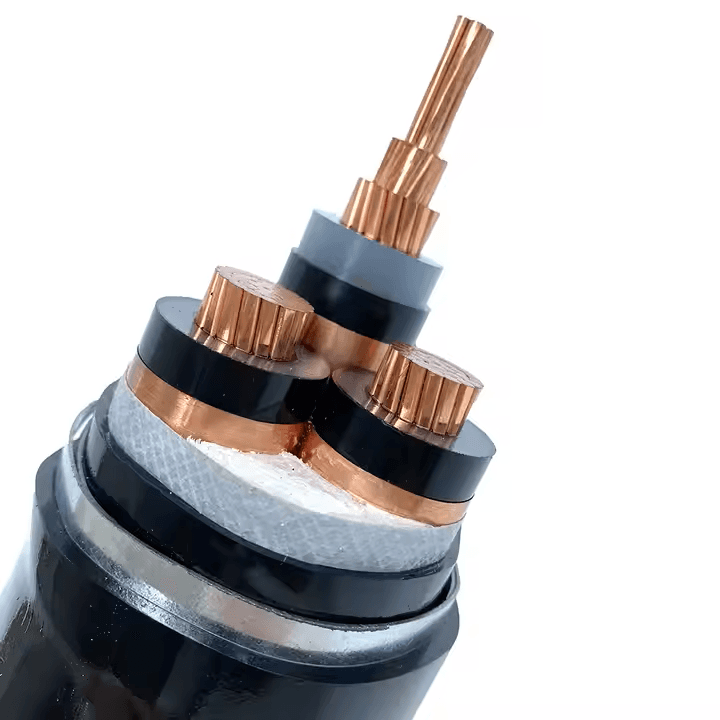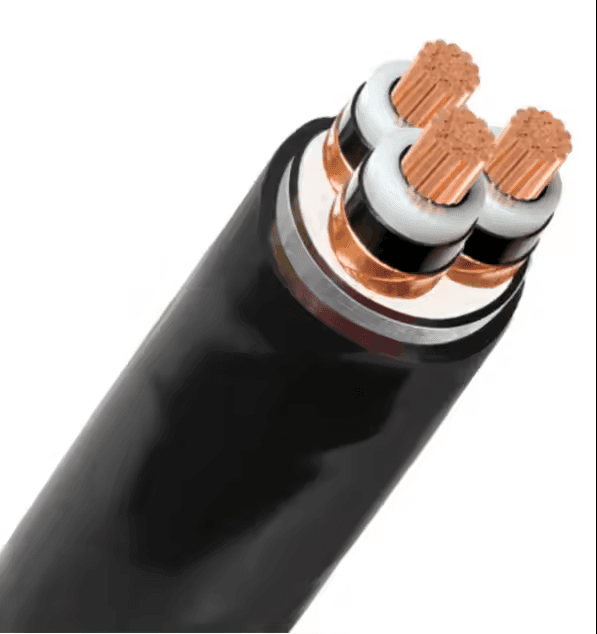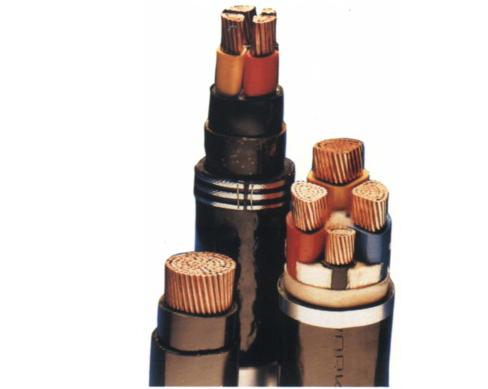

The buyer's specification says IEC 60502. The certificate that reaches the approval file says GB/T 12706. Both describe extruded-insulation power cable rated from 1 kV to 35 kV, so the task is to prove that clause by clause instead of arguing about a cover page.
In practice the gap is small and very specific. One project finds the insulation wall quoted as a nominal figure while the specification asks for a minimum. Another finds the drum marking sequence shorter than the consultant's template expects. A third finds the sample test frequency written in one document and assumed in the other.
So a GB/T 12706 vs IEC 60502 check comes down to three documents on one desk: the specification, the manufacturer's construction data and the test certificate. Mark what matches, and put every remaining difference in writing before the purchase order is placed.
Why Two Standard Numbers Appear on One Order
A manufacturer builds to the standard that governs its production line, its sampling plan and its certification. Where that standard is GB/T 12706, each drum is designed and tested against it, and the paperwork travels with that number attached.
Buyers write against whatever their own engineers and insurers recognise. Where that is IEC 60502, the two texts cover the same cable family but use different clause numbering, different thickness tables and different test listings, and that is where the confusion usually starts.
Reconciling them is ordinary engineering work rather than a legal exercise. Take the clauses the circuit depends on, find the counterpart value in the other text, and write down the result. That record is what the next reviewer, and the next project, will actually use.
A GB/T 12706 vs IEC 60502 comparison should begin with construction clauses, because a standard number on its own does not describe the cable.
Where the Two Documents Overlap and Where They Diverge
Six areas carry almost all of the risk in this kind of GB/T 12706 vs IEC 60502 review.
| Area | Usually comparable | Needs a decision |
|---|---|---|
| Cable family and voltage range | Extruded insulation, 1 kV to 35 kV | Whether the project accepts the equivalent range |
| Conductor | Copper or aluminium in stranded form | Class, compacting and dimensional limits |
| Insulation and screen | XLPE or PVC with a defined wall | Thickness table and tolerances |
| Metallic layers | Screen, bedding and armour arrangements | Material and fault-current duty |
| Tests | Routine, sample and type testing | Sample frequency and witness points |
| Marking and documents | Cable identity and records | Language, format and certificate content |
Once the areas are separated, the review reduces to the clauses the project actually depends on.
When a specification cites IEC and the certificate cites GB/T, the GB/T 12706 vs IEC 60502 review becomes an approval step rather than a technical argument.
Compare Construction, Not Only the Title
The cable that arrives on site is defined by construction tables, so the GB/T 12706 vs IEC 60502 comparison has to reach them.
Conductor and class
Confirm material, stranding class, compacting and any minimum cross-section the specification applies to parallel runs.
Insulation and wall
Compare the specified wall thickness and tolerance, and establish whether the value is nominal or minimum.
Screen and sheath
Check the metallic screen type, bedding, armour and oversheath against the earth-fault duty of the circuit.
Overall dimensions
Verify diameter, weight and minimum bending radius, because these drive ducts, trays, cleats and joint bays.
Keep the power cable standard comparison on one page, with the evidence reference sitting beside each clause.
The Offer Rejected for the Wrong Reason
Situation: An 11 kV XLPE feeder goes out to tender. One bidder returns a datasheet citing GB/T 12706 while the specification cites IEC 60502, and the offer is parked as non-compliant before anyone opens the construction table.
Finding: The review never reaches construction. Nobody compares conductor class, insulation thickness, screen type, test list or marking, so the package is rejected on a standard number alone.
Decision: The buyer asks for a cross-reference sheet mapping each specification clause to the matching construction or test value, with the certificate reference beside it.
Result: Most clauses turn out to be comparable, two need a written deviation and one changes the drum marking. The package proceeds with a documented approval instead of a lost bidder.
A cable test report cross reference is most useful when it separates routine, sample and type tests for the order.
Questions a Reviewer Should Ask Before Approving
These six questions expose the clauses that genuinely differ in a GB/T 12706 vs IEC 60502 review.
- Which version and year of each standard governs this order?
- Does the specification quote a nominal or a minimum insulation wall?
- Which conductor class and compacting does the design assume?
- Which sample and type tests are required, and at what frequency?
- Does the project require a specific screen, bedding or armour material?
- Which language and format must the certificate and marking follow?
Answers to these questions usually remove the need for a general argument about standards.
Send the specification clause list with the enquiry so the GB/T 12706 vs IEC 60502 answer arrives together with the offer.
Cross-Reference Sheet for the Approval File
Record the comparison where the next reviewer can find it.
| Column | What it holds | Who supplies it |
|---|---|---|
| Specification clause | The requirement as written | Buyer or consultant |
| Manufacturer clause | The matching construction or test value | Manufacturer |
| Evidence | Test report, drawing or certificate reference | Manufacturer |
| Verdict | Comparable, deviation or clarification needed | Reviewing engineer |
| Action | Accept, correct or raise a deviation | Project team |
| Approval | Name, date and document revision | Design authority |
One sheet of this kind is faster to review than a correspondence trail, and it survives staff changes on both sides.
Tests: Routine, Sample and Type
Routine tests are performed on the delivered lengths. Sample tests are performed on cable or material taken at a defined frequency. Type tests demonstrate that a design meets the standard and are not repeated on every drum.
Because the listings differ, the GB/T 12706 vs IEC 60502 test comparison is best handled as a single list for the order, marked against each item with the document that requires it, the witness and the record issued.
Where a project wants more than the standard requires, that has to be stated in the enquiry. A manufacturer cannot infer an extra sample test from a specification that only quotes a standard number.
Read the Certificate Against the Specification
A certificate is evidence only when it can be matched to the order in front of you.
Match the identity
Check cable type, size, voltage rating and drum or length reference against the delivered goods.
Match the standard
Confirm that the standard number and year on the certificate match the approved comparison sheet.
Match the tests
Verify which items are routine, sample or type, and that the results correspond to the approved list.
Match the scope
Confirm the certificate covers the construction actually supplied, including screen, armour and sheath.
Marking, Packaging and Document Language
Marking is where a small difference becomes a site problem. Where a project expects a defined sequence of manufacturer, type, size, voltage and length on the sheath, that same sequence should appear in the approved comparison sheet.
Document language matters just as much. Drawings, test reports and packing lists may need to be issued in the language of the end user, and the format may have to follow a consultant template rather than the manufacturer's own.
Both points belong in the enquiry. Raised after production, they become re-marking, translation or a delay at the loading port.
What to Send With the Enquiry
Send the inputs that let an offer answer the comparison directly.
- the specification with clause numbers, standard versions and any national annex
- voltage rating, conductor material and class, and the cross-sections required
- insulation, screen, sheath and armour expectations, including fault duty
- test scope, sampling basis, witness points and certificate format
- marking sequence, drum lengths, packing and document language
- the authority who approves a deviation, and the deadline for that approval
With these inputs, the comparison can be returned with the offer rather than after it.
RFQ Inputs for a Standards Comparison and Approval
Give the clauses, tests and documents with the enquiry so the comparison can be answered inside the offer.
- the specification with clause numbers, standard versions and national annex
- voltage rating, conductor material and class, and cross-sections
- insulation, screen, bedding, armour and oversheath requirements
- test scope, sampling basis, witness points and reporting format
- marking sequence, drum lengths, packing and document language
- certificate content and any template the consultant requires
- the approving authority and the deviation deadline
- delivery programme and the point at which the approval must be closed
Technical references such as IEC 60502, IEC 60228 and IEC 60332 can align cable construction and test terminology. The approved project specification, applicable local rules and qualified design authority still govern the final system decision.
JINCHUAN Cable Support for power cable standard review and project approval
JINCHUAN Cable produces PVC and XLPE insulated power cables to GB/T 12706 and can supply the construction data, test records and certificates a clause-by-clause review needs.
Review the power cable range and the manufacturing profile, then send the specification with clause numbers.
Put the clause comparison, the test list and the certificate reference into one document, and the standard question closes before production starts.
FAQ
What is the difference between GB/T 12706 and IEC 60502?
Both cover extruded-insulation power cables rated 1 kV to 35 kV. The clause numbering, thickness tables and test listings differ, which is why the two are usually compared clause by clause rather than as whole documents.
Does a GB/T 12706 cable meet an IEC 60502 specification?
Often it satisfies most of it. The remaining clauses still have to be checked one by one, then accepted or raised as a deviation by the project's own engineer.
Why does the standard number matter on a certificate?
Because the certificate is the evidence that the cable was produced and tested against a defined document, and the reviewer needs to map it to the specification.
Are the tests the same in both documents?
The families of routine, sample and type tests serve similar purposes, but the listings and frequencies differ, so one test list for the order is the practical route.
How long does a clause comparison take?
With the specification clause list and the manufacturer data available, a focused review of the clauses the project depends on takes a meeting rather than a week.
Who approves a difference between the two documents?
The designated design authority or consultant approves the deviation, while the buyer's project team manages the commercial consequence.
Can the comparison be issued with the quotation?
Yes, and it is quicker to review, because the buyer receives the mapping and the supporting evidence together with the price.
Does the comparison change the cable construction?
Sometimes. A clause may require a different screen, sheath, marking sequence or test, and that change should be visible in the offer.
What documents should accompany the comparison?
The construction drawing, test list, certificate reference, marking sample and any packing or language requirement.
How can JINCHUAN Cable support a standards review?
JINCHUAN Cable can provide construction data, test records and certificates so the buyer's engineer can complete the comparison before production.