
An industrial chain factory power cable supplier should plan for the point where chain becomes accepted product. Forming speed matters, but welding, heat treatment, calibration and proof testing determine whether a production lot can ship.
Several common assumptions hide this reality: the largest motor is not always the highest-priority feeder, all indoor routes are not alike, and final testing is not a minor afterthought.
The following structure corrects those assumptions and turns them into practical purchasing checks.
The chain-production path and its cable consequences
The table follows material through the operations that create strength, geometry and final acceptance.
| Stage | Operational dependency | Cable planning focus |
|---|---|---|
| Link forming | High-cycle output and moving stock | Machine duty, feeders, guarding and cell identity |
| Welding | Joint integrity and line balance | Welding duty, extraction and shared utilities |
| Heat treatment | Batch properties and schedule | Furnace groups, fans, controls and hot routes |
| Calibration | Dimensional consistency | Machine sequence and material handling |
| Proof testing | Lot acceptance | Test range, duty, controls and permanent records |
| Coating and packing | Corrosion protection and dispatch | Wet or controlled zones and finished-product flow |
Four misconceptions that weaken chain-factory cable plans
Correcting these ideas helps buyers compare offers through production consequence rather than habit.
Misconception: The forming machine is always the most critical load
What to use instead: A chain proof test machine cable or furnace support feeder may hold a larger quantity of finished work.
Misconception: Every welding cell has the same duty
What to use instead: Chain size, weld method, cycle and shared extraction can change both electrical and production assumptions.
Misconception: The whole building is one industrial environment
What to use instead: Moving-metal, hot furnace, coating and test zones require separate route descriptions.
Misconception: Future capacity only needs spare kilowatts
What to use instead: Physical routes, test range, furnace batches and stable equipment identities determine whether expansion is usable.
The alternative is a route- and consequence-based schedule that documents why each important circuit matters.
Five steps to build the requirement around accepted chain output
The order prevents a forming-machine purchase from hiding downstream constraints.
1. Define chain range and saleable output
State material, size, grade, production mix and required units or tonnes per shift.
2. Map batch and continuous stages
Separate high-cycle forming from furnace cycles and proof-test occupancy.
3. Identify shared support systems
Include extraction, cooling, handling, coating utilities and controls.
4. Mark actual route zones
Show moving metal, hot areas, wet finishing and test-machine boundaries.
5. Agree the handover evidence
Connect labels, drums, approved cable data, tests and final route revisions.
Scenario: faster forming fills the proof-test queue
Situation: A chain manufacturer adds a high-speed forming and welding line for a new size range.
Finding: The furnace can absorb the volume, but calibration and proof testing require longer changeovers and test cycles. Finished chain waits before acceptance.
Decision: The buyer includes test-machine range, controls, material handling and future bay space in the expansion review.
Expected result: Supplier scope is compared against accepted output, and the next capacity constraint is visible before production ramps up.
Where the industrial chain factory power cable supplier should show evidence
The proposal should make these operational links clear enough for engineering, receiving and maintenance teams to verify.
Forming and welding cell identity
A chain forming machine cable should remain tied to a permanent line name and approved duty.
Furnace batch dependency
Each chain heat treatment cable group should show fans, controls and support systems that protect the cycle.
Proof-test envelope
Maximum chain size, normal duty, test duration and control arrangement should come from approved project data.
Route and delivery grouping
Cable lengths, drums and labels should follow real work zones and installation stages.
Where should the next expansion budget go?
Select the branch based on measured queue and acceptance data rather than the most visible machine.
Work waits before welding
Review forming balance, welding-cell duty, extraction and handling between the two stages.
Lots wait for heat treatment
Check furnace cycles, loading, support systems and hot-route capacity.
Finished chain waits for proof testing
Prioritize the test range, occupancy, controls and route for another approved station.
Accepted chain waits for finishing or packing
Review coating, drying, handling and dispatch rather than adding upstream speed.
The cable package should follow the investment that removes the verified business constraint.
Limits that should remain explicit
A credible supplier response states what depends on the final machine, process or safety design.
- Protection and coordination settings require approved system calculations.
- Welding duty must come from the selected process and machine supplier.
- Heat-treatment quality qualification is outside the cable supplier's role.
- Proof-test procedures and safety zones require responsible engineering approval.
- Outdoor or heavy-traffic route protection needs site confirmation.
Visible limits prevent technical responsibilities from being hidden inside a general quotation.
RFQ inputs for formed, treated and tested chain
The inquiry should follow the chain through the stages that determine strength and final acceptance.
- System voltage and frequency
- Load or cable schedule
- Motor ratings and starting method
- Route length and installation method
- Actual wet, dusty, hot, outdoor or mechanical conditions
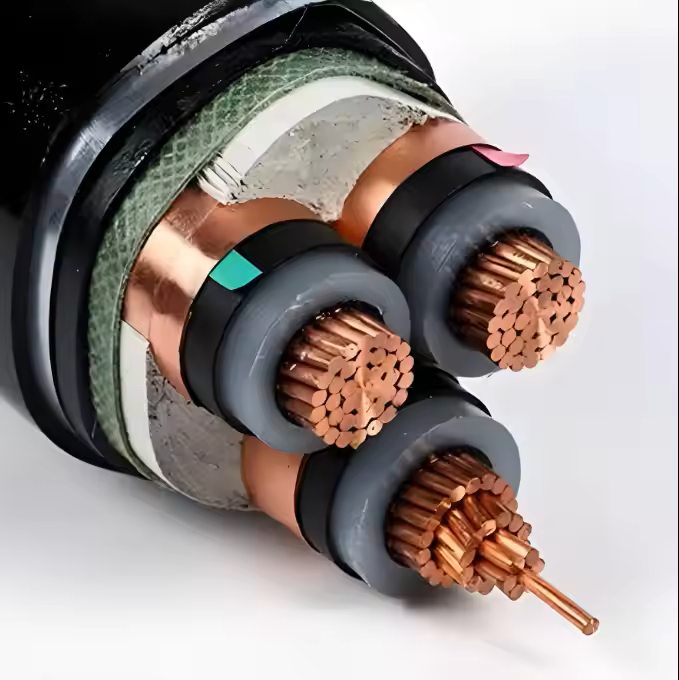
- Required conductor, insulation, sheath and armor details
- Destination, delivery stages and required records
- chain size, material and output range
- forming and welding machine duty
- furnace cycles and shared support loads
- proof-test range, duration and controls
- coating, material-handling and route zones
For industrial chain factory projects, references such as IEC 60502, IEC 60228 and IEC 60332 can help both sides use consistent terminology. They do not replace the approved specification or the buyer's responsibility to confirm the design.
How JINCHUAN Cable supports industrial chain factory decisions
For chain manufacturers, metal-forming engineers and factory contractors evaluating the industrial chain factory power cable supplier, JINCHUAN Cable can review forming, welding, furnace and proof-test cable groups against the stated production and acceptance path.
The offer can document construction, route assumptions, delivery and records while the qualified project team retains responsibility for welding, heat-treatment and test approval.
Buyers can review JINCHUAN Cable products and learn more about the JINCHUAN Cable company. Share the project purpose, critical loads, route conditions, quantities, destination and expected records to create a stronger basis for technical and commercial comparison.
Share the product range, queue data and proof-test plan so the quotation can focus on accepted chain output and expansion readiness.
FAQ
What should buyers expect from a industrial chain factory power cable supplier?
Buyers should expect the proposal to connect cable construction with high-cycle forming, welding duty, batch heat treatment, proof-test capacity and material handling, not merely repeat conductor sizes from a schedule.
Which part of the industrial chain factory should be mapped first?
Start with wire or bar preparation, link forming, welding, heat treatment, calibration, proof testing, coating and packing. This shows which supporting loads can interrupt more than one production stage.
How should quotations for the industrial chain factory be compared?
Compare the stated route assumptions, operating duty, included records, delivery grouping and exclusions beside price. That exposes scope differences before approval.
Which route conditions matter in a industrial chain factory?
The inquiry should distinguish moving-metal areas, welding cells, furnace corridors, test-machine zones, coating spaces and heavy material routes. Broad labels such as indoor or industrial are rarely precise enough for a useful review.
What hidden risk deserves attention in this project?
A common hidden risk is treating proof testing as a small final machine even though it can control acceptance for an entire production lot. Its production consequence may be greater than the connected load suggests.
Should future changes be discussed before ordering?
Yes. larger chain sizes, faster forming, added furnaces and higher proof-test capacity can affect route capacity, circuit names, distribution space and the value of today's approval records.
Which records help after installation?
Useful records include line and furnace names, batch and test identities, route-protection notes, approved cable assumptions and revisions. They help receiving, installation and maintenance teams connect each cable with its purpose.
Which technical references may support the discussion?
IEC 60502, IEC 60228 and IEC 60332 may provide common terminology, while the approved project specification remains the final design basis.
What should be sent with the first RFQ?
Send the cable or load schedule plus project details such as chain size, material and output range, forming and welding machine duty, furnace cycles and shared support loads, proof-test range, duration and controls, coating, material-handling and route zones. Clear inputs allow suppliers to identify assumptions instead of guessing.
How can JINCHUAN Cable support the industrial chain factory?
JINCHUAN Cable can review the schedule, routes, operating conditions, quantities and required records against the result the buyer needs to protect: steady forming, controlled welding, stable heat treatment and dependable proof-tested output.