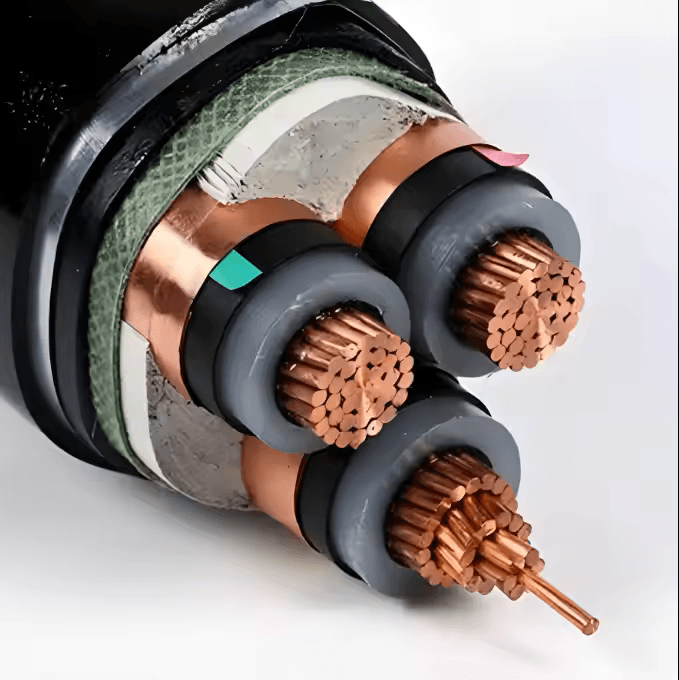

A cable can arrive with the right conductor size, the right insulation and the right test report, and still cause a commissioning delay because nobody agrees which core is which.
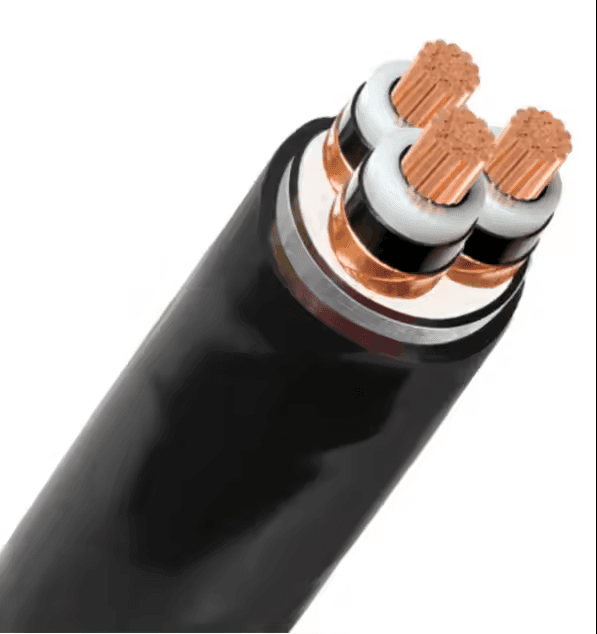
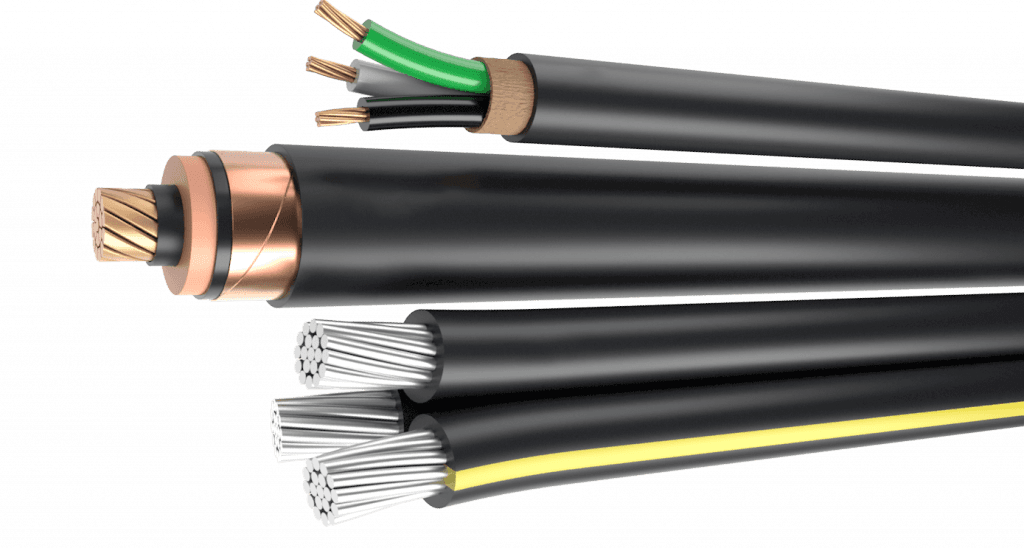
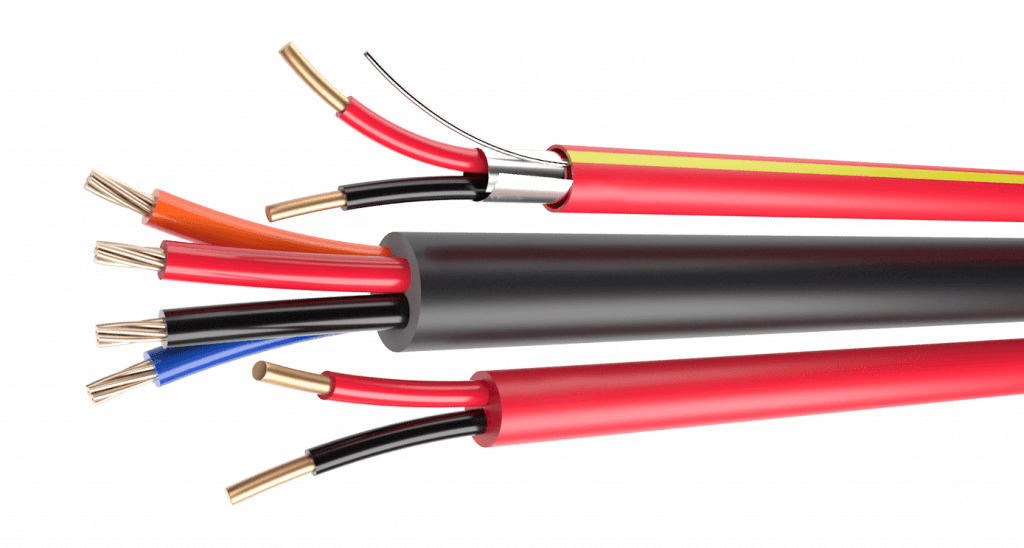
Cable core identification is settled by convention rather than by a single global rule. International practice fixes the protective conductor and sets a defined order for the rest, British practice numbers the cores, and North American practice ties colors to the grounded conductor and the system in use.
That matters because the drawing, the panel schedule and the cable drum all have to describe the same core before a single termination is made.
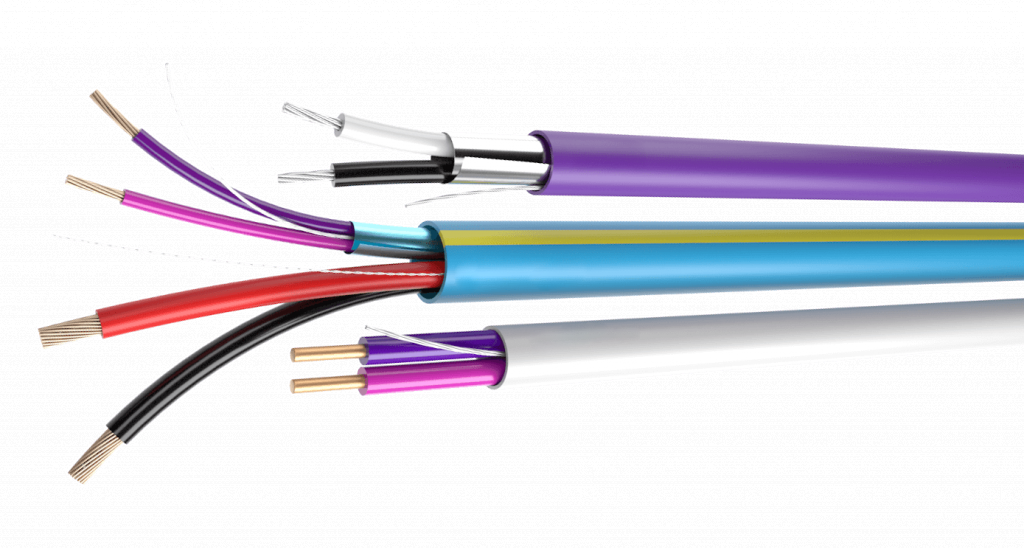
Case: Two Feeders, One Color Set
Situation: A panel builder received two multicore feeders for adjacent drives. Both used the same color sequence for the main cores, and neither drum carried a core chart.
Finding: During termination the crew followed the order they had seen on the previous job. Phase rotation on one feeder was wrong, and the drive refused to start.
Decision: Termination stopped, the drawings were annotated with core numbers, and a chart was requested for every drum on the project.
Result: Nothing changed except the paperwork travelling with the cable, and the second feeder terminated correctly on the first attempt.
Cable core identification is decided by convention, and the project specification is the document that fixes it.
Why There Is No Single Color Table
International practice fixes the protective conductor and sets a defined order for the remaining cores, then leaves manufacturers some freedom inside that order. Two compliant cables can therefore look different from each other.
British practice numbers the cores and defines a sequence, which keeps large core counts readable but asks the installer to translate numbers into phases.
North American practice ties colors to the grounded conductor and to the system in use. Mixing that convention with a European schedule is where most of the trouble begins.
Color works well for two, three and four cores, while numbered cores with a chart stay readable as the core count grows.
What Should Be Fixed Before Ordering
Four decisions remove most cable core identification problems before the drum is built.
- The color or number system, named explicitly rather than described as standard.
- The direction of counting, taken from a defined end and a defined rotation.
- The treatment of the protective conductor, which normally keeps its own identification for the full length.
- The core chart, which should reach site with the drum rather than stay in an office file.
None of these carry a cost, and all of them remove a site argument.
Core identification should be confirmed at the drum, not only in the store, because that is where the terminations are made.
Cable Core Identification by Core Count
The practical risk changes as the core count rises.
| Cores | Common practice | Practical risk |
|---|---|---|
| 2 and 3 | Color for phases plus a distinct protective core | Short tails make colors hard to judge |
| 4 and 5 | Colors or numbers, depending on the project | Mixed drums in one store |
| 7 and above | Numbers, usually with a chart | Counting direction differs between ends |
| Pilot or spare cores | Separately identified | A spare core mistaken for a phase |
Once a drum carries numbered cores, the chart becomes part of the cable rather than an accessory.
The counting direction is part of cable core identification, and leaving it unstated is a common cause of wrong phase rotation.
Checks Before the First Termination
A few minutes at the drum prevents rework that costs a shift.
Read the chart
Confirm that the drum chart matches the drawing, and that both use the same starting core and the same direction.
Ring out the cores
Prove continuity and identify each core with a meter instead of trusting color alone under site lighting.
Mark both ends
Apply the project tags at both ends while the cores are still identifiable, before tails bend into a panel.
Record what was found
Note any difference between the chart and the physical core order so the next drum can be checked against the same finding.
Ask for the charts that travel with the drum, since a chart kept in an office rarely reaches the person making the joint.
What the Drawing Should State
Four lines on the drawing prevent the most common commissioning delay.
| Statement | Effect on site | Effect if absent |
|---|---|---|
| Identification system | The crew prepares the right labels | Assumptions fill the gap |
| Counting direction | Both ends agree | Phase rotation errors |
| Protective conductor rule | Bonding stays consistent | Armor and sheath bonding is treated casually |
| Marking permanence | Tags survive the project | Marks fade before commissioning |
Those four lines take minutes to write and settle the entire site convention.
Color Under Poor Light
Colored cores are easy to read on a bench and difficult to read in a dark cable trench or inside a cabinet where the tails are short and already dusty.
Print applied to the insulation fades with handling, and heat-shrink sleeves fitted at the factory survive better than tape added later on site.
Where a project expects many terminations, cable core identification by number with a chart usually holds up better than a palette judged under a torch.
Where Identification Goes Wrong
Most faults come from a small number of habits.
- Assuming that two drums of the same cable use the same core order without reading both charts.
- Cutting the cores before the chart is checked, which removes the only reliable reference on the drum.
- Reusing a spare core without re-labelling it, so the spare quietly becomes an unmarked live conductor.
- Letting several contractors apply their own convention on the same site.
One convention, written once and repeated on every drum, removes all four.
Documents That Carry the Convention
Identification only works when these documents agree with each other.
| Document | What it fixes | Who relies on it |
|---|---|---|
| Project specification | The system in use | Design and procurement |
| Cable schedule | Core count and identification | Factory and stores |
| Termination drawing | Core to terminal mapping | Panel builder |
| Delivery note | Chart reference and drum identity | Site stores and crew |
When all four agree, the cable stops being a source of doubt.
Working With a Supplier on Identification
Identification is easy to specify and easy to verify, provided it is asked for.
State the system
Ask for colors, numbers or both, and name the counting direction from a defined end.
Ask for a chart
Request a chart with the delivery documents and, where practical, fixed to the drum itself.
Confirm the protective core
Make clear that the protective conductor keeps its own identification for the full length of the cable.
Check one drum first
Reviewing the first drum catches a mismatch while the balance can still be corrected at the factory.
RFQ Inputs for Cable Core Identification
These details decide what the factory prints and how the drum is marked.
- the identification system required, by color, by number or by both
- the core count, including any spare or pilot cores
- the counting direction and the reference end
- the rule that applies to the protective conductor
- the marking method required and how long it has to survive on site
- the language and format of the core chart
- the conductor size and voltage class for the same drum
- the destination and packing details so the chart travels with the cable
Technical references such as IEC 60502, IEC 60228 and IEC 60332 can align cable construction and test terminology. The approved project specification, applicable local rules and qualified design authority still govern the final system decision.
JINCHUAN Cable Support for core identification for panels, joints and terminations
JINCHUAN Cable applies cable core identification to the system named on the order and can supply a core chart with the delivery documents.
Review the multicore range and the manufacturing profile, then send the identification rule with the enquiry.
Fix the identification rule once in writing, and every drum on the project can be checked against the same reference.
FAQ
Is there one global color code for cable cores?
No. International practice fixes the protective conductor and a defined order, while regions and projects apply their own sequences, so the specification decides.
Are numbered cores better than colored cores?
Numbered cores stay readable as the core count rises and work well with a chart, while colors are quicker where only a few cores are used.
What is a core chart?
Cable core identification is recorded in a chart that maps each core to its color or number and to its terminal, and that chart should reach site with the drum rather than remain in an office.
Why does the counting direction matter?
Two people counting from opposite ends can identify the same core differently, which is a common cause of wrong phase rotation.
Should the protective conductor carry a distinct identification?
Most specifications require the protective conductor to be identifiable along its full length, and that rule should be stated rather than assumed.
Can factory marking fade?
Marking applied to the insulation can fade with handling, so printed or heat-shrink sleeves are often specified where identification has to survive a long project.
What should be checked when the drum arrives?
The chart against the drawing, the physical core order with a meter, and the marking method actually used.
Do spare cores need identification?
Yes. An unmarked spare core is easily mistaken for a phase or reused without being re-labelled.
What if two suppliers use different conventions?
The specification should settle one convention for every drum, since mixed conventions create the fault that labelling was meant to prevent.
How does JINCHUAN Cable handle core identification?
JINCHUAN Cable follows the identification system stated on the order and supplies marking and charts that match the approved drawing.