
A geothermal development usually sits where the ground is doing something unusual. Steam or hot brine arrives at the surface, the air is warm and humid, and the nearest store with a replacement gland may be hours away.
That combination makes the cabling unusual in three ways at once. The cable lives in a warmer environment than the design assumption often allows, its surroundings are chemically active, and every decision has to be made as though a return visit will be expensive.
None of those conditions is exotic on its own. Their combination, on a site where access is limited, is what makes the cable specification worth getting right first time.
A Yard Where the Supports Failed First
Situation: A geothermal power plant expanded its turbine hall yard with additional cooling and pumping equipment, and the new cable route was specified on the basis of an earlier project at a coastal site.
Finding: The cable itself performed as expected. The galvanised supports, tray fixings and cable glands deteriorated quickly in the warm, humid, sulphur bearing atmosphere, and inspection found corrosion at joints in the tray long before any cable problem.
Decision: Supports and fixings were changed to a heavier protective system, glands were reselected, and the route was re-examined where drainage had been pooling around the tray legs.
Result: The repair was civil and mechanical rather than electrical, and the specification was rewritten with the environment described in words rather than by reference to another project.
A geothermal power plant sits above a resource that arrives hot, mineral rich and often acidic, so the environment around the cable is unusual before any electrical consideration begins.
What Makes a Geothermal Power Plant Different
Temperature is the first difference. A yard that sits beside a steam turbine hall does not cool down the way a temperate outdoor switchyard does, and the ambient figure used for cable selection has to reflect the place rather than the region.
Chemistry is the second. Brine carries dissolved salts, and non condensable gases in the steam can include hydrogen sulphide, which is aggressive towards copper and silver in particular.
Access is the third. Coverage, spares and the availability of trained jointers matter more here, because a repair that would be routine at a city substation becomes a logistics exercise.
The site also concentrates large rotating loads close together: pumps, fans and cooling equipment whose duty cycles are driven by the resource rather than by a production schedule.
Brine corrosion attacks metalwork around the route, including supports, glands and trays, often before it reaches the cable itself.
What the Enquiry Has to State
Five facts about the site turn a generic industrial order into one that suits a geothermal installation.
The ambient temperature range
Not the regional figure, but the temperature in the place the cable will actually run, including the effect of nearby hot equipment and pipework.
The chemistry around the route
Brine, condensate and any hydrogen sulphide present, together with whether the area is classified for gas.
Whether the route is buried or on the surface
The two environments are hostile in different ways, and a route can be both along its length.
The duty of each feeder
Continuous pump and fan duty differs from a feeder that is switched occasionally, and the difference affects both size and construction.
The spares policy
What has to be held on site, because a second delivery may cost more in time than in freight.
Hydrogen sulphide is present at many fields, and it attacks exposed copper and silvered contacts while being difficult to see or smell at the concentrations that matter.
Loads at a Geothermal Power Plant and What They Ask For
The equipment at a geothermal site falls into a small number of duty types.
| Load group | Duty pattern | What it asks of the cable |
|---|---|---|
| Pumps and wellhead equipment | Continuous, often outdoors | Moisture resistance, protection from mechanical damage |
| Cooling and ventilation | Long running, high ambient | Adequate rating at elevated temperature |
| Turbine and generator auxiliaries | Critical, supervised | Routing that keeps power and control paths separate |
| Instrumentation and control | Continuous, low current | Screening and separation from power feeders |
The second row is the one most often underestimated, because the temperature is a property of the place rather than of the load.
High ambient temperature reduces the current a cable can carry, so a construction that performs well in a temperate yard may need attention here.
Where Geothermal Installations Suffer
The same handful of details causes most of the trouble.
- Support and fixing systems that were chosen for a coastal or industrial yard rather than for a warm, sulphur bearing one.
- Glands and terminations installed with components whose plating is attacked by the local atmosphere.
- Cable selected against a regional ambient temperature that understates the temperature beside a steam line.
- Routes that run through wet ground without a drainage path, so the cable spends its life in standing water.
- Spares chosen by length rather than by the accessory and the skill available on site.
Most of these are mechanical and environmental rather than electrical, which is why they are missed by an electrical specification alone.
Remote site conditions mean the spare drum, the gland and the jointer who can fit them all have to be planned long before they are needed.
Heat Above and Below a Geothermal Power Plant Route
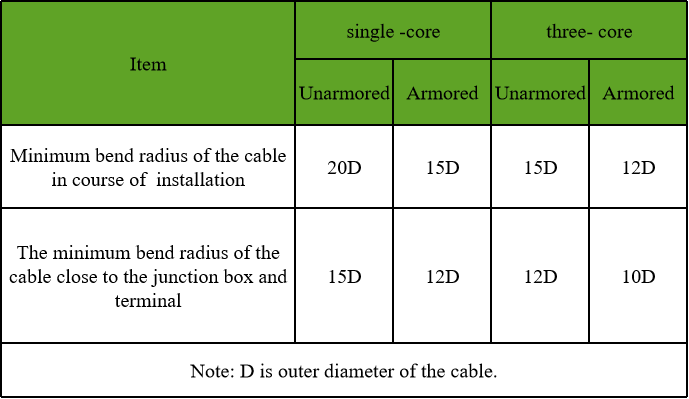
Above ground, the limiting factor is usually ambient temperature and solar gain. A run on an exposed tray in a hot yard is warmer than the same cable in a shaded trench, and the difference has to appear in the calculation.
Below ground, the ground itself becomes the variable. A geothermal field can have unusually warm soil near pipelines and wellheads, and a buried route that passes close to hot services sees a very different thermal environment from one crossing a field.
Both effects reduce the current the cable can carry, and both are cumulative with grouping where several circuits share a route.
The practical approach is to state the worst section of the route rather than an average, because a rating is only as good as the hottest metre the cable passes through.
Construction Choices and Their Consequences
Three choices come up on almost every geothermal enquiry.
| Choice | Why it is made | What it costs |
|---|---|---|
| A larger conductor than the load requires | Keeps the temperature rise within limits at high ambient | More copper, a heavier drum and stiffer cable to handle |
| Heavier sheath or oversheath | Provides mechanical and chemical protection | Larger diameter, tighter bend radius constraints |
| Separation of power and control routes | Reduces interference and simplifies maintenance | More tray and more support steel |
Each of these is a defensible answer and each of them makes the route harder to build, which is why the trade off belongs in the design stage.
Before the Route Is Fixed
Four points to settle while the alignment is still a drawing.
Where the hot sections are
Mark the parts of the route near steam lines, wellheads and hot services, and check the rating against them.
How water will leave
Drainage along the route and at low points, so the cable is not left in permanent standing water.
How the cable will be pulled
Tension, sidewall pressure at bends and the space available for a winch on a congested site.
How the route will be maintained
Access for inspection and the ability to reach a support or a gland without scaffolding.
Maintenance Realities
What the site can realistically inspect decides which details are worth spending on.
- Support condition and gland plating should be inspected on a schedule, not when a fault appears.
- Thermographic inspection works best on terminations and joints where a load is present and the route is accessible.
- Loose or corroded fixings are a mechanical finding that often precedes an electrical one.
- Records of repairs matter greatly where the crew that did the work may not return.
- Any change near the route, such as a new steam line, should trigger a review of the assumed temperature.
Inspection finds corrosion long before it finds a cable fault, which makes it the cheaper of the two discoveries.
Delivering to a Geothermal Power Plant Site
Freight to a geothermal field is planned like a project milestone rather than a delivery. Roads, access windows, crane availability and storage conditions all influence the drum sizes that make sense.
Longer drum lengths reduce the number of joints, and joints are the part of the work that depends on weather, skill and access at the site itself. That trade off is often worth making even when the transport cost rises.
Storage on arrival matters as much as transport. A geothermal site is warm and humid, and a drum left in the open with end caps missing is an invitation to moisture at the point where the cable is most vulnerable.
Agreeing the storage arrangement, the spares and the accessory kit at the same time as the cable turns three separate problems into one plan.
RFQ Inputs for a Geothermal Site
These details let a geothermal power plant cable be selected for the site rather than for a generic industrial environment.
- the ambient temperature in the actual place the cable will run
- the chemistry around the route, including brine and any hydrogen sulphide
- whether each section is buried, on a tray or both along its length
- the duty cycle of the loads, particularly pumps and cooling equipment
- the route sections close to hot services and pipework
- the drainage and sealing arrangements along the route
- the accessories and the spares to be held on site
- the delivery, access and storage arrangements at the site
Technical references such as IEC 60502, IEC 60228 and IEC 60332 can align cable construction and test terminology. The approved project specification, applicable local rules and qualified design authority still govern the final system decision.
JINCHUAN Cable Support for geothermal power plants
JINCHUAN Cable supplies power cable to constructions selected for the ambient temperature and the chemical environment a geothermal power plant presents along the route.
Review the cable range and the manufacturing profile, then send the site conditions so the construction matches the environment rather than the region.
Describe the environment of a geothermal power plant in words before selecting the construction, because the site will not adapt to a specification written for somewhere else.
FAQ
Why does a geothermal power plant need a different cable approach?
Because the route sits in unusually warm, humid and chemically active surroundings, often a long way from stores and skilled labour.
Which is worse, the heat or the chemistry?
Both cause failure and they act on different parts. Heat reduces the current the cable can carry, while chemistry attacks supports, glands and exposed metal.
What is the risk from hydrogen sulphide?
It attacks copper and silvered surfaces, so it damages terminations and contacts before it reaches the cable insulation.
Does brine affect the cable itself?
It chiefly attacks the metal around it, and where a sheath is damaged it accelerates what happens inside.
How should the ambient temperature be chosen?
From the temperature in the place the cable will actually run, including nearby hot equipment, rather than from a regional figure.
Do buried sections behave differently?
Yes. Ground temperature near pipelines and wellheads can be elevated, and the soil provides the cooling path rather than the air.
Should the conductor be oversized?
Sometimes, and it is one way to hold the temperature rise within limits when the ambient cannot be reduced. The cost is weight, stiffness and drum size.
What should be held as spares?
Short lengths of each significant size together with the glands, terminations and materials a repair needs, chosen for the skills available on site.
How does delivery affect the design?
Access and storage conditions influence drum sizes and lengths, and longer lengths trade transport cost against fewer joints on site.
How can JINCHUAN Cable support the selection?
JINCHUAN Cable can confirm how a construction behaves in elevated ambient temperature and what the sheath and oversheath provide along the route.