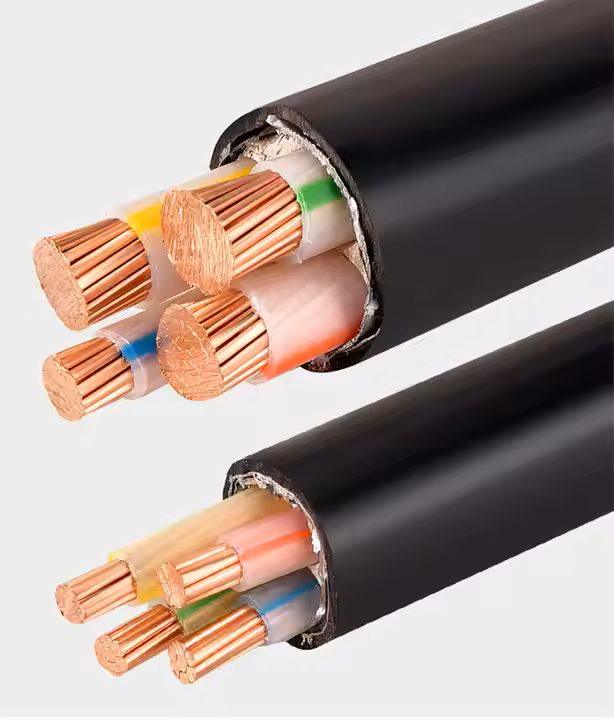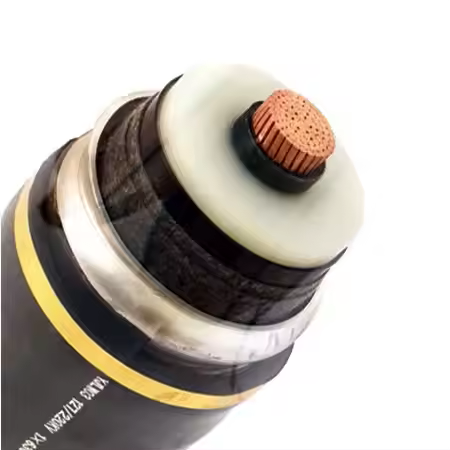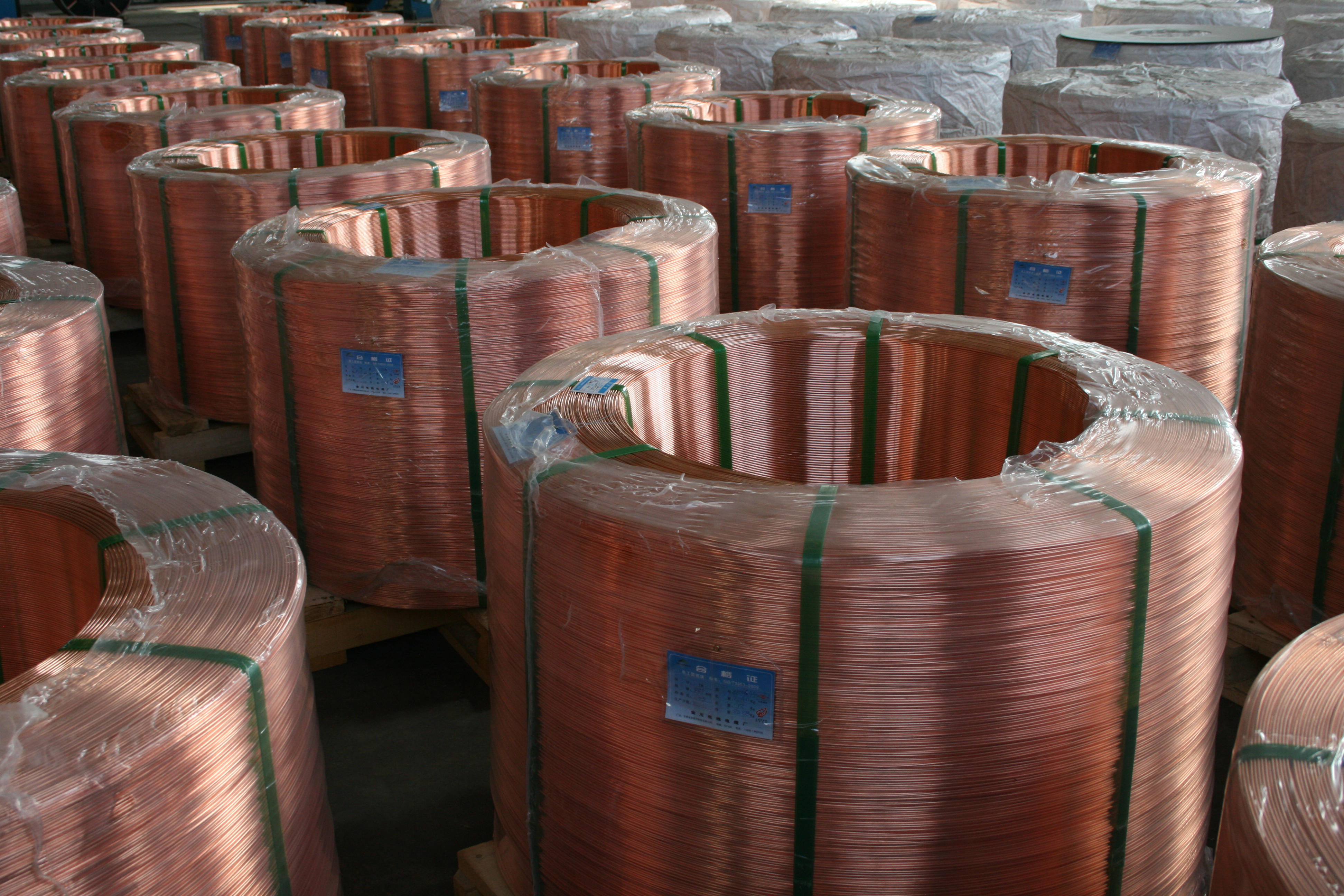

The cable manufacturer vs trading company decision should be based on technical complexity, product breadth, order size, evidence needs, logistics and who owns corrective action. Buying direct is not automatically the lowest-risk option, and using a trading company is not automatically more expensive.
A direct manufacturer may offer clearer production communication and traceability for a defined cable family. A capable trading company may add value when the buyer needs several product sources, consolidated export handling or a smaller mixed order, provided the actual factories and evidence chain remain transparent.
This guide answers the buyer questions behind factory-direct sourcing, supplier intermediaries and long-term cable procurement strategy.
Compare direct, intermediary and hybrid cable sourcing
This comparison does not select a cable by industry label. It shows how three international industrial cable sourcing decision project configurations change the evidence a supplier must review.
| Project configuration | Defining features | Main advantage | Best fit | Relative cost level |
|---|---|---|---|---|
| Direct manufacturer | Buyer contracts the producing factory | Clearer production access | Defined cable families and larger programs | Medium |
| Trading or sourcing company | Seller coordinates one or more factories and export flow | Product breadth and consolidation | Mixed baskets and complex logistics | Medium |
| Hybrid approved-source model | Buyer approves factories while one party coordinates commerce | Combines transparency and coordination | Recurring multi-source programs | Medium-high |
Commercial structure should not weaken the buyer's visibility into approved source, requirements and evidence.
Start with the sourcing problem, not the supplier label
A useful cable manufacturer vs trading company starts with a defined buyer, production outcome and project boundary. The following distinctions prevent a general factory inquiry from becoming an unqualified product request.
Choose for technical depth
A defined, high-consequence cable package may benefit from direct access to the responsible manufacturing and quality teams.
Choose for product breadth
A mixed basket may require several qualified factories and coordinated documentation.
Choose for order practicality
MOQ, size mix, consolidation and shipment timing can change the viable route.
Choose for risk ownership
Confirm who answers technical changes, production deviations, test evidence and claims.
Buyer Decision Table: manufacturer or trading company?
Use this specification table to compare each cable manufacturer vs trading company on the same approved project basis. Values are inputs to confirm, not assumptions for the supplier to invent.
| Specification item | Project input | Evidence to retain |
|---|---|---|
| Electrical system | One buyer-approved technical requirement and source-approval rule for every quoted cable line | Approved single-line diagram and load schedule |
| Conductor and size | Buyer-defined material, cross-section and circuit duty | Cable schedule and engineering approval |
| Insulation and sheath | Verified service and installation conditions communicated without loss through the sourcing chain | Route map and environmental boundary |
| Mechanical protection | Approved installation and protection requirements retained in the final factory order | Installation method and risk review |
| Fire performance | Project-required performance and test reference | Approved specification and test documents |
| Identification | Transparent factory, supplier, order, batch and drum identities across documents | Drum list, cable register and final revision |
A compliant schedule makes technical and commercial differences visible before the international industrial cable sourcing decision cable order is released.
Scenario: a mixed project benefits from a transparent hybrid route
Situation: An importer needs several power cable constructions plus smaller accessory lines in one shipment.
Finding: One manufacturer can supply the main cables efficiently but not every low-volume item or the complete consolidation service.
Decision: The buyer approves each source and uses one accountable coordinator for commercial consolidation, documents and logistics.
Expected result: The project retains factory visibility while reducing shipment and coordination work.
Before and after: compare sourcing routes by responsibility
Changing from a machine list to a complete-product view changes which cable groups receive priority.
Before: disconnected equipment assumptions
- Technical clarification is listed without showing buyer asks who can answer the requirement.
- Source approval is listed without showing factory identity is assumed or hidden.
- Production evidence is listed without showing documents arrive without batch linkage.
- Shipment coordination is listed without showing packing and consolidation are separate surprises.
After: one traceable approved cable supply route flow
- Technical clarification is released with named technical owner and controlled reply.
- Source approval is released with approved source and product scope.
- Production evidence is released with traceable inspection, test and drum records.
- Shipment coordination is released with one released logistics and document plan.
Responsibility mapping exposes where either sourcing route adds or removes risk.
Transparency red flags in direct and intermediary sourcing
Each warning sign shows where the cable manufacturer vs trading company may be based on a route description that is too broad.
Red flag: The manufacturing source is unclear
Why it matters: The buyer cannot verify capability or connect records with production Better requirement: Name the actual source and approval status
Red flag: Technical answers pass through several undocumented steps
Why it matters: Requirements may be simplified or changed Better requirement: Use a controlled clarification and revision log
Red flag: Test reports cannot be linked with delivered drums
Why it matters: Evidence may not represent the order Better requirement: Retain batch, report and drum linkage
Red flag: Claims ownership is divided
Why it matters: Corrective action may stall between seller, factory and logistics provider Better requirement: Name one accountable commercial owner and technical path
Transparency matters more than the business label printed on the quotation.
Evidence scorecard for either cable sourcing route
Use this scorecard to test the quality evidence behind a cable manufacturer vs trading company. Certification names alone do not replace project-specific inspection and traceability.
| Criterion | Question | Evidence to request |
|---|---|---|
| Source transparency | Is the actual manufacturing source and approved scope visible? | Source declaration and approval record |
| Technical control | Can requirements and changes reach the responsible team intact? | Clarification and revision log |
| Quality traceability | Do inspections and tests connect with the delivered batch and drums? | Reports, batch and drum list |
| Corrective ownership | Who contains, investigates and closes a quality or delivery issue? | Contract responsibility and action record |
The same evidence standard should apply whether the invoice comes from a factory or an intermediary.
Total cost comparison beyond the supplier margin
The quoted price for a cable manufacturer vs trading company is meaningful only when route, quantity, testing, delivery and exclusions use the same basis.
| Cost driver | Project impact | Control before ordering |
|---|---|---|
| Technical coordination | Buyer time and change risk differ by communication path | Measure clarification speed and error ownership |
| MOQ and mixed orders | One source may not suit every size or product family | Compare practical order allocation |
| Inspection and consolidation | Multiple sources add coordination and handling | Price the required service explicitly |
| Freight and documentation | Shipment scale and export competence affect landed cost | Normalize one delivery basis |
| Claims and repeat orders | Slow ownership can exceed visible purchase savings | Assess contract, records and response path |
Total sourcing cost includes buyer workload, delay, rework and corrective-action risk as well as supplier margin.
Which sourcing route fits the order?
Which branch protects accepted approved cable supply route while meeting the required delivery date?
One complex cable family dominates
Direct manufacturer access may simplify technical clarification and production evidence.
The order combines several product families
A transparent trading or sourcing company may reduce coordination and consolidation work.
The order is small and highly mixed
Compare practical MOQ, source count, packing and logistics rather than forcing one route.
The program is recurring
Prioritize revision control, approved-source stability and clear corrective ownership.
A hybrid sourcing strategy may be reasonable when each line retains an approved source and evidence trail.
Questions to ask both manufacturers and trading companies
OEM and project customization should make the cable manufacturer vs trading company easier to approve, receive, install and maintain.
Who manufactures each quoted cable line?
Request the source, approved capability and notification rule for any change.
Who approves technical deviations?
Name the person or organization authorized to close each clarification.
Who issues and retains test records?
Confirm how reports connect with batches, drums and the seller's documents.
Who owns a claim after delivery?
The contract should identify containment, investigation, replacement and communication responsibility.
Clear answers allow the buyer to compare business models without relying on stereotypes.
Sourcing-route information to request before award
A useful RFQ gives every supplier the same technical, commercial and evidence basis.
- System voltage and frequency
- Load or cable schedule
- Motor ratings and starting method
- Route length and installation method
- Actual wet, dusty, hot, outdoor or mechanical conditions
- Required conductor, insulation, sheath and armor details
- Destination, delivery stages and required records
- actual manufacturer for every quotation line
- technical and deviation approval responsibility
- MOQ, mixed-order and consolidation plan
- inspection, test and drum traceability
- logistics, claims and repeat-order ownership
For international industrial cable sourcing decision projects, references such as IEC 60502, IEC 60228 and IEC 60332 can help both sides use consistent terminology. They do not replace the approved specification or the buyer's responsibility to confirm the design.
How JINCHUAN Cable supports international industrial cable sourcing decision decisions
For industrial importers, distributors, EPC buyers and factory procurement teams evaluating the cable manufacturer vs trading company, JINCHUAN Cable can review buyer-approved cable schedules, route conditions, quantities, identification and document requirements against the stated sourcing objective for the international industrial cable sourcing decision.
For the international industrial cable sourcing decision, the response can identify assumptions and exclusions while final system design, protection, compliance approval and installation responsibility remain with qualified project teams.
Buyers can review JINCHUAN Cable products and learn more about the JINCHUAN Cable company. Share the project purpose, critical loads, route conditions, quantities, destination and expected records to create a stronger basis for technical and commercial comparison.
Send the approved cable schedule and sourcing priorities to request a comparable technical and commercial quotation.
FAQ
What should buyers expect from a cable manufacturer vs trading company?
Buyers should expect the proposal to connect cable construction with technical responsibility, production visibility, multi-product consolidation, MOQ, testing, document flow, communication, logistics and corrective action, not merely repeat conductor sizes from a schedule.
Which part of the international industrial cable sourcing decision should be mapped first?
Start with requirement definition, source selection, technical clarification, production coordination, inspection, consolidation, shipment, claims handling and repeat ordering. This shows which supporting loads can interrupt more than one production stage.
How should quotations for the international industrial cable sourcing decision be compared?
Compare the stated route assumptions, operating duty, included records, delivery grouping and exclusions beside price. That exposes scope differences before approval.
Which route conditions matter in a international industrial cable sourcing decision?
The inquiry should distinguish project-specific installation and service requirements that must remain visible through the chosen sourcing channel. Broad labels such as indoor or industrial are rarely precise enough for a useful review.
What hidden risk deserves attention in this project?
A common hidden risk is assuming that direct purchase is always cheaper or that an intermediary automatically weakens control without examining the actual scope and evidence chain. Its production consequence may be greater than the connected load suggests.
Should future changes be discussed before ordering?
Yes. broader product baskets, larger volumes, new technical requirements, consolidated shipments, local service needs and repeat-order programs can affect route capacity, circuit names, distribution space and the value of today's approval records.
Which records help after installation?
Useful records include source identity, technical approvals, quotation revisions, inspection reports, test evidence, packing lists, shipment records and corrective-action ownership. They help receiving, installation and maintenance teams connect each cable with its purpose.
Which technical references may support the discussion?
IEC 60502, IEC 60228 and IEC 60332 may provide common terminology, while the approved project specification remains the final design basis.
What should be sent with the first RFQ?
Send the cable or load schedule plus project details such as actual manufacturer for every quotation line, technical and deviation approval responsibility, MOQ, mixed-order and consolidation plan, inspection, test and drum traceability, logistics, claims and repeat-order ownership. Clear inputs allow suppliers to identify assumptions instead of guessing.
How can JINCHUAN Cable support the international industrial cable sourcing decision?
JINCHUAN Cable can review the schedule, routes, operating conditions, quantities and required records against the result the buyer needs to protect: a sourcing route matched to project complexity, evidence needs, product breadth, order size, logistics capability and risk ownership.