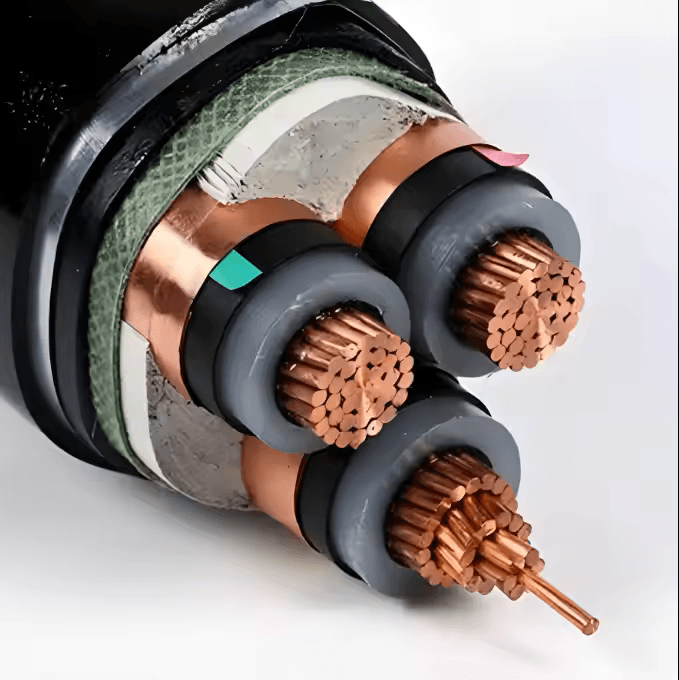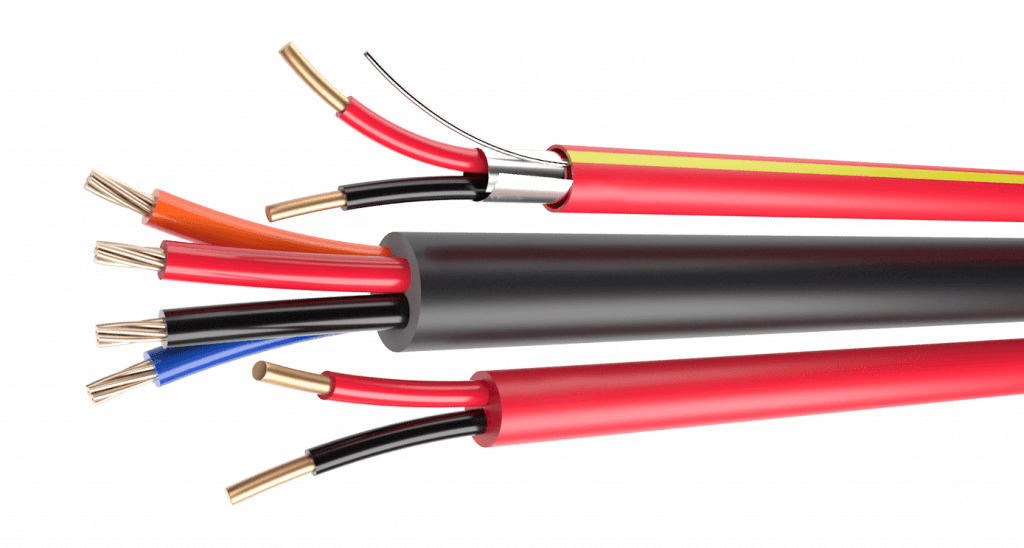

Power cable UV resistance matters where sunlight reaches the outer sheath for months and years, not only during installation. The buyer should review the actual sheath formulation evidence together with solar exposure, surface temperature, water, support contact and expected service life.
The words outdoor rated are too broad for a final decision. Power cable UV resistance should be tied to the ordered construction and route; shading, conduit or covers may still be useful where heat or mechanical weathering creates a tougher boundary.
This guide combines buyer prompts about sunlight-resistant sheaths, black and colored jackets, rooftops, solar farms, reflected heat, outdoor trays, supports, accelerated weathering evidence, inspections and route changes.
How much sunlight does the cable really see?
A useful outdoor UV exposure review starts with a defined buyer, production outcome and project boundary. The following distinctions prevent a general factory inquiry from becoming an unqualified product request.
Direct all day?
Open roofs and solar fields create sustained exposure and high surface temperature.
Reflected from metal or white roofing?
Reflected radiation can affect shaded-looking sections.
Only near equipment entries?
Short exposed transitions still need a defined construction or cover.
Will supports trap water or dirt?
Weathering includes contact points, drainage and movement, not sunlight alone.
The decision is strongest when each answer is supported by project-specific evidence for the outdoor power cable route.
Outdoor-cable claims that need a closer look
These shortcuts can hide a material or component assumption inside the outdoor UV exposure review quotation.
Misconception: Black sheath always proves UV resistance
What to use instead: Color alone does not state formulation or test evidence. Better evidence: Review the ordered construction.
Misconception: A test report predicts exact service life
What to use instead: Accelerated exposure supports comparison but not a universal calendar. Better evidence: Keep route inspections.
Misconception: Shade removes the outdoor requirement
What to use instead: Heat, water and reflected light may remain. Better evidence: Survey the boundary.
Misconception: No cracks means no concern
What to use instead: Fading, chalking, stiffness and support wear can be earlier clues. Better evidence: Use a baseline.
Power cable UV resistance should be supported by construction-specific evidence and field observation.
Exposure case: a shaded rooftop feeder still changes surface condition
Situation: A cable route sits under a canopy but runs above a bright metal roof near hot process exhaust.
Finding: Reflected radiation and local surface temperature were not included in the original outdoor description.
Decision: The team maps the actual exposure, checks the sheath evidence and improves support and shielding at the hot zone.
Expected result: Power cable UV resistance is assessed against the real rooftop rather than the word shaded on an early drawing.
Compare three outdoor protection approaches
This comparison does not select a cable by industry label. It shows how three outdoor power cable route project configurations change the evidence a supplier must review.
| Project configuration | Defining features | Main advantage | Best fit | Relative cost level |
|---|---|---|---|---|
| Exposed UV-resistant sheath | Cable construction provides the primary barrier | Simple access | Open tray routes | Medium |
| Shaded or covered route | Physical cover reduces direct exposure | Additional protection | Rooftops and facades | Medium-high |
| Enclosed conduit | Cable is shielded inside a route system | Strong physical separation | Short transitions or harsh zones | High |
Power cable UV resistance and route protection should be compared as a system, including heat and maintenance access.
Outdoor Exposure Decision Table
Use this specification table to compare each outdoor UV exposure review on the same approved project basis. Values are inputs to confirm, not assumptions for the supplier to invent.
| Specification item | Project input | Evidence to retain |
|---|---|---|
| Electrical system | Approved cable duty, operating temperature, service life and project weathering requirements | Approved single-line diagram and load schedule |
| Conductor and size | Buyer-defined material, cross-section and circuit duty | Cable schedule and engineering approval |
| Insulation and sheath | Direct and reflected sunlight, ambient, surface heat, water, wind, pollutants and shading | Route map and environmental boundary |
| Mechanical protection | Supports, covers, bend points and entries avoid abrasion, water traps and movement damage | Installation method and risk review |
| Fire performance | Project-required performance and test reference | Approved specification and test documents |
| Identification | Circuit, cable construction, UV evidence, route zone, support, inspection and revision | Drum list, cable register and final revision |
A compliant schedule makes technical and commercial differences visible before the outdoor power cable route cable order is released.
Read the outdoor route as a series of weather zones
A practical outdoor UV exposure review review begins with exposure survey, construction review, route protection decision, installation, baseline inspection, periodic checks and change control. The cable list should follow the same permanent area and machine names used by production and maintenance teams.
Route photographs should be taken at comparable locations and conditions so later inspections can distinguish normal appearance from progressive damage. This connects conductor, insulation, sheath, protection and route decisions with the consequence of a stopped process rather than a catalog description.
Covers and conduits need their own temperature, drainage, fire and access review before they are treated as automatic protection. The final record should show which shared services can interrupt several stages and which circuits control release of the finished product.
Outdoor-route evidence scorecard
Use this scorecard to test the quality evidence behind a outdoor UV exposure review. Certification names alone do not replace project-specific inspection and traceability.
| Criterion | Question | Evidence to request |
|---|---|---|
| Construction | Does UV evidence match the ordered sheath? | Datasheet and test reference |
| Exposure | Are direct, reflected and hot zones mapped? | Route survey |
| Installation | Do supports and entries avoid local damage? | Inspection record |
| Maintenance | Is there a repeatable condition baseline? | Trend file |
Power cable UV resistance is managed when product evidence and route inspections remain connected throughout service.
Commercial gaps in an outdoor cable offer
The quoted price for a outdoor UV exposure review is meaningful only when route, quantity, testing, delivery and exclusions use the same basis.
Red flag: Outdoor is the only requirement
Why it matters: Evidence and exposure remain vague Better requirement: Name the UV basis.
Red flag: Covers are excluded
Why it matters: Route protection may be incomplete Better requirement: Assign scope.
Red flag: Support materials are unspecified
Why it matters: Local wear and heat can differ Better requirement: Detail interfaces.
Red flag: Inspection ends at installation
Why it matters: Ageing has no baseline Better requirement: Plan maintenance.
Red flag: Color changes are unrestricted
Why it matters: Sheath formulation evidence may change Better requirement: Control substitution.
A comparable power cable UV resistance offer states the sheath evidence, exposed zones and any physical protection included.
Outdoor cable checks across the asset life
Capacity for a outdoor UV exposure review should be checked against approved data, production windows and staged deliveries.
Stage 1: Design
Map exposure and choose construction or route protection.
Stage 2: Delivery
Protect drums and verify sheath identity.
Stage 3: Installation
Inspect supports, covers, entries and surface damage.
Stage 4: Early service
Capture a clean baseline under normal operation.
Stage 5: Periodic review
Trend fading, chalking, cracking, stiffness and wear.
Power cable UV resistance decisions improve when maintenance knows what the cable looked like before ageing began.
Outdoor cable fields worth keeping
OEM and project customization should make the outdoor UV exposure review easier to approve, receive, install and maintain.
Sheath identity
Record material, color, construction and test reference.
Exposure map
Name direct, reflected, shaded and enclosed route zones.
Installation details
Retain supports, covers, entries and drainage.
Condition history
Use repeatable photos and inspection criteria.
Information to include in a power cable RFQ
Suppliers can compare the same basis when the RFQ includes the following project inputs.
- System voltage and frequency
- Load or cable schedule
- Motor ratings and starting method
- Route length and installation method
- Actual wet, dusty, hot, outdoor or mechanical conditions
- Required conductor, insulation, sheath and armor details
- Destination, delivery stages and required records
- cable duty, service life and sheath construction
- direct and reflected sunlight exposure zones
- ambient, surface heat, water and pollutants
- supports, covers, conduit, entries and drainage
- UV evidence, installation baseline and inspection records
For outdoor power cable route projects, references such as IEC 60502, IEC 60228 and IEC 60332 can help both sides use consistent terminology. They do not replace the approved specification or the buyer's responsibility to confirm the design.
How JINCHUAN Cable supports outdoor power cable route decisions
For industrial buyers, EPC engineers, utilities, contractors, commissioning teams and cable distributors evaluating the power cable UV resistance, JINCHUAN Cable can review buyer-approved schedules, sheath construction, UV-related test evidence, dimensions and technical clarifications, quantities, identification and document requirements for the outdoor power cable route.
The response can state assumptions, evidence and exclusions while final system design, protection, compliance approval and installation remain with qualified project teams responsible for the outdoor power cable route.
Buyers can review JINCHUAN Cable products and learn more about the JINCHUAN Cable company. Share the project purpose, critical loads, route conditions, quantities, destination and expected records to create a stronger basis for technical and commercial comparison.
Send the approved schedule and outdoor exposure, sheath and inspection requirements to request a quotation with a traceable evidence package.
FAQ
What should buyers expect from a power cable UV resistance?
Buyers should expect the proposal to connect cable construction with sheath material, pigment and formulation evidence, solar exposure, ambient, surface temperature, moisture, supports, movement and inspection, not merely repeat conductor sizes from a schedule.
Which part of the outdoor power cable route should be mapped first?
Start with exposure survey, construction review, route protection decision, installation, baseline inspection, periodic checks and change control. This shows which supporting loads can interrupt more than one production stage.
How should quotations for the outdoor power cable route be compared?
Compare the stated route assumptions, operating duty, included records, delivery grouping and exclusions beside price. That exposes scope differences before approval.
Which route conditions matter in a outdoor power cable route?
The inquiry should distinguish rooftops, solar plants, outdoor trays, substations, facades and exposed risers where cable surfaces receive direct or reflected sunlight. Broad labels such as indoor or industrial are rarely precise enough for a useful review.
What hidden risk deserves attention in this project?
A common hidden risk is accepting the phrase outdoor cable without defining UV evidence, exposure duration, heat, support contact, water or mechanical weathering. Its production consequence may be greater than the connected load suggests.
Should future changes be discussed before ordering?
Yes. removed shading, hotter equipment, new roof surfaces, support corrosion, cable movement, cleaning chemicals and longer service life can affect route capacity, circuit names, distribution space and the value of today's approval records.
Which records help after installation?
Useful records include route photos, exposure zones, sheath datasheet, test reference, support detail, installation inspection, baseline condition and maintenance trend. They help receiving, installation and maintenance teams connect each cable with its purpose.
Which technical references may support the discussion?
IEC 60502, IEC 60228 and IEC 60332 may provide common terminology, while the approved project specification remains the final design basis.
What should be sent with the first RFQ?
Send the cable or load schedule plus project details such as cable duty, service life and sheath construction, direct and reflected sunlight exposure zones, ambient, surface heat, water and pollutants, supports, covers, conduit, entries and drainage, UV evidence, installation baseline and inspection records. Clear inputs allow suppliers to identify assumptions instead of guessing.
How can JINCHUAN Cable support the outdoor power cable route?
JINCHUAN Cable can review the schedule, routes, operating conditions, quantities and required records against the result the buyer needs to protect: an outdoor cable route whose sheath, supports, shading and maintenance plan match the actual sunlight, heat and weather exposure.