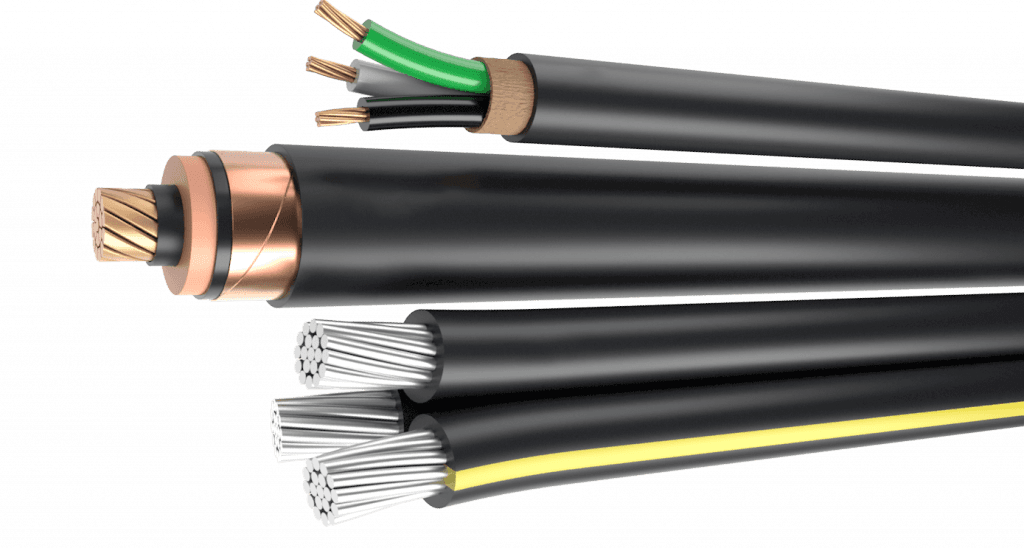
Two cables can be described as 4 by 240 square millimetres and still arrive on drums of noticeably different size.
Compaction presses the strands into a tighter geometry, so the same copper occupies a smaller circle. The current rating barely moves, while diameter, mass and the space the cable needs all change.
That makes compaction a route decision as much as a conductor decision, because the benefit appears in ducts, trays and lifting plans rather than on the resistance test.
What Compaction Changes
The electrical duty stays close, and the geometry moves.
| Property | Standard stranded | Compacted |
|---|---|---|
| Cross-sectional area | Nominal | Nominal, same |
| Conductor diameter | Reference | Smaller |
| Total cable diameter | Reference | Smaller |
| Mass per km | Reference | Lower |
| Current rating | Reference | Practically unchanged |
The gain is geometric, so the specification has to name the geometry if it matters.
A compacted conductor carries the same current as a stranded one of equal size, while occupying a smaller circle.
Why Projects Ask for Compaction
Four practical reasons appear repeatedly.
Existing ducts
Where the duct bank cannot be enlarged, a smaller cable diameter is often the only way to add a circuit without new civil work.
Drum length
A smaller diameter packs more metres onto a drum, which can reduce the number of joints on a long route.
Weight limits
Lower mass per km keeps a drum inside crane, truck and floor loading limits on constrained sites.
Tray space
On crowded trays, a smaller diameter leaves more room for spacing and airflow between circuits.
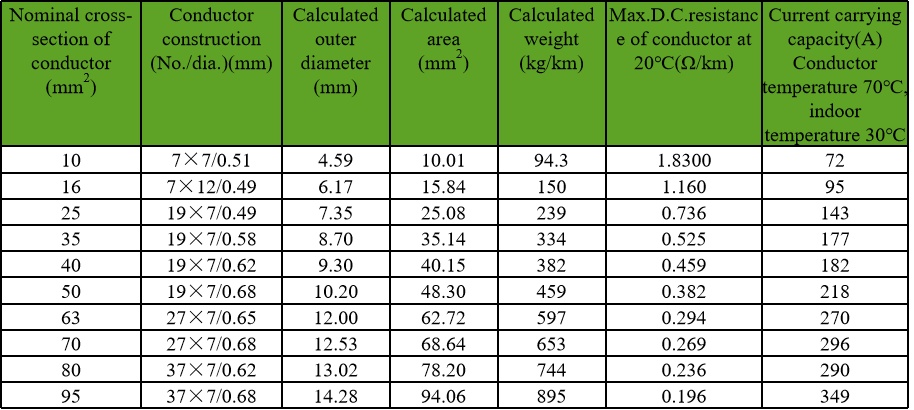
Compacted stranded conductor geometry reduces overall cable diameter, which changes duct fill and drum length together.
What Happens Inside the Conductor
Stranding leaves gaps between the wires. Compaction presses the assembly so those gaps close, and the outer wires deform slightly to fill the spaces between the inner ones.
The conductor keeps the same nominal area and the same strand count, while the measured diameter and the void volume fall.
Because the surface of the conductor is smoother and the gaps are smaller, the screen and insulation are extruded over a more regular base, which is one reason screened compacted constructions are common.
Cable weight per km falls when the diameter shrinks, so handling, cleat spacing and transport limits all move with the choice.
Where Compaction Changes the Installation
Four details move once the diameter changes.
- Duct fill and pulling tension, because a smaller cable has more clearance in the same duct.
- Cleat and support spacing, which follows the mass of the finished cable rather than the conductor size.
- Drum length and the number of joints on a long route.
- Lug and joint fit, because the conductor that enters the connector is slightly smaller in diameter.
None of these appear on a resistance reading, and all of them affect the site programme.
Duct fill is often the reason a compacted conductor is chosen, particularly where an existing duct bank cannot be enlarged.
Where the Figure Comes From
These are the values that show whether compaction was actually applied.
| Value | What it shows | Where it appears |
|---|---|---|
| Conductor diameter | Whether the geometry was compacted | Datasheet and drawing |
| Cable diameter | Duct fill and tray space | Datasheet |
| Mass per km | Handling and transport limits | Datasheet |
| Drum length | Joint count on the route | Delivery plan |
If only the cross-section is quoted, the buyer cannot tell which geometry was built.
Ask for the conductor diameter and mass per km beside the cross-section, since those two figures show whether compaction was applied.
Case: One Duct, One More Circuit
Situation: An operating plant needed an additional feeder between two buildings. The existing duct bank had spare capacity in the drawing but little clearance in practice, and civil work was ruled out during the shutdown window.
Finding: The original construction would not pass through two bends in the existing duct. A compacted conductor of the same nominal size reduced the cable diameter enough to clear them.
Decision: The construction was changed to a compacted conductor, the pulling tension was recalculated, and the lug type was rechecked against the smaller conductor diameter.
Result: The cable was pulled without civil work, and the recorded tension stayed inside the limit, which kept the shutdown to the planned duration.
What Compaction Does Not Buy
Compaction does not increase the current rating of a given cross-section, so it cannot be used to justify a smaller conductor than the load requires.
It does not make a cable more flexible in the way a finer strand class does, because the strand count is unchanged.
It also does not remove the need for correct bedding, screen and sheath, which still decide whether the cable survives its route.
Questions for the Supplier
These answers confirm that the quoted cable matches the requirement.
| Question | Why it is asked | Typical answer |
|---|---|---|
| Is the conductor compacted? | Confirms the geometry | Yes, compacted to the nominal area |
| What is the conductor diameter? | Used for lug and joint checks | A measured figure with tolerance |
| What is the mass per km? | Used for handling and drum limits | A figure per construction |
| Which strand class applies? | Sets flexibility and termination | A named class |
Four answers remove the guesswork from a decision that is usually taken for site reasons.
Where Compaction Is the Poorer Choice
Compaction is not a default improvement.
- Where maximum flexibility is needed for repeated handling, since strand class matters more than diameter there.
- Where a standard construction is already available and the duct has ample clearance.
- Where the project is priced on a catalogue size and a non-standard geometry delays the drum.
- Where the buyer needs a conductor diameter that existing lugs and joints are already stocked to fit.
Compaction earns its place when the route or the handling limit asks for it.
Recording the Choice
The decision is easy to lose between phases.
State it on the schedule
Name the conductor geometry beside the size, so a later phase does not revert to a standard stranded construction.
Check the accessories
Confirm that lugs, joints and glands suit the conductor and cable diameter that were actually ordered.
Confirm drum length
Recheck the delivery plan, because a longer drum changes lifting and storage arrangements.
Keep the tension record
A recorded pull figure shows whether the smaller diameter delivered the clearance that was expected.
RFQ Inputs for Conductor Geometry
These details let the factory quote the geometry rather than a generic size.
- the nominal cross-section and the required strand class
- whether a compacted conductor is required or optional
- the conductor diameter and the overall cable diameter expected
- the duct or tray the cable has to pass through, with bends and fill
- the expected mass per km and the drum length required
- the lug, joint and gland types already approved
- the insulation, screen and sheath for the same construction
- the destination and the handling equipment available at site
Technical references such as IEC 60502, IEC 60228 and IEC 60332 can align cable construction and test terminology. The approved project specification, applicable local rules and qualified design authority still govern the final system decision.
JINCHUAN Cable Support for conductor construction choice for ducted and heavy routes
JINCHUAN Cable can quote compacted and standard conductor constructions and supplies the conductor diameter, cable diameter and mass per km that route planning depends on.
Review the conductor options and the manufacturing profile, then send the duct or handling constraint with the enquiry.
State the constraint that forced the choice, and the conductor geometry stops being an assumption on the datasheet.
FAQ
Does a compacted conductor carry more current?
No. For the same nominal cross-section the current rating is practically unchanged, and the gain appears in diameter, mass and space.
How much smaller is a compacted conductor?
The reduction depends on the size and the strand construction, so the conductor and cable diameters should be quoted rather than estimated.
Is compaction the same as a finer strand class?
No. Compaction changes the geometry of the same strands, while strand class changes how many wires make up the conductor and how flexible it is.
Can a compacted conductor be terminated normally?
Yes, provided the lug or joint suits the actual conductor diameter, which is slightly smaller than a standard stranded conductor of the same size.
Why does compaction help in ducts?
The smaller diameter leaves more clearance in the duct, which reduces fill and pulling tension on the same route.
Does compaction change the drum length?
It can, because more metres fit on a drum of the same size, which may reduce the number of joints on a long route.
Does compaction affect the screen?
The smoother conductor surface supports a more regular screen, which is one reason screened compacted constructions are widely used.
Is compaction suitable for all sizes?
It is applied across a wide range of sizes, although availability and the practical benefit depend on the construction being ordered.
What should be checked at delivery?
Conductor diameter against the datasheet, cable diameter, and the mass per km if it was part of the handling plan.
How can JINCHUAN Cable support the choice?
JINCHUAN Cable can compare compacted and standard constructions for the route and supply the dimensions and mass figures that planning needs.