
A buried feeder that fails after two years is often blamed on the cable. Just as often, the covering has been opened by something with teeth.
Rodent and termite protection is the part of the specification that covers that risk, and it is decided by the ground the cable crosses as much as by the cable itself.
The awkward part is that the damage is rarely visible, so the failure arrives looking like a fault rather than a bite.
What Actually Damages a Buried Cable
Damage from animals is mechanical, and it shows up in a few recognisable ways.
- Rodents gnaw through outer coverings, and the marks are usually visible on the inner layers once the cable is opened.
- Termites remove material from certain coverings and can open a path for moisture, which starts a much longer process.
- Birds and climbing animals damage riser and aerial sections where the covering sits above ground.
- Burrowing animals disturb bedding and backfill, which leaves a cable unsupported and sometimes exposed.
Rodent and termite protection addresses the first two directly and the second two through the route design.
Rodent and termite protection has to be continuous along the route, because a short unprotected section is enough to start the problem.
How Rodents Get In
A rodent does not need a hole. It needs a surface it can grip and a reason to keep working at it, and a cable in a duct or against a wall gives it both.
Once the outer layer is breached, the damage rarely stops there. Water follows the opening, the armour or the screen begins to corrode, and the fault appears much later than the bite.
That delay is what makes the problem expensive. A nibbled covering on a feeder that is not yet in service is a repair, while the same damage after two winters is a failure with an outage attached.
Anti rodent cable measures are mechanical, so the armour or the outer covering has to be hard enough to resist gnawing rather than merely thick.
Protection Options and What They Stop
Four options appear in specifications, and none of them covers everything.
| Option | Resists | Limits |
|---|---|---|
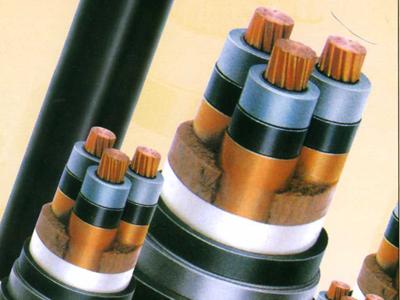
| Steel tape or wire armour | Gnawing and impact | Needs correct bedding and glanding |
| Hard outer covering | Gnawing and termite attack | Availability depends on the size ordered |
| Protective duct | Access from the soil | Only where the duct is continuous |
| Careful bedding and backfill | Burrowing and settlement | Does not replace armour |
Rodent and termite protection usually combines two rows rather than relying on one.
Termite resistant cable outer layers are chosen for the species and the climate on the route, which is why local practice is worth checking first.
Choosing for the Ground
Four facts about the route decide which combination is worth paying for.
Which species are present
Local practice and utility experience describe this far better than a general assumption about the region.
What the ground is like
Soft soil, farmland and made ground each bring a different risk, and all of them are easier to burrow through than compacted subsoil.
Where the cable is exposed
A duct entrance, a riser and a joint bay are the places where protection stops being continuous.
How long the route has to last
A feeder expected to serve for decades justifies more protection than a temporary supply.
Buried cable protection begins with the bedding and the duct, and a duct that stops at a joint bay leaves the weakest point exposed.
Why Termites Are a Different Problem
Termites do not gnaw for access. They remove material, and some coverings are more attractive to them than others, which is why the choice of material matters as much as the thickness.
Moisture makes the situation worse twice over. It attracts activity, and it turns a small breach into a longer term problem inside the cable.
Where termites are known to be active, the local specification usually names a construction. Following it is more reliable than selecting a covering on the basis of how it sounds.
Cable armour protection is only as good as its coverage, so the enquiry should say where the cable is exposed and for how long.
Case: Two Seasons in Soft Soil
Situation: A farm installation ran a feeder through soft ground beside a storage building, direct buried for most of its length with a duct only under the access road.
Finding: After two seasons the feeder tripped. Excavation showed gnawing damage on two sections and moisture inside the armour, while the ducted section under the road was untouched.
Decision: The replacement ran in a continuous duct through the risk area, with a harder outer covering specified for the exposed lengths and the joint bay rebuilt above the water table.
Result: The route has run since without a repeat, and bare sections are no longer used on that site for any feeder that has to stay in service.
What the Route Tells You
Four route features point at four responses.
| Route feature | Risk | Usual response |
|---|---|---|
| Farmland and soft soil | Burrowing and gnawing | Continuous duct or armour |
| Warm humid ground | Termite activity | Termite resistant covering |
| Road and yard crossings | Impact and excavation | Duct and deeper bedding |
| Joint bays | Interrupted protection | Sealed bays above water level |
Each feature points at one response, and most routes contain more than one.
Where Protection Gets Undone
The protection is usually defeated at the same few points.
- A duct that stops short of a joint bay, leaving the last few metres bare.
- A repair that restores the conductor and leaves the outer covering thinner than the original.
- Bedding that is finer or coarser than the drawing, so the cable settles or is abraded.
- An exposed riser where nothing protects the covering above ground.
Rodent and termite protection is only continuous if every one of those points is covered.
What to Send With the Enquiry
Four answers change the construction that gets quoted.
The species and the local practice
What the local utility or the operator requires is the most useful starting point.
The ground along the route
Soil type, water table, and any landfill or made ground on the alignment.
Where the cable is exposed
Duct entrances, risers, crossings and joint bays, with the exposed length at each.
The service life expected
How long the feeder is expected to run before it is replaced.
Paying for Protection Once
Mechanical protection is one of the few items on a cable order that is cheaper to add before delivery than afterwards, because adding it later means excavation, a joint and an outage.
The comparison is not between two figures on a quotation. It is between a construction that survives the ground it sits in and a repair programme nobody budgeted for.
Where the risk is real, put rodent and termite protection in the specification with the route facts beside it, and let the construction be selected against both.
RFQ Inputs for Protected Routes
These details let the construction match the ground and the local practice.
- the species known to be active along the route
- any local utility or operator requirement for the construction
- the soil type, water table and any made ground
- the sections that run in duct and the sections that are direct buried
- the exposed lengths at duct entrances, risers and joint bays
- the armour and outer covering expected for the route
- the bedding and backfill specified
- the service life expected of the installation
Technical references such as IEC 60502, IEC 60228 and IEC 60332 can align cable construction and test terminology. The approved project specification, applicable local rules and qualified design authority still govern the final system decision.
JINCHUAN Cable Support for buried route protection for cables in soft or termite active ground
JINCHUAN Cable supplies constructions with armour and outer covering options that can be matched to the ground, so rodent and termite protection can be specified rather than assumed.
Review the cable range and the manufacturing profile, then send the route facts so the construction can be selected against them.
Send the route facts with the enquiry, and rodent and termite protection stops being an assumption.
FAQ
How common is animal damage to buried cable?
It is common enough that many utilities specify rodent and termite protection as standard in certain ground. Local experience on the route is the best guide.
Does steel armour stop rodents?
Steel tape or wire armour resists gnawing and impact, and it is normally combined with correct bedding and a duct in the highest risk sections.
What makes a covering termite resistant?
The material and the overall construction. Some coverings are attacked more readily than others, which is why local practice usually names a construction.
Is a duct enough on its own?
Only where it is continuous. A duct that stops at a joint bay leaves the last few metres exposed.
Why does damage appear long after it happens?
A breach lets water in, and corrosion or moisture ingress then takes months or years to produce a fault.
Does bedding matter?
Yes. Bedding and backfill decide whether the cable settles, is abraded, or is left unsupported.
Can protection be added after installation?
Only by excavation, which usually means a joint and an outage, so it is far cheaper to specify at the start.
Do riser and aerial sections need the same protection?
They face different animals, mainly birds and climbing ones, so the arrangement at the supports and the covering is different.
Where is the weakest point on a protected route?
Usually a joint bay, a riser or a duct entrance, because that is where continuous protection is interrupted.
How can JINCHUAN Cable support a protected route?
JINCHUAN Cable can supply armour and outer covering options for the ground conditions and confirm what the construction includes.