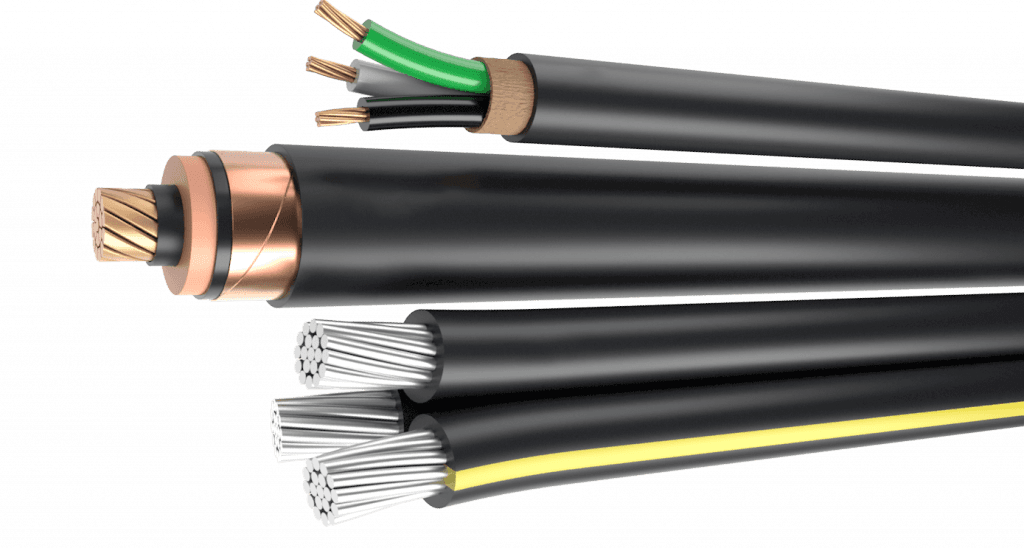
The question rarely starts as a technical one. It starts with a corridor that cannot be secured, a building that cannot be crossed, or a fault that has to be found quickly.
An overhead line route needs continuous clearances and a corridor that stays usable. Bury the cable instead and the demands move underground: a trench or duct, ground that can be put back afterwards, and some way of reaching the cable again after a fault.
The two options do the same electrical job. Everything that separates them sits outside the conductor, which is why an overhead or underground cable decision is rarely settled by the cable itself.
What Each Option Demands
The two routes place their demands in different places.
- An overhead line route needs clearances along its whole length, plus structures and foundations at intervals.
- An underground cable route needs a continuous trench or duct, joints at planned positions and a restored surface.
- The overhead route is inspected from the ground and repaired at height, while the underground route is inspected at joints and repaired by excavation.
- Land access is temporary for construction and permanent for maintenance, and the two are often negotiated separately.
Naming the demand that cannot be met usually decides the route before costs are compared.
Choosing between an overhead or underground cable route is usually settled by land access, terrain and how fast a fault has to be repaired.
Terrain and Corridor
Straight open ground is where an overhead line route earns its keep. Structures can go wherever the ground takes them, and a surveyor can walk the corridor in a morning.
Put buildings, tall trees, a river or a steep slope in the way and the argument flips. Each one makes an overhead corridor harder to hold and harder to keep clear.
Where the corridor crosses land under different ownership, the underground cable route may still need fewer agreements, even though the construction itself is more intensive.
An overhead line route needs a continuous corridor, while an underground cable route needs a trench or duct that others can reach again later.
Case: A Crossing That Changed the Answer
Situation: A plant extension needed a feeder across a public road and a strip of leased land. The initial plan followed the shortest alignment as an overhead line route.
Finding: The alignment needed three structures inside the leased strip, and the landowner would only agree to a temporary construction easement. A permanent overhead corridor was refused.
Decision: The route was changed to an underground cable route in ducts under the road, with joint bays placed on plant-owned ground at both ends.
Result: The change cost the project time and money up front. What it bought back was permanence: no easement to renew, and joint bays a crew could open years later without asking anyone for permission.
How a fault gets repaired is where the two routes separate most, and that gap tends to matter more than the difference in first cost.
Side by Side on What Decides It
These are the comparisons that usually carry weight in a route study.
| Factor | Overhead line route | Underground cable route |
|---|---|---|
| Corridor | Continuous clearance needed | Trench or duct along the alignment |
| Visual impact | Structures visible for the route length | Visible mainly at joints and chambers |
| Fault location | Often visible from the ground | Requires testing and excavation |
| Repair time | Usually shorter from the ground | Longer, because access has to be reopened |
| Surface reinstatement | Limited | Part of the scope |
The repair column is often what moves a project away from initial estimates.
Where an overhead line route crosses built-up ground, the underground cable route often becomes the workable answer rather than the cheap one.
Questions That Decide a Route
Four questions settle most route studies.
Can the corridor be held permanently?
A route that cannot keep its clearance along the full length is not an overhead line route in practice, however short the alignment.
How fast must a fault be repaired?
Where supply interruption is expensive, the fault location and repair method become a primary selection factor.
What is under the alignment?
Existing services, foundations and future construction all constrain a trench more than they constrain a structure line.
Who maintains the surface?
Reinstating roads, yards and landscaping belongs in the scope, and it is easy to leave out of an early estimate.
Send the route survey and the expected repair philosophy with the enquiry, because both shape the construction that follows.
Cost Structure Rather Than Cost
Money leaves a project at different points on each route. On an overhead line route it goes into structures, foundations and the conductors strung between them; go underground and it moves into excavation, ducts, joints and putting the surface back.
That matters at estimate stage, because the largest number moves with route length in one case and barely notices it in the other.
A comparison built on cable price alone leaves out the civil work on one side and the structures on the other.
Where a Mixed Route Helps
Many projects use both, which is why an overhead or underground cable decision often ends as a mixed route.
| Section | Typical choice | Design point |
|---|---|---|
| Open ground | Overhead line route | Structure spacing and clearance |
| Road or rail crossing | Underground cable route | Duct depth and protection |
| Built-up area | Underground cable route | Joint bay access and reinstatement |
| Transition | Termination structure | Cable sealing and support at the change |
The transition is where the two systems meet, so it deserves its own detail rather than a note.
What the Underground Side Has to Prove
Once the cable goes below ground, a set of requirements follows it.
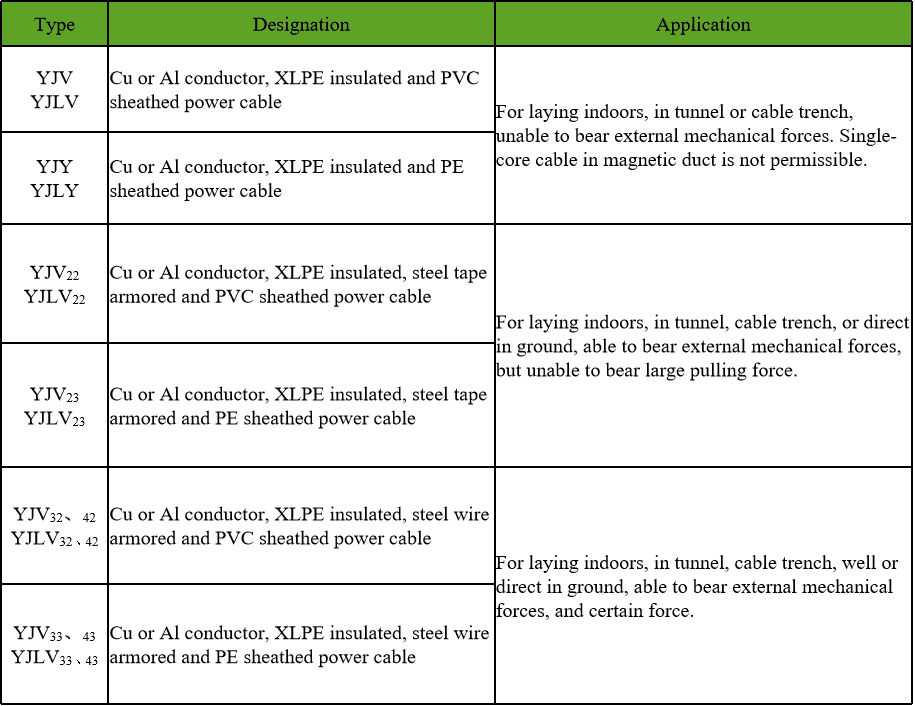
- The duct or trench has to be built so a replacement cable can pass along it later.
- Joint positions have to be reachable without disrupting operations above them.
- The cable construction has to match the soil, the water table and the expected mechanical loads.
- The surface restoration standard has to be agreed with whoever owns the ground.
Each of these is cheaper to design at the route stage than to discover during construction.
Information the Route Study Needs
These inputs decide whether either option can actually be built.
| Input | Why it is needed | Owner |
|---|---|---|
| Alignment survey | Confirms clearances or trench feasibility | Design |
| Service records | Shows what the trench has to cross | Utility owner |
| Land agreements | Confirms permanent access | Project team |
| Fault response target | Sets the inspection and repair approach | Operations |
A route study that skips any of these returns a recommendation that cannot be built.
What to Put in the Enquiry
Once the route is fixed it reaches back into the cable specification. Buried or overhead, duct or direct, joints at planned bays or wherever the drum happens to end: each answer changes what gets manufactured.
Get them into the enquiry and the quotation is built on them. Leave them out and they come back later as a variation.
A supplier who receives the route conditions can confirm the construction against them instead of quoting a generic cable for an unstated alignment.
RFQ Inputs for Route Selection
These details let the construction follow an overhead or underground cable decision.
- the alignment and the sections where the route changes type
- whether the cable section runs in duct, direct buried or on a structure
- the soil, water table and expected mechanical loading on the buried section
- the joint positions and how they will be reached for maintenance
- the voltage class and the expected fault duty
- the drum length and the access available along the alignment
- the reinstatement standard expected for roads, yards or landscaping
- the delivery programme and the sequence of civil work
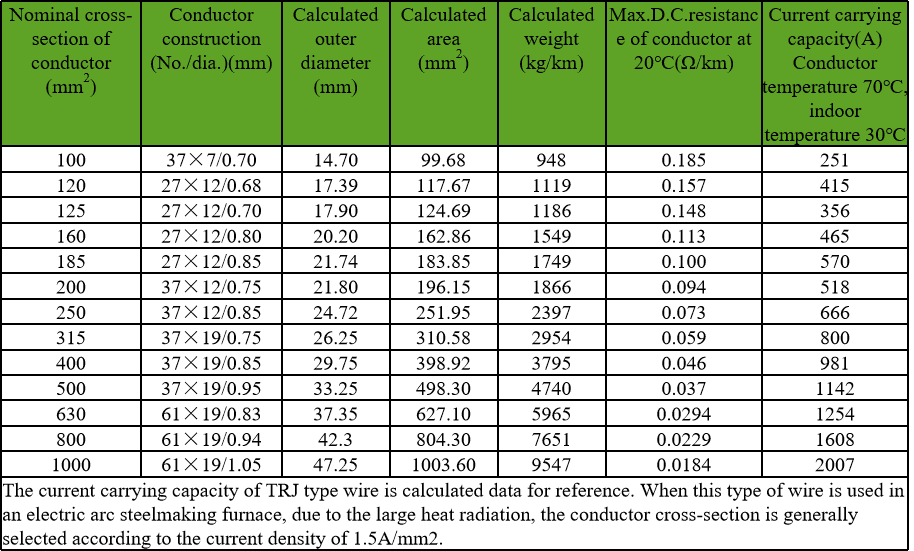
Technical references such as IEC 60502, IEC 60228 and IEC 60332 can align cable construction and test terminology. The approved project specification, applicable local rules and qualified design authority still govern the final system decision.
JINCHUAN Cable Support for route selection between overhead lines and underground cable
JINCHUAN Cable supplies the buried side of an overhead or underground cable decision, for ducted, direct buried and mixed routes, and confirms the construction against the alignment conditions.
Review the cable range and the manufacturing profile, then send the route survey so the buried sections can be specified properly.
Settle the corridor question first, and the comparison between the two routes becomes a design discussion rather than a cost argument.
FAQ
What decides between an overhead or underground cable route?
For an overhead or underground cable decision, land access, terrain, clearance along the corridor and the repair philosophy usually decide, with cost following those constraints.
Which option costs less to build?
It depends on the dominant work package, because one route concentrates cost in structures and foundations while the other concentrates it in civil work, cable and joints.
Which is faster to repair after a fault?
An overhead line route is often repaired sooner because the fault can be seen from the ground, while an underground cable route may need testing and excavation.
Can the two be mixed?
Yes, and many projects do. The design effort then moves to the transition points, where the cable has to be sealed and supported as it changes from one system to the other.
What affects the buried section most?
Soil, water table, mechanical loading and the ability to reach joints later, along with the standard applied to surface reinstatement.
Does the route affect the cable construction?
Yes. An overhead or underground cable decision changes burial, ducting, mechanical protection and the number of joints, which in turn shape the construction and the accessories ordered with it.
Why is the corridor such a big factor?
Because clearance has to hold for the whole run, not most of it. One short stretch that cannot hold it drags the entire route onto the other option.
Is visual impact a technical factor?
It is a planning and land-use factor, and it often decides whether a corridor can be secured at all.
What information should go to the cable supplier?
The alignment, the buried and ducted sections, the soil and water conditions, the joint positions and the expected fault duty.
How can JINCHUAN Cable support a route decision?
JINCHUAN Cable can confirm the cable construction against the buried and ducted sections once the alignment is known.