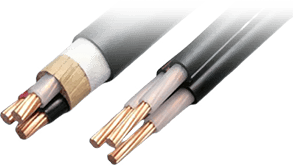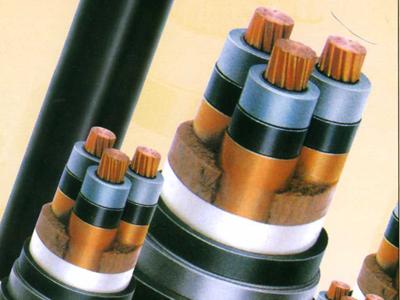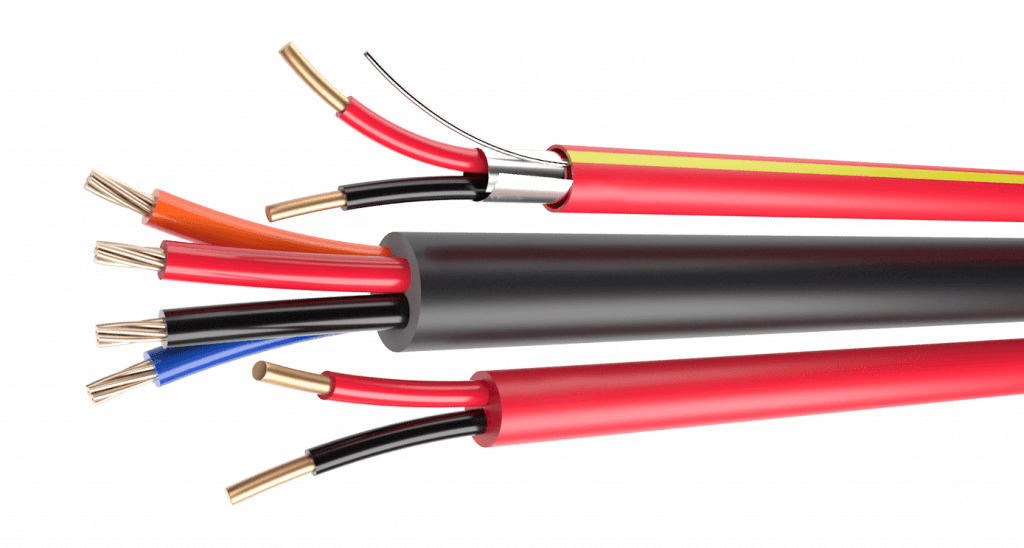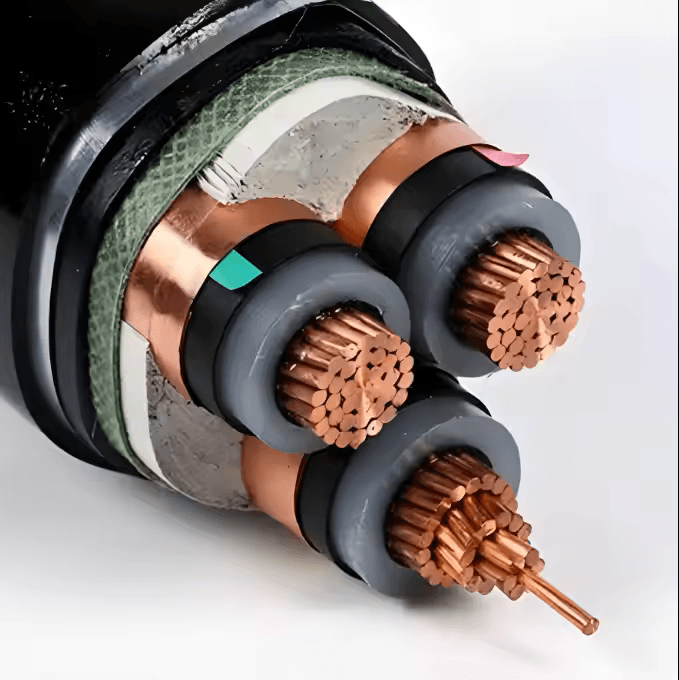

A pinhole in an outer jacket is a small defect that turns into a large failure once the cable is buried and energised.
The jacket is the last barrier between the environment and everything built inside the cable. A single hole lets moisture reach the armor or the screen, and the damage spreads from there.
A cable jacket spark test exists to find that hole during manufacture, while the drum is still in the factory and a repair costs a few metres instead of a trench.
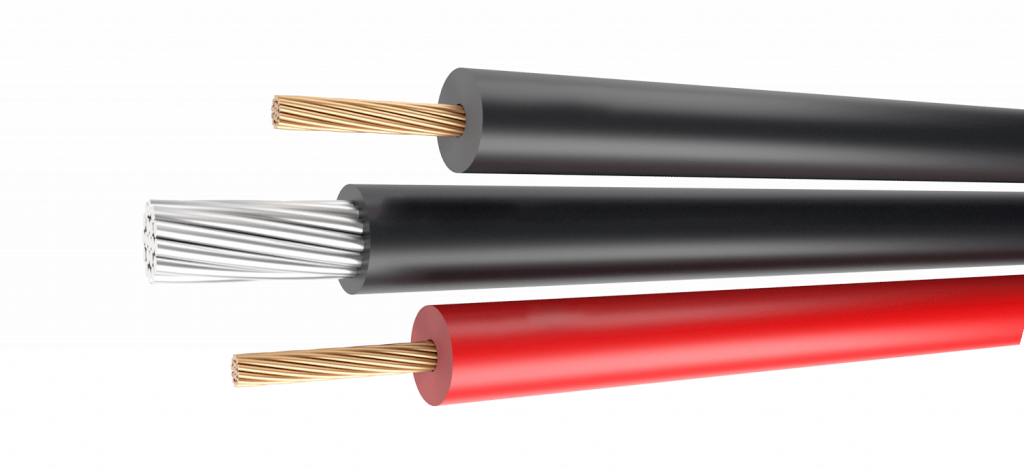
How a Cable Jacket Spark Test Works
The finished cable passes over a bead chain or an electrode ring held at a defined voltage while the jacket itself is grounded. A break in the covering allows a discharge, and that discharge is detected and recorded.
What matters in practice is the voltage relative to jacket thickness. Too low and small holes pass undetected; too high and the test itself can damage a sound jacket.
A cable jacket spark test runs as routine production rather than as a type test, which is why it can be applied to every metre of a drum.
A cable jacket spark test looks for breaks in the outer covering while the drum is still in the factory, where a repair costs metres rather than a trench.
What a Buyer Should Ask About the Test
Four questions turn a claim into evidence.
Which voltage
The electrode voltage should be stated together with the jacket thickness it applies to, because the two are set as a pair.
How much is tested
Ask whether the whole drum length passes the electrode and how the record identifies the length that was tested.
Which method
Bead chain, electrode ring and water tank arrangements differ in sensitivity, so the method belongs in the record.
What happens on a fault
Ask what the factory does when a fault is detected, and whether the affected length is removed and retested.
The test voltage has to match the jacket thickness and compound, since an incorrect setting either misses defects or creates them.
What a Jacket Pinhole Test Is Looking For
Most of these are invisible without a test or close inspection.
| Defect | How it appears | Consequence if missed |
|---|---|---|
| Pinhole | A single small break | Water reaches the screen or armor |
| Thin wall | Local thickness below specification | Reduced mechanical life |
| Scoring | A longitudinal mark | Crack growth in service |
| Embedded particle | A foreign body inside the jacket | A stress point and a corrosion site |
| Longitudinal split | An open gap along the sheath | An immediate moisture path |
Each of these starts small and becomes expensive at a buried joint.
Jacket pinhole testing answers a different question from thickness measurement, and the two records belong together in the delivery file.
Where Jacket Damage Comes From
Factory defects and site damage have different causes and different fixes.
- Extruder conditions during manufacture, which can leave thin spots or trapped particles.
- Handling between the extruder and the drum, where the cable runs over rollers and guides.
- Loading and unloading, where drums rub against each other or against metal edges.
- Installation pulling, where duct entries and rough bends score the jacket along its length.
The first three are caught by production testing, and the last one has to be controlled on site.
A cable sheath integrity test recorded after pulling completes the picture, because the factory test cannot see installation damage.
Case: A Drum That Passed and Then Failed
Situation: A drum left the factory with a cable jacket spark test record showing no faults. The cable was pulled through a ducted route in two sections and then buried.
Finding: Three months later an insulation resistance reading on one section had fallen, and a sheath test located a small break about 40 metres from the joint bay.
Decision: The crew reviewed the pull log, which showed a peak tension well above the planned figure at one bend. The damaged length was cut out and replaced with a joint.
Result: The replacement section passed both the sheath test and the pressure test, and the pull limit at that bend was lowered for the remaining drums.
Ask for the spark test record with the drum, and the jacket history of that drum becomes traceable.
Spark Testing Compared With Other Jacket Checks
Thickness measurement and a cable jacket spark test answer different questions. Thickness shows whether enough material was applied on average, and the spark test shows whether the covering is continuous.
A cable can pass an average thickness reading and still fail a spark test, because a thin spot or an embedded particle creates a local weakness that an average hides.
Insulation resistance and sheath tests performed after installation look for damage that happened later, and they do not replace the production test.
Test Records Worth Keeping
Together these cover the jacket from the extruder to the trench.
| Record | What it proves | When it is needed |
|---|---|---|
| Spark test log | Jacket continuity over the tested length | At delivery and at handover |
| Thickness readings | How much material was applied | During review of the order |
| Routine test report | Electrical performance of the drum | With every delivery |
| Sheath test after pulling | Installation did not damage the covering | Before backfill |
A project that keeps all four can trace any jacket finding to a stage of the work.
Checks After the Cable Is Pulled
The jacket has a second life to live once it leaves the factory.
Inspect the drum ends
Look at the first and last few metres, where handling damage usually appears first.
Walk the exposed route
Check bends, duct entries and any point where the cable crossed a sharp edge or a rough surface.
Test before backfill
A cable sheath integrity test performed while the cable is still accessible turns a hidden defect into a repair.
Record what the pull showed
Tension and sidewall pressure figures explain a later finding when a fault appears months into service.
What Changes the Test Setting
The setting belongs to the construction, so it should be quoted with it.
| Variable | Effect on the setting | Owner |
|---|---|---|
| Jacket thickness | A thinner wall needs a lower voltage | Manufacturer |
| Jacket compound | Different compounds behave differently | Manufacturer |
| Conductor screen | Presence of a semicon layer | Manufacturer |
| Cable diameter | Bead chain contact geometry | Manufacturer |
A setting carried over from another job is not evidence for this one.
Writing the Requirement Into the Order
A short clause prevents most argument later.
- Require the cable jacket spark test on the full drum length rather than on a sample.
- Ask for the voltage and the method in the record that ships with the drum.
- State what happens to a length that fails, including removal and retesting.
- Require the sheath to be tested again after installation and before backfill.
Those four lines cost nothing and give the project a documented jacket history.
RFQ Inputs for Cable Jacket Spark Testing
These details let the factory quote the test the project actually needs.
- the jacket material and its nominal thickness
- the voltage class and conductor size of the same construction
- the test method expected, whether bead chain, electrode ring or another arrangement
- whether the full drum length is to be tested and recorded
- the sheath test planned after installation and the acceptance value
- the drum length and the handling equipment available at site
- the standard the construction is built to
- the records that should travel with the delivery
Technical references such as IEC 60502, IEC 60228 and IEC 60332 can align cable construction and test terminology. The approved project specification, applicable local rules and qualified design authority still govern the final system decision.
JINCHUAN Cable Support for jacket integrity testing during cable manufacture
JINCHUAN Cable runs the cable jacket spark test as part of normal production and can provide the test record with the drum alongside routine test data.
Review the product range and the manufacturing profile, then send the jacket requirement with the enquiry.
Ask for the jacket test record once, and every drum on the project arrives with a verifiable covering.
FAQ
What does a cable jacket spark test detect?
A cable jacket spark test detects breaks in the outer covering, including pinholes, splits and thin spots, by passing the finished cable over a charged electrode.
Is the spark test the same as a thickness check?
No. Jacket thickness verification shows how much material was applied on average, while the spark test shows whether the covering is continuous.
Can the test damage a good jacket?
An excessive voltage can stress the covering, so the setting is matched to the jacket thickness and compound.
How much of the drum is tested?
On a properly run line the full length passes the electrode, and the record should identify the length that was tested.
What happens when a fault is found?
The affected length is normally removed, the cause is investigated, and the cable is tested again before production continues.
Does the factory test cover installation damage?
No. A sheath test after pulling is needed, because duct entries and bends can damage a jacket that was sound at the factory.
Why keep the pull log?
Tension and sidewall pressure figures explain a later fault and show whether the installation stayed within the limits quoted for the cable.
Does the jacket compound change the test setting?
Yes. Different compounds behave differently under the electrode, so the voltage is set for the construction being produced.
Can a damaged jacket be repaired?
Local repair is possible in some cases, although the repaired length must be retested and protected to the same standard as the parent covering.
How can JINCHUAN Cable support jacket testing requirements?
JINCHUAN Cable can confirm the jacket construction, test method and voltage for the cable ordered and supply the record with the drum.