
A trenchless crossing solves a surface problem. The road stays open, the river bank stays intact, the process plant keeps running, and the cable still has to get from one side to the other.
What changes is where the difficulty sits. Instead of excavation, the project inherits a curved underground path whose shape nobody can see, and a pulling operation that fails expensively if the preparation was optimistic.
Horizontal directional drilling is routine work for the contractors who do it and unfamiliar territory for many of the people who specify the cable. The gap between those two positions is where problems are born.
Why a Route Chooses Horizontal Directional Drilling
A crossing is usually chosen for reasons that have nothing to do with cable. A road cannot be closed for a week, a river must not be disturbed, an operating plant cannot stop, or a listed surface cannot be opened.
Once the decision is made, the route stops being a trench and becomes a bore. The duct is installed first, usually in a single pull, and the cable follows later, often weeks afterwards, when the site looks completely different.
That interval is a risk in itself. Between the duct going in and the cable being pulled, the surface is restored, the pits are closed, and the only evidence of the route is a drawing and a set of coordinates.
Whatever is not recorded during the drilling phase tends to be discovered during the cable pull.
Horizontal directional drilling installs a duct without opening the surface along the route, which is why it is chosen under roads, rivers and operating plant.
What Drilling Changes
The comparison is not about which method is better, but about where the risk moves.
| Aspect | Open trench | Directional drilling |
|---|---|---|
| Route shape | Straight runs with defined bends | A long curve that cannot be inspected afterwards |
| Access | The cable is laid and observed | The cable is pulled and monitored indirectly |
| Verification | Visual and measurable as work proceeds | Depends on records and monitoring during the pull |
| Surface impact | Excavation along the whole route | Pits at each end only |
The second column is not worse, and it does demand more preparation before the pull starts.
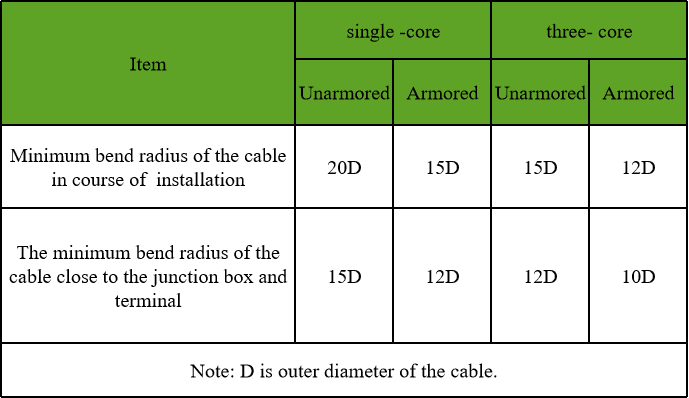
The bend radius of the drilled path is set by the rig and the duct, and the cable inside that duct still has its own minimum bend radius to respect.
What the Crossing Has to Settle
Five items decide whether the drilled route suits the cable being ordered.
The radius the duct will follow
The drilled curve has a radius of its own, and the cable inside it must be able to follow that curve while under tension.
The duct size and type
Inner diameter, wall stiffness and jointing method all affect friction, and friction is what limits the pull.
The entry and exit pits
Their length, approach angle and drainage decide how the cable enters the duct and whether it can be laid out straight first.
The survey along the bore
Depth, position and any deviation matter to future work, and the only cheap moment to capture them is during drilling.
The separation from other services
Crossings that pass close to water mains, gas mains or other ducts are a design problem before they are a construction problem.
An entry pit is where the pull begins, and its size and drainage often decide whether the installation is straightforward or an exercise in improvisation.
Where Ducted Crossings Go Wrong
These are the recurring failures, and most of them are decided before any cable arrives.
- A duct installed with a tighter curve than the cable can negotiate under tension.
- A duct left open and unsealed, so it fills with silt and water before the cable is pulled.
- An entry pit too short to lay the cable out, forcing the pull to start around a corner.
- Lubricant chosen for a straight pull rather than for a long curved one.
- No record of the bore depth, so a later excavation works from an assumption.
Each of these is cheap to avoid at the drilling stage and expensive to discover during the pull.
Pulling tension through a drilled duct is dominated by friction along a long curved path, which is why lubrication and duct condition matter more than they do in a straight trench.
A Crossing That Held and a Pull That Stalled
Situation: A site needed a feeder under a busy access road, and a horizontal directional drilling contract was let for the duct while the cable was ordered separately against the same route length.
Finding: The bore was completed and the duct installed as designed, with a curve at each end. The duct had been left open for several weeks, and by the time the cable was pulled it contained water and grit, which lifted the friction along the curved section well above the estimate.
Decision: The duct was cleaned, the pull was re-planned with a higher lubricant volume and a slower winch speed, and the cable was inspected at both ends before termination.
Result: The pull completed within the cable's tension limit. The lesson was recorded as a duct sealing requirement, applied to every crossing on the same site afterwards.
A duct route that has been installed without a survey record leaves the next project with no way to plan around it, and no way to know where the bends are.
Bend Radius in a Horizontal Directional Drilling Bore
Two different radii apply to a drilled crossing. The first belongs to the bore: the curve the duct follows through the ground. The second belongs to the cable: the tightest curve it may be bent through while being pulled.
The bore radius is normally generous compared with the cable's own limit, but generosity is not the same as margin. Add the sag of a heavy cable in a large duct, and the effective path the cable takes is not always the centreline of the bore.
Where a cable sits against the outside of a curve under tension, the load is concentrated on a small area of sheath. That is the condition sidewall pressure describes, and it is the one that damages oversheaths without any visible drama.
The practical response is to state the bore geometry, the duct size and the cable mass together, and to have somebody confirm that the combination works before the drilling contract is let.
What Horizontal Directional Drilling Asks of the Cable
Three loads act on the cable during a curved pull, and each has a limit.
| Condition | What it loads | How it is limited |
|---|---|---|
| Total pulling tension | Conductor and sheath in tension | Winch monitoring against a stated limit |
| Sidewall pressure at bends | Local pressure on the oversheath | Bend radius, duct size, cable mass |
| Abrasion against duct wall | Outer surface of the sheath | Lubrication, duct condition, pulling speed |
Monitoring the winch tells you about the first of these and says nothing directly about the other two.
Before the Pull Starts
Four checks separate a controlled pull from an expensive one.
Prove the duct is clear
A mandrel or proving run before the cable goes in, so a blockage is found while it can still be cleared.
Confirm the layout at the entry pit
Enough room to lay the cable out straight, with rollers sized for the drum and the cable mass.
Agree the tension limit in writing
The figure should be on the method statement and on the winch operator's sheet, not in a conversation.
Have the end ready
Pulling eye, stocking and sealing arranged, so the cable is not left with an unprotected end while the equipment is found.
Records for a Route Nobody Can See
A buried duct in a straight trench can be found by digging. A drilled crossing can only be understood from its record, which is why the drilling phase produces documents that matter as much as the cable test certificates.
Depth profile, entry and exit coordinates, duct type and diameter, and any deviation from the planned alignment give the next engineer enough to work with. Without them, every future crossing in the same area is a fresh investigation.
Photographs of the duct ends before they are sealed, and of the pull itself, are useful because they show conditions that a drawing cannot.
Kept with the cable data, the record describes one installation rather than two independent ones, which is the point at which a trenchless crossing stops being a liability.
What to Ask a Horizontal Directional Drilling Contractor
The answers to five questions decide whether the cable can follow the bore.
- What radius will the bore follow over its full length, and how is it measured?
- What duct type and diameter is proposed, and what is its inner surface finish?
- How will the duct be sealed and left between installation and the cable pull?
- What pulling tension and lubrication rate does the method statement assume?
- What survey record will be issued, and in what format?
A contractor who answers all five comfortably is usually one who has pulled cable through a curve before.
RFQ Inputs for a Drilled Crossing
These details let horizontal directional drilling be planned with the cable, the duct and the pull treated as one installation.
- the bore length, radius and depth profile as designed
- the duct type, inner diameter and jointing method
- the entry and exit pit dimensions and approach angles
- the cable mass, diameter and minimum bend radius
- the pulling tension and sidewall pressure limits for the cable
- the lubricant proposed and its compatibility with the sheath
- the condition the duct will be left in before the pull
- the survey and completion records the owner expects
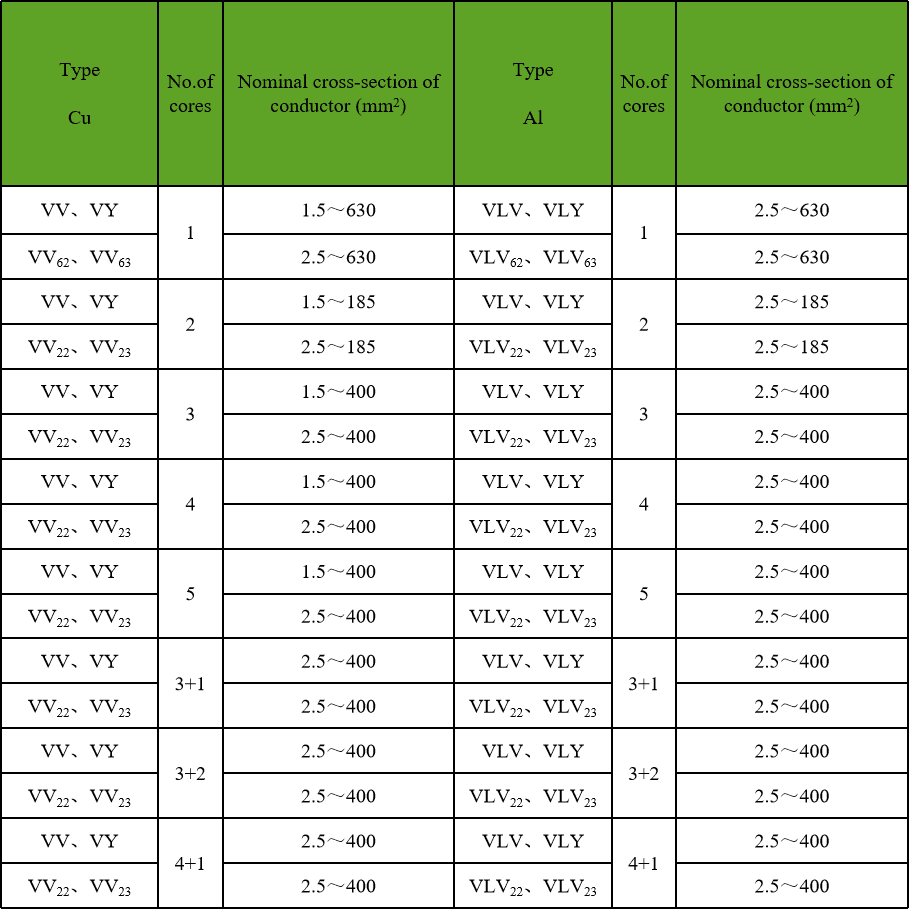
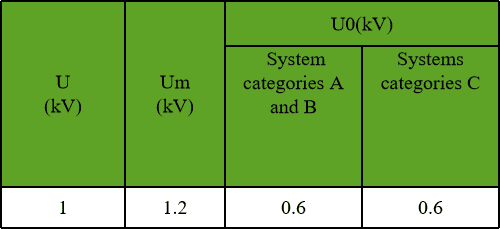
Technical references such as IEC 60502, IEC 60228 and IEC 60332 can align cable construction and test terminology. The approved project specification, applicable local rules and qualified design authority still govern the final system decision.
JINCHUAN Cable Support for trenchless crossings and ducted routes
JINCHUAN Cable supplies cable with the mass, diameter and bend limits a drilled crossing has to work within, and can confirm how the oversheath behaves against a duct wall.
Review the cable range and the manufacturing profile, then send the bore and duct details so the pull can be planned around the cable being supplied.
Settle the bore radius, the duct and the cable as one calculation before the horizontal directional drilling contract is let, because a hole in the ground is difficult to renegotiate.
FAQ
What is horizontal directional drilling used for?
It installs a duct under an obstacle such as a road, river or working plant without opening the surface along the route.
How is it different from an open trench?
The route becomes a long curve that is never seen again, and the cable is pulled rather than laid, so preparation and records carry more weight.
Does the cable bend radius still apply?
Yes. The bore may follow a generous radius, and the cable inside the duct still has to stay within its own minimum bend radius while under tension.
Why does duct condition matter so much?
Friction against the duct wall dictates the pulling tension on a long curved route. Silt, water and damage raise it sharply.
What limits the pulling length?
The cable's tensile limit, the sidewall pressure at curves and the capacity of the winch, all of which are affected by lubrication.
Should the duct be sealed afterwards?
The ends should be sealed as soon as the duct is installed, otherwise silt and water collect before the cable arrives.
Who decides the duct size?
The crossing designer, working with the cable diameter and mass. A larger duct reduces friction but changes the cable's position in the curve.
What records should be kept?
Depth profile, entry and exit coordinates, duct type and diameter, the pulling tension recorded, and photographs of the duct ends.
Can a drilled crossing be inspected later?
Not visually. It is understood from its records, which is why they are part of the asset rather than paperwork for the file.
How can JINCHUAN Cable support a drilled crossing?
JINCHUAN Cable provides the mass, diameter and bend limits of the cable being supplied, and can confirm the sheath properties relevant to pulling.