
On most projects the service cable is a small item on a large drawing. It is a few metres of cable between a boundary and a meter box, and it rarely attracts the attention given to a main feeder.
It also sits at the point where two organisations meet. One owns the network and sets the rules; the other owns the installation and pays for the cable. Every disagreement about scope settles on this short length.
Getting it right is mostly a matter of agreeing three things early: where the supply point is, where the meter goes, and who is responsible for what in between.
What Defines a Service Connection
Five items describe the installation before its size or its route is discussed.
A supply point fixed by the operator
The network ends somewhere specific, and where it ends decides the length of the run that the site has to provide.
A route that may cross public land
A service cable often passes under a footpath or through a shared area, which brings reinstatement and access obligations with it.
A size that follows the load
The cable is sized for the declared demand and for the diversity the operator applies, not for the sum of everything installed.
A protective device at the origin
The device and its position are usually prescribed, and the cable has to be coordinated with whatever is specified.
A seal at every accessible termination
Sealing turns a connection into a record. It is a small detail with a large role in disputes.
A service cable runs between the point where the supply arrives and the position where it is metered, and most of its rules come from the operator rather than from the site.
Where the Supply Boundary Sits
One line on a drawing decides who pays for each metre, and it is worth confirming in writing.
- The point where the operator's network ends and the site's installation begins.
- The ownership of any cable, joint or cut out on each side of that point.
- Who is permitted to work on each section, and who must be present.
- Which party reinstates the surface after excavation.
- Who holds the records for the section they own.
Ambiguity here is the single most common cause of delay on a service connection.
The meter position is not simply where the meter is fitted, because it also sets the cable route, the protection at the origin and the access the operator will need.
From the Main to the Meter
The physical run is usually short, and it passes through more transitions than its length suggests. It leaves the operator's network, enters the site, passes through a wall or a duct, terminates in a cut out or an isolator, and reaches the meter terminals.
Each transition is a point where something is agreed or assumed. The duct, the wall entry, the enclosure and the terminal arrangement all belong to the coordination between the two organisations.
Where those transitions are detailed on a drawing, the installation proceeds quickly. Where they are left to the day, the installer improvises in a space that is usually narrow and often wet.
A short route with four transitions is worth as much design attention as a long route with one.
The supply authority owns the network up to a defined point, and where a cut out sits on the wrong side of that boundary the problem becomes a commercial one.
Ownership Along the Route
Three sections of a service connection behave differently, even when they are built together.
| Section | Who usually owns it | Who may work on it |
|---|---|---|
| Network up to the supply point | The operator | The operator or their contractor |
| Service cable from the supply point | The site | The site's contractor, to the operator's standard |
| Metering equipment and terminals | The operator | The operator, with the site providing access |
Ownership determines who may open a joint, and that in turn determines which party can respond to a fault.
Sealing is what makes a connection evidence. An unsealed joint or meter terminal cannot be shown to be undisturbed, which matters when consumption is disputed.
A Boundary Agreed Too Late
Situation: A new workshop was built with a meter position inside the building, and the incoming supply was brought in through a duct installed by the building contractor.
Finding: The operator's network ended further from the building than the design had assumed, so the length of cable that the project was responsible for was nearly double the quantity ordered. The duct was also too small for the cable that the operator required for the declared load.
Decision: A second duct was installed by the building contractor, the additional length was ordered, and the supply date moved to a point agreed in writing by both parties.
Result: The programme absorbed the delay at a poor moment. The next project on the same site began with the supply point confirmed in writing before the duct was laid.
The service cable is often the shortest run on a project and the one with the least design attention, which is roughly the order in which faults appear.
What Changes the Size
Four factors move the service cable away from a simple load calculation.
| Factor | Effect on the cable | Who confirms it |
|---|---|---|
| Declared demand and diversity | Sets the current the cable carries in normal use | The operator, from the connection application |
| Route length and voltage drop | Longer runs may need a larger conductor than the load alone suggests | The designer, against the operator's limits |
| Fault level at the supply point | Affects the protective device and the cable's withstand | The operator |
| Ambient and installation method | Buried, in duct or in air all derate differently | The designer, using the installed conditions |
The second row is the one most often discovered late, because service routes are assumed to be electrically short.
Sealing, Access and Tamper Risk
A seal is a small item that changes the status of a connection. Sealed terminals are evidence that nobody has altered the wiring, and unsealed ones are not.
Access matters for the same reason it matters anywhere else: the operator will need to reach the meter and the cut out during the life of the installation, and that access has to survive whatever the building does afterwards.
Where a meter position is surrounded by new partitions, shelving or stored material, the next visit becomes a dispute rather than a routine task.
Tamper risk is not only about theft. An accessible service cable that can be reconnected by an unauthorised person is also a safety issue, and the arrangement at the meter position is the control that prevents it.
Before the Supply Is Connected
Four confirmations prevent a connection visit that ends without a connection.
The boundary is agreed in writing
A single sentence naming the supply point, its location and which party builds up to it.
The route is complete and clear
Ducts installed, draw cord in place, ends sealed and the enclosure ready to receive the equipment.
The load is declared
The connection application and the installed load should describe the same installation.
Access is possible
The meter position reachable by the operator without moving stored goods or dismantling a fitting.
Records the Owner Should Hold
The owner of a site holds records for everything behind the supply point, and the service connection is no exception. Cable size, route, depth and the position of any joint belong in the drawing set.
The connection agreement, the declared load and the protective device arrangement should be kept with those drawings, because they are what a future addition will be assessed against.
Photographs taken before reinstatement are disproportionately valuable, especially where the route crosses a paved or planted surface that will be disturbed again.
Together these records answer the questions that arise when a load is added, when a fault is investigated or when the supply is upgraded.
Where Installations Go Wrong
The failures are small, systematic and almost entirely avoidable.
- A duct installed before the supply point was confirmed, and too small afterwards.
- A meter position chosen for the building layout rather than for the operator's access.
- An assumed boundary that leaves the project ordering less cable than the route requires.
- Seals disturbed during building work and never reported.
- No record of the route, so a later excavation meets the cable without warning.
Every one of these is resolved by a conversation held a few weeks earlier than it usually is.
RFQ Inputs for a Service Connection
These details let the service cable, the duct and the meter position be planned as one installation.
- the supply point and the boundary the operator has confirmed
- the route from the supply point to the meter position
- the declared load and the diversity the operator applies
- the duct size, type and depth along the route
- the protective device specified at the origin
- the meter position, enclosure and access arrangement
- the fault level and any withstand requirement at the supply point
- the records and drawings the owner expects to hold afterwards
Technical references such as IEC 60502, IEC 60228 and IEC 60332 can align cable construction and test terminology. The approved project specification, applicable local rules and qualified design authority still govern the final system decision.
JINCHUAN Cable Support for service connections and meter positions
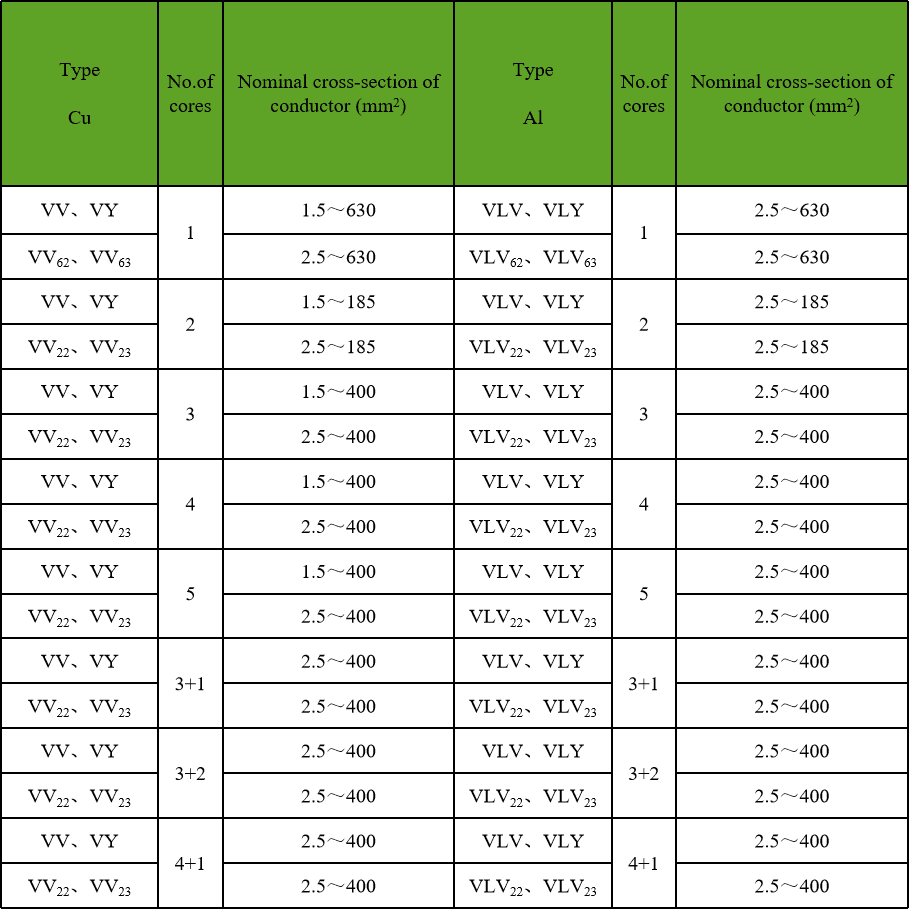
JINCHUAN Cable supplies service cable in the sizes and constructions a connection requires, including the conductor and sheath options that suit a buried or ducted route.
Review the cable range and the manufacturing profile, then confirm the supply point before the duct is laid.
Confirm the supply point and the meter position in writing before anything is buried, because the cheapest change on a service connection is the one made on paper.
FAQ
What is a service cable?
It is the cable between the point where the supply arrives and the position where the installation is metered, and it is usually the shortest run on a project.
Who owns it?
Ownership is divided at a defined boundary. The operator owns the network up to it, and the site owns the installation beyond it, including the service cable where that is the arrangement.
Why does the boundary matter?
Because it decides who pays, who may work on each section and who responds when something goes wrong. It should be confirmed in writing.
How is the size chosen?
From the declared demand and diversity, the route length, the voltage drop limits, the fault level and the way the cable is installed.
Why does voltage drop matter on such a short run?
Service routes are assumed to be electrically short, and some are not. A long service can need a larger conductor than the load alone suggests.
What is a cut out?
It is the assembly at the origin of the installation containing the protective device and the terminals where the supply is connected and sealed.
Why is sealing important?
A seal shows that a connection has not been disturbed. It matters for safety, for disputed consumption and for any later inspection.
How much access does the meter need?
Enough for the operator to reach and work on the equipment without moving stored goods or dismantling a fitting, maintained for the life of the installation.
What should be recorded?
The route, depth, cable size, joint positions, the connection agreement, the declared load and photographs taken before reinstatement.
How can JINCHUAN Cable support a service connection?
JINCHUAN Cable supplies service cable in the sizes and constructions the route requires and confirms the conductor and sheath options available.