
Power cable capacitance matters when a long insulated feeder stores and exchanges electrical charge with the system. The total effect grows with installed length and can influence charging current, switching behavior, protection measurements and reactive-power planning, especially on medium-voltage networks.
Buyers should request construction-specific capacitance data and make sure the project calculation uses the actual route, frequency and operating configuration. Power cable capacitance is a system input; it should not be copied from a different cable size or treated as a pass/fail value by itself.
This page groups buyer prompts about charging current, long MV feeders, no-load current, switching, transformers, protection, compensation, cable testing, parallel circuits and quotation evidence.
Capacitance and Charging-Current Decision Table
Use this specification table to compare each cable capacitance and charging-current review on the same approved project basis. Values are inputs to confirm, not assumptions for the supplier to invent.
| Specification item | Project input | Evidence to retain |
|---|---|---|
| Electrical system | Approved voltage, frequency, grounding, switching sequence, protection and operating scenarios | Approved single-line diagram and load schedule |
| Conductor and size | Buyer-defined material, cross-section and circuit duty | Cable schedule and engineering approval |
| Insulation and sheath | Verified cable length, parallel runs, joints, terminations and energized sections | Route map and environmental boundary |
| Mechanical protection | Cable and accessories installed in the approved configuration used by the electrical study | Installation method and risk review |
| Fire performance | Project-required performance and test reference | Approved specification and test documents |
| Identification | Feeder, cable construction, capacitance basis, length, drum, joint and revision | Drum list, cable register and final revision |
A compliant schedule makes technical and commercial differences visible before the long medium-voltage cable circuit cable order is released.
When does cable capacitance become a project decision?
A useful cable capacitance and charging-current review starts with a defined buyer, production outcome and project boundary. The following distinctions prevent a general factory inquiry from becoming an unqualified product request.
Is the feeder long?
Total capacitive current depends on installed electrical length, not the drum count alone.
Is the system medium voltage?
Voltage and frequency influence charging-current magnitude and switching duty.
Will the cable be lightly loaded?
Charging current can be more visible when real load current is low.
Are several circuits connected together?
Parallel or collector arrangements can combine capacitive effects.
The decision is strongest when each answer is supported by project-specific evidence for the long medium-voltage cable circuit.
Compare three long-feeder configurations
This comparison does not select a cable by industry label. It shows how three long medium-voltage cable circuit project configurations change the evidence a supplier must review.
| Project configuration | Defining features | Main advantage | Best fit | Relative cost level |
|---|---|---|---|---|
| Single radial feeder | One cable circuit energized as a unit | Clear operating state | Industrial supply | Medium |
| Parallel MV feeders | Several cable paths share load and charging current | Higher capacity | Large facilities | Medium-high |
| Collector network | Many branches combine at a substation | Scalable generation collection | Wind or solar projects | High |
Power cable capacitance should be assessed against the actual network topology, not only one isolated cable segment.
From a datasheet value to an operating feeder model
Changing from a machine list to a complete-product view changes which cable groups receive priority.
Before: disconnected equipment assumptions
- Cable data is listed without showing one generic capacitance value is copied.
- Route is listed without showing civil distance replaces electrical length.
- Operation is listed without showing only full-load current is reviewed.
- Protection is listed without showing settings are inherited from an overhead feeder.
After: one traceable feeder with an approved capacitance and charging-current basis flow
- Cable data is released with the ordered construction is identified.
- Route is released with every energized section is counted.
- Operation is released with light-load and energization cases are included.
- Protection is released with cable charging behavior is considered.
The revised model makes capacitance useful to design, purchasing and commissioning teams.
Scenario: a long feeder draws current before the plant load starts
Situation: A new MV feeder is energized while the remote process remains offline.
Finding: The observed no-load current is higher than the team expected from an overhead-line assumption.
Decision: Engineering checks the as-built cable length, construction-specific capacitance, switching state and protection measurements.
Expected result: Power cable capacitance is incorporated into the final feeder model and commissioning baseline.
Evidence audit for a long MV cable feeder
The construction review should connect materials and components with actual long medium-voltage cable circuit routes.
- Cable data: Capacitance is construction-specific and stated per unit length; retain approved datasheet.
- Route data: Installed energized length and parallel circuits are known; retain route schedule.
- System study: Charging, switching and protection effects are assessed; retain calculation record.
- Operating proof: Commissioning results can be linked to the feeder; retain test and switching record.
Power cable capacitance evidence should connect the factory cable data with the final energized network length.
Long-feeder evidence scorecard
Use this scorecard to test the quality evidence behind a cable capacitance and charging-current review. Certification names alone do not replace project-specific inspection and traceability.
| Criterion | Question | Evidence to request |
|---|---|---|
| Construction | Does the capacitance value match the ordered cable? | Datasheet |
| Length | Does the calculation use the energized route? | As-built schedule |
| System behavior | Are switching and protection scenarios reviewed? | Engineering study |
| Handover | Can commissioning data be traced to the model? | Test record |
Power cable capacitance is controlled when cable data, route length and system operation remain on the same revision.
What should buyers do when charging current is material?
Which branch protects accepted feeder with an approved capacitance and charging-current basis while meeting the required delivery date?
Effect is within the approved system basis
Retain the calculation and cable construction as order evidence.
Protection sensitivity is affected
Coordinate settings and measurement behavior before energization.
Switching duty is significant
Review equipment, sequence and any required system mitigation.
Route or configuration is changing
Recalculate instead of scaling an old result without verification.
The cable quotation should expose the data needed for the decision without claiming to replace the system study.
Commercial effects of capacitance-related decisions
The quoted price for a cable capacitance and charging-current review is meaningful only when route, quantity, testing, delivery and exclusions use the same basis.
| Cost driver | Project impact | Control before ordering |
|---|---|---|
| Cable construction | Dimensions and insulation design affect capacitance | Compare approved data |
| Route length | Longer energized length raises charging current | Freeze the route |
| Protection review | Engineering and setting changes add scope | Define responsibility |
| Switching equipment | System duty may affect equipment selection | Coordinate early |
| Commissioning | Additional measurements and records require time | Plan the test |
A comparable offer includes the cable data and documents required to complete the network decision.
Questions to close before ordering a long MV feeder
OEM and project customization should make the cable capacitance and charging-current review easier to approve, receive, install and maintain.
Which capacitance value applies?
Use the ordered construction and stated frequency.
Which length is energized?
Count route sections, joints and parallel paths correctly.
Which operating cases matter?
Include energization, light load and normal service.
Which records are delivered?
Request datasheets, tests, drum identity and revision control.
Power cable capacitance becomes auditable when a buyer can reproduce the system input after installation.
Information to include in a power cable RFQ
Suppliers can compare the same basis when the RFQ includes the following project inputs.
- System voltage and frequency
- Load or cable schedule
- Motor ratings and starting method
- Route length and installation method
- Actual wet, dusty, hot, outdoor or mechanical conditions
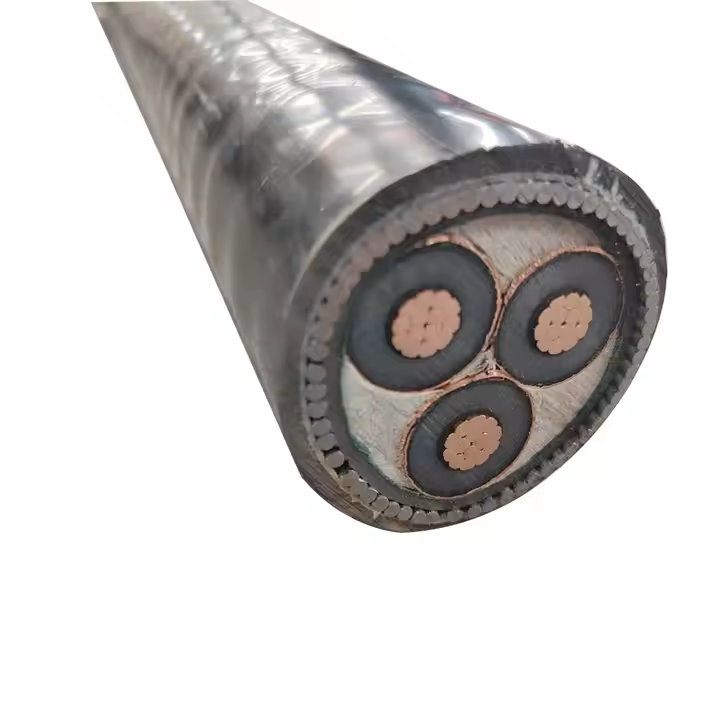
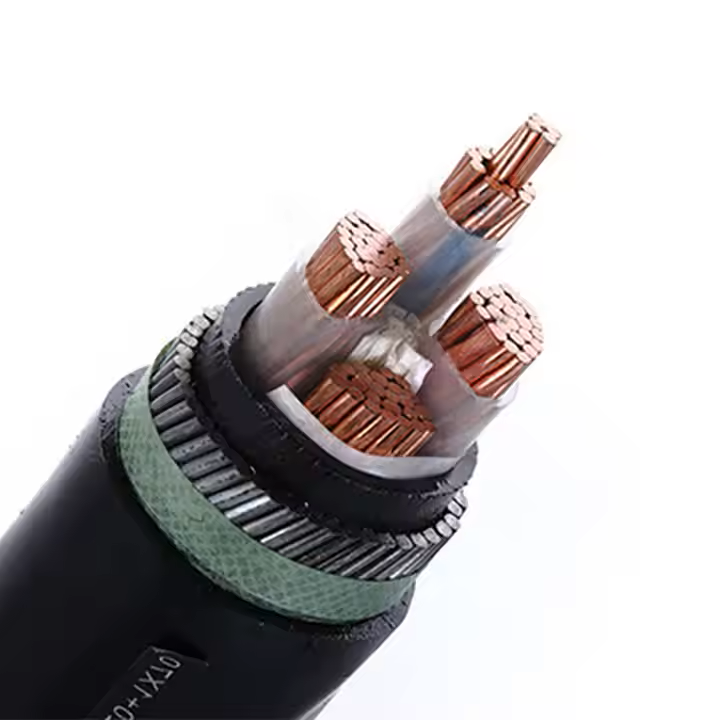
- Required conductor, insulation, sheath and armor details
- Destination, delivery stages and required records
- system voltage, frequency and grounding
- ordered cable construction and capacitance data
- energized route length and parallel circuits
- switching, protection and operating scenarios
- tests, drum identity and as-built records
For long medium-voltage cable circuit projects, references such as IEC 60502, IEC 60228 and IEC 60332 can help both sides use consistent terminology. They do not replace the approved specification or the buyer's responsibility to confirm the design.
How JINCHUAN Cable supports long medium-voltage cable circuit decisions
For industrial buyers, EPC engineers, utilities, contractors, project quality teams and cable distributors evaluating the power cable capacitance, JINCHUAN Cable can review buyer-approved schedules, capacitance data, cable constructions, drum identity, test evidence and technical clarifications, quantities, identification and document requirements for the long medium-voltage cable circuit.
The response can state assumptions, evidence and exclusions while final system design, protection, compliance approval and installation remain with qualified project teams responsible for the long medium-voltage cable circuit.
Buyers can review JINCHUAN Cable products and learn more about the JINCHUAN Cable company. Share the project purpose, critical loads, route conditions, quantities, destination and expected records to create a stronger basis for technical and commercial comparison.
Send the approved schedule and capacitance, route and system-operating requirements to request a quotation with a traceable evidence package.
FAQ
What should buyers expect from a power cable capacitance?
Buyers should expect the proposal to connect cable construction with system voltage, frequency, cable construction, route length, capacitance per length, charging current, switching, protection, compensation and testing, not merely repeat conductor sizes from a schedule.
Which part of the long medium-voltage cable circuit should be mapped first?
Start with system definition, route confirmation, cable-data review, charging-current calculation, switching study, protection coordination and commissioning. This shows which supporting loads can interrupt more than one production stage.
How should quotations for the long medium-voltage cable circuit be compared?
Compare the stated route assumptions, operating duty, included records, delivery grouping and exclusions beside price. That exposes scope differences before approval.
Which route conditions matter in a long medium-voltage cable circuit?
The inquiry should distinguish long underground, tunnel, offshore, renewable-energy and industrial MV feeders where total installed length magnifies capacitive effects. Broad labels such as indoor or industrial are rarely precise enough for a useful review.
What hidden risk deserves attention in this project?
A common hidden risk is treating capacitance as a laboratory datasheet value while total route length changes energization, protection and reactive-current behavior. Its production consequence may be greater than the connected load suggests.
Should future changes be discussed before ordering?
Yes. longer collector circuits, added parallel runs, transformer changes, different switching sequence, new protection settings and network expansion can affect route capacity, circuit names, distribution space and the value of today's approval records.
Which records help after installation?
Useful records include single-line diagram, route length, cable datasheet, capacitance calculation, switching basis, protection settings, test report and commissioning record. They help receiving, installation and maintenance teams connect each cable with its purpose.
Which technical references may support the discussion?
IEC 60502, IEC 60228 and IEC 60332 may provide common terminology, while the approved project specification remains the final design basis.
What should be sent with the first RFQ?
Send the cable or load schedule plus project details such as system voltage, frequency and grounding, ordered cable construction and capacitance data, energized route length and parallel circuits, switching, protection and operating scenarios, tests, drum identity and as-built records. Clear inputs allow suppliers to identify assumptions instead of guessing.
How can JINCHUAN Cable support the long medium-voltage cable circuit?
JINCHUAN Cable can review the schedule, routes, operating conditions, quantities and required records against the result the buyer needs to protect: a long-feeder design that accounts for charging current, switching behavior, protection sensitivity, reactive demand and operating scenarios.