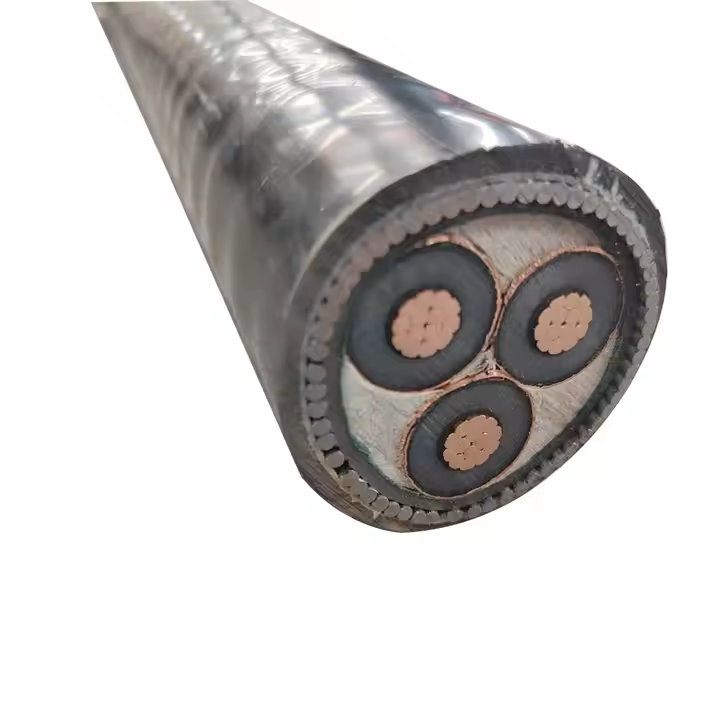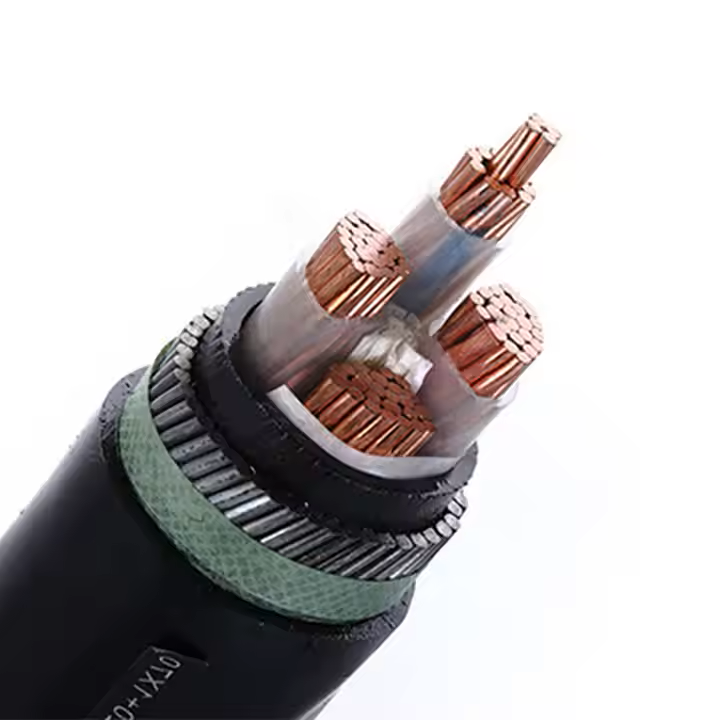

A power cable sheath integrity test checks whether the outer protective layer and its test boundary remain electrically sound after manufacturing, transport or installation. It is especially useful after pulling or before energization, when localized damage can still be investigated and repaired before service.
Buyers should define the cable section, grounding connections, joints, terminations, test voltage, duration, safety method and acceptance authority. A power cable sheath integrity test is not the same as conductor insulation-resistance testing, and the two results should not be interpreted as substitutes.
This guide covers connected prompts about oversheath tests, post-pull checks, DC test voltage, wet surfaces, grounded screens, jointed circuits, fault location, repair methods, retesting and handover evidence.
From test setup to repaired-cable release
The oversheath integrity testing should follow named handoffs from production input to released output.
| Work stage | Primary owner | Required output |
|---|---|---|
| Define boundary | Production engineering | Connection diagram; confirm cable section, accessories and grounding. |
| Make safe | Plant engineering | Safe work area; confirm isolation, discharge, barriers and test equipment. |
| Apply test | Quality team | Raw evidence; confirm voltage, duration, observation and result. |
| Locate and repair | Construction team | Corrective action; confirm fault position, damage assessment and approved method. |
| Retest and hand over | Maintenance team | Released record; confirm repeat result, identity and acceptance. |
The sequence separates measurement, diagnosis, repair and acceptance responsibility.
Scenario: a small sheath defect is found before backfill
Situation: A duct pull is completed and the pre-energization test does not meet the approved sheath criterion.
Finding: Fault-location work identifies localized damage near a roller transition that remains accessible.
Decision: The cable is assessed, repaired with the approved sheath method and retested before the route is closed.
Expected result: The power cable sheath integrity test prevents a hidden installation defect from entering service.
What exactly is included in the sheath test boundary?
A useful oversheath integrity testing starts with a defined buyer, production outcome and project boundary. The following distinctions prevent a general factory inquiry from becoming an unqualified product request.
Which cable section is tested?
Identify route limits, drum ends, joints and terminations.
How are metallic layers connected?
Define screens, armor, grounding leads and test access.
Which external surfaces are wet or dirty?
Surface leakage can affect measurement and investigation.
Who owns the disposition?
Name the authority that accepts, repairs or escalates the result.
The decision is strongest when each answer is supported by project-specific evidence for the installed cable sheath acceptance.
Sheath Integrity Test Decision Table
Use this specification table to compare each oversheath integrity testing on the same approved project basis. Values are inputs to confirm, not assumptions for the supplier to invent.
| Specification item | Project input | Evidence to retain |
|---|---|---|
| Electrical system | Approved cable construction, test purpose, voltage, duration, safety and acceptance criterion | Approved single-line diagram and load schedule |
| Conductor and size | Buyer-defined material, cross-section and circuit duty | Cable schedule and engineering approval |
| Insulation and sheath | Known cable section, route condition, joints, terminations, moisture and grounding interfaces | Route map and environmental boundary |
| Mechanical protection | Cable ends, test points and accessories safely prepared without introducing new sheath damage | Installation method and risk review |
| Fire performance | Project-required performance and test reference | Approved specification and test documents |
| Identification | Feeder, sheath section, drum, joint, test point, result, repair and retest | Drum list, cable register and final revision |
A compliant schedule makes technical and commercial differences visible before the installed cable sheath acceptance cable order is released.
Evidence audit for a sheath test result
The construction review should connect materials and components with actual installed cable sheath acceptance routes.
- Method: Test voltage, duration and connections are released; retain approved procedure.
- Boundary: Cable length, joints and grounding are identifiable; retain connection diagram.
- Result: Instrument and raw reading are retained; retain test sheet.
- Disposition: Fault, repair and retest remain linked; retain corrective record.
Power cable sheath integrity test evidence should let another engineer reproduce the boundary and understand the decision.
Pre-energization sheath-test scorecard
Use this scorecard to test the quality evidence behind a oversheath integrity testing. Certification names alone do not replace project-specific inspection and traceability.
| Criterion | Question | Evidence to request |
|---|---|---|
| Method | Are voltage, time and safety defined? | Test procedure |
| Boundary | Are cable section and grounding clear? | Diagram |
| Diagnosis | Can a failed result be located and assessed? | Investigation record |
| Closure | Are repair and retest traceable? | Signed release |
A power cable sheath integrity test is closed only after the result and any corrective action share one cable identity.
Where sheath testing fits in the project sequence
Capacity for a oversheath integrity testing should be checked against approved data, production windows and staged deliveries.
Stage 1: Factory
Establish production or drum evidence where required.
Stage 2: After delivery
Inspect ends, packing and visible sheath condition.
Stage 3: After pulling
Check for installation damage before all access is closed.
Stage 4: After jointing or repair
Retest the defined sheath section.
Stage 5: Before energization
Release the final accepted baseline.
Testing before backfill or final closure can make fault location and repair far more practical.
Compare three sheath-test responses
This comparison does not select a cable by industry label. It shows how three installed cable sheath acceptance project configurations change the evidence a supplier must review.
| Project configuration | Defining features | Main advantage | Best fit | Relative cost level |
|---|---|---|---|---|
| Pass and release | Stable result on the approved boundary | Fast handover | Compliant section | Low |
| Investigate and repair | Localized defect is found and assessed | Preserves usable cable | Repairable damage | Medium |
| Escalate or replace | Damage or uncertainty exceeds approved repair scope | Risk control | Severe defect | High |
Power cable sheath integrity test outcomes should lead to an explicit release, repair or escalation branch.
Cost drivers in sheath testing and repair
The quoted price for a oversheath integrity testing is meaningful only when route, quantity, testing, delivery and exclusions use the same basis.
| Cost driver | Project impact | Control before ordering |
|---|---|---|
| Test sections | More joints and route zones add setup | Plan access |
| Fault location | Long or buried routes need specialized work | Retain identity |
| Repair access | Backfill and civil closure increase cost | Test early |
| Retesting | Every repair needs controlled closure | Include scope |
| Replacement risk | Unverified damage can delay energization | Use hold points |
Early sheath testing can protect project value by finding installation damage while the route remains accessible.
Sheath-test fields for the acceptance package
OEM and project customization should make the oversheath integrity testing easier to approve, receive, install and maintain.
Boundary
Record feeder, route section, joints and grounding.
Method
State instrument, voltage, duration and safety controls.
Result
Retain reading, observations and acceptance status.
Corrective action
Link location, repair method and retest.
Information to include in a power cable RFQ
Suppliers can compare the same basis when the RFQ includes the following project inputs.
- System voltage and frequency
- Load or cable schedule
- Motor ratings and starting method
- Route length and installation method
- Actual wet, dusty, hot, outdoor or mechanical conditions
- Required conductor, insulation, sheath and armor details
- Destination, delivery stages and required records
- test stage, cable section and accessories
- screen, armor and grounding connections
- test voltage, duration, instrument and safety
- fault location and approved repair method
- retest, acceptance and handover records
For installed cable sheath acceptance projects, references such as IEC 60502, IEC 60228 and IEC 60332 can help both sides use consistent terminology. They do not replace the approved specification or the buyer's responsibility to confirm the design.
How JINCHUAN Cable supports installed cable sheath acceptance decisions
For industrial buyers, EPC engineers, utilities, contractors, project quality teams and cable distributors evaluating the power cable sheath integrity test, JINCHUAN Cable can review buyer-approved schedules, sheath constructions, test data, drum identity, repair evidence and technical clarifications, quantities, identification and document requirements for the installed cable sheath acceptance.
The response can state assumptions, evidence and exclusions while final system design, protection, compliance approval and installation remain with qualified project teams responsible for the installed cable sheath acceptance.
Buyers can review JINCHUAN Cable products and learn more about the JINCHUAN Cable company. Share the project purpose, critical loads, route conditions, quantities, destination and expected records to create a stronger basis for technical and commercial comparison.
Send the approved schedule and sheath-test, route and acceptance requirements to request a quotation with a traceable evidence package.
FAQ
What should buyers expect from a power cable sheath integrity test?
Buyers should expect the proposal to connect cable construction with test stage, cable construction, sheath material, test voltage, duration, grounding, accessories, moisture, fault location, repair and retest, not merely repeat conductor sizes from a schedule.
Which part of the installed cable sheath acceptance should be mapped first?
Start with method approval, cable isolation, sheath preparation, test connection, measurement, fault investigation, repair, retest and release. This shows which supporting loads can interrupt more than one production stage.
How should quotations for the installed cable sheath acceptance be compared?
Compare the stated route assumptions, operating duty, included records, delivery grouping and exclusions beside price. That exposes scope differences before approval.
Which route conditions matter in a installed cable sheath acceptance?
The inquiry should distinguish buried, duct, tunnel, tray and jointed cable routes where pulling, rollers, backfill or handling can damage the outer sheath. Broad labels such as indoor or industrial are rarely precise enough for a useful review.
What hidden risk deserves attention in this project?
A common hidden risk is testing an undefined circuit boundary so bonded screens, connected accessories or wet surfaces change the result and confuse the disposition. Its production consequence may be greater than the connected load suggests.
Should future changes be discussed before ordering?
Yes. new joints, repaired sections, later excavation, sheath ageing, grounding changes and maintenance fault investigation can affect route capacity, circuit names, distribution space and the value of today's approval records.
Which records help after installation?
Useful records include test method, feeder and drum identity, connection diagram, instrument, voltage, duration, result, fault location, repair and retest. They help receiving, installation and maintenance teams connect each cable with its purpose.
Which technical references may support the discussion?
IEC 60502, IEC 60228 and IEC 60332 may provide common terminology, while the approved project specification remains the final design basis.
What should be sent with the first RFQ?
Send the cable or load schedule plus project details such as test stage, cable section and accessories, screen, armor and grounding connections, test voltage, duration, instrument and safety, fault location and approved repair method, retest, acceptance and handover records. Clear inputs allow suppliers to identify assumptions instead of guessing.
How can JINCHUAN Cable support the installed cable sheath acceptance?
JINCHUAN Cable can review the schedule, routes, operating conditions, quantities and required records against the result the buyer needs to protect: a documented decision on outer-sheath condition after transport, storage, pulling, jointing and backfill.