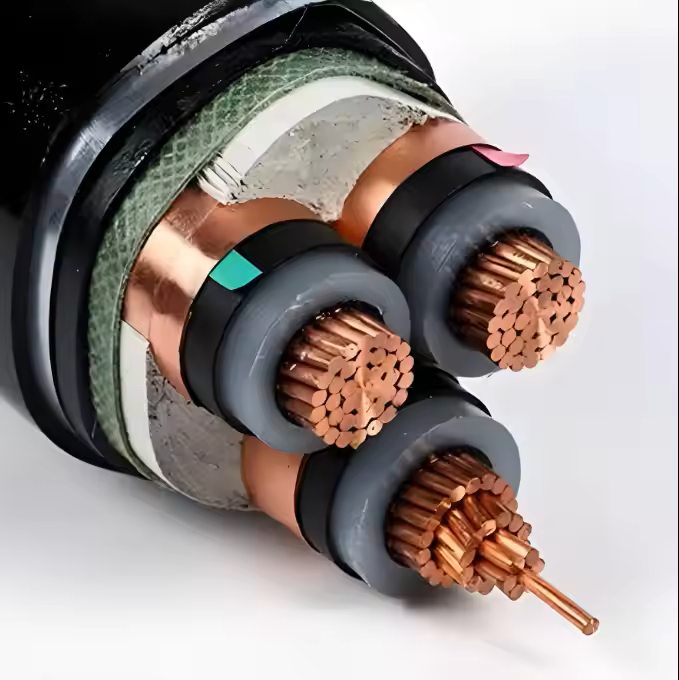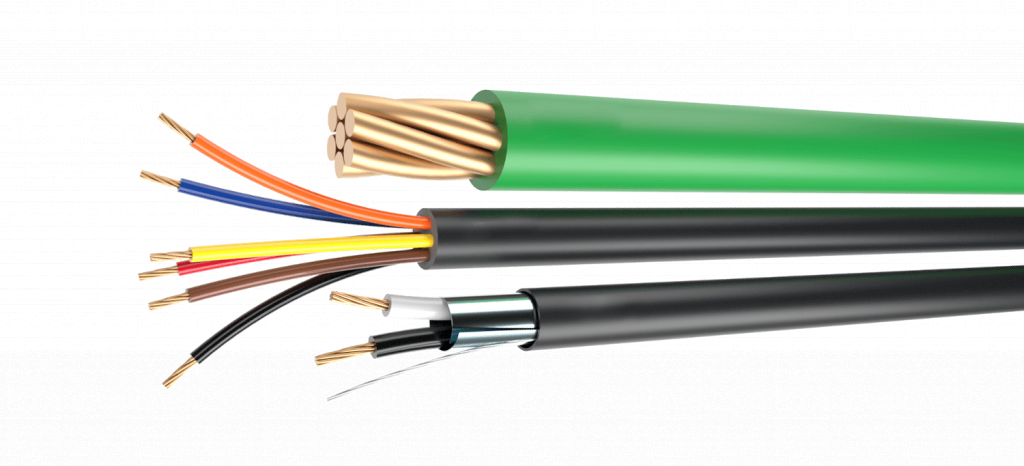

When a critical feeder fails, the first request is often for the fastest available cable. Speed matters, but an urgent drum is not useful if its voltage class, conductor, dimensions, accessories, route length or test evidence do not fit the failed circuit. An emergency cable replacement plan moves those facts out of the crisis and into a controlled readiness file.
The plan should distinguish fault response from permanent replacement. Operations may need an authorized temporary supply, while engineering investigates the failure boundary and approves the long-term construction. Procurement can run in parallel only when assumptions, decision owners and change points are visible.
This guide follows a recovery clock: identify, compare, supply, install, test and learn.
The First Hour: Protect People and Freeze the Facts
Immediate actions belong to the site emergency procedure and authorized personnel. Procurement begins with preserved identities, not speculation about the failed cable.
| Control point | Information to secure | Decision it protects |
|---|---|---|
| Safety state | Isolation, permit, earthing and access status | Prevents recovery pressure overriding site rules |
| Affected service | Source, destination, load consequence and redundancy | Sets operational priority and temporary-control need |
| Cable identity | Circuit number, route, endpoints, joints, construction and installation date | Stops the wrong historical record entering the RFQ |
| Failure evidence | Protection operation, alarms, test data, visible condition and event time | Supports boundary and cause review |
| Change authority | Incident lead, design approver, procurement owner and release chain | Lets parallel work proceed without conflicting instructions |
Do not clean, cut or discard failed components beyond what safety requires until the responsible investigation team has preserved the evidence it needs.
An emergency cable replacement plan starts with safe isolation, preserved evidence and one verified circuit identity.
Four Decisions That Set the Recovery Path
The early meeting should close a small number of high-consequence questions before teams scatter into separate workstreams.
Is the failed boundary known?
Confirm whether evidence points to the cable, a joint, termination, equipment interface or an external event. A replacement cable cannot correct an unresolved accessory or route cause by itself.
Is temporary operation authorized?
The owner and design authority decide whether redundancy, a temporary feeder or reduced loading is acceptable, including protection, access, monitoring and removal requirements.
Can approved stock be used?
Compare stored cable by complete construction, rating, condition, length, dimensions, accessories, age records and test status rather than accepting a matching cross-section alone.
Does the permanent design need to change?
If heat, water, mechanical damage, route congestion or interface failure contributed, the repair scope may need route or accessory changes before manufacture is released.
The emergency cable replacement plan should separate temporary restoration from the approval path for permanent work.
The Spare Drum Was Long Enough but Still Wrong
Situation: A factory loses a motor feeder and finds a warehouse drum with the required nominal conductor size and enough length to reach the equipment.
Finding: The stored construction has a different outer diameter and armor arrangement, while the available glands, cleats and panel entry were selected for the failed cable. Its storage history and end seals are also incomplete.
Decision: The team holds installation, verifies stock identity and condition, checks electrical and mechanical compatibility, and compares approved accessory changes with an expedited item-specific replacement.
Result: Production uses an authorized temporary operating arrangement while the permanent feeder is restored with compatible cable, hardware and traceable evidence rather than an improvised size match.
Use the emergency cable replacement plan to compare stored cable by complete compatibility rather than conductor size alone.
Build a One-Page Cable Identity Sheet Before Failure
The most valuable emergency document is short enough to find under pressure and detailed enough to start a credible supplier inquiry.
- Permanent circuit name, source, destination, voltage, phase and service consequence.
- Approved conductor material, size, number of cores, insulation, screen, armor, sheath and performance requirements.
- Installed length, route sections, joint locations, termination tails and feasible drum or delivery constraints.
- Finished diameter, mass, minimum handling information and matched gland, lug, cleat, joint and termination references.
- Original order, manufacturer, batch or drum, factory records, commissioning results and relevant maintenance history.
- Named technical approver, emergency buyer, site contact, receiving location and document repository.
Review the sheet after modifications and routine maintenance. An obsolete emergency record can be more dangerous than no record because it looks authoritative.
A practical emergency cable replacement plan runs engineering, supply, logistics and site preparation under one action register.
Separate Temporary Restoration From Permanent Acceptance
An emergency cable replacement plan can contain two technical paths with different evidence and time horizons. A temporary arrangement may support essential operation under defined limits and monitoring, but it should have an approval, installation record, expiry or review date and removal responsibility. Urgency does not turn it into the as-built permanent design.
The permanent replacement should address the investigated failure mode, current load, protection, route condition and maintainability. If the original cable was damaged by water entry, excessive heating, movement or an accessory interface, simply ordering an identical construction may reproduce the problem.
Keep both paths in one action register so temporary work does not disappear after restart. The closeout should show which assumptions were later verified, what permanent changes were approved and when provisional equipment was removed or reclassified.
After energization, update the emergency cable replacement plan with as-built data and lessons from every delay.
Compare Three Supply Strategies Before the Incident
Readiness stock should follow outage consequence, replacement feasibility and shared cable families, not the instinct to warehouse every installed item.
| Strategy | Strength | Risk to control | Best preparation |
|---|---|---|---|
| Dedicated spare drum | Fast access to an exact critical item | Storage ageing, end condition, handling and tied-up capital | Inspection cycle, identity sheet and accessory kit |
| Common approved cable family | One stock item may serve several reviewed circuits | Dimensions or performance may not match every interface | Compatibility matrix and pre-approved limitations |
| Expedited manufacturer order | Current item-specific construction and records | Manufacturing slot, raw material, transport and approval time | Framework terms, current drawings and emergency contacts |
| Temporary cable system | May restore limited service while permanent work proceeds | Protection, routing, access, monitoring and removal | Engineered contingency method and owner approval |
Many critical sites use a combination: selected physical stock, controlled interchangeable families and a supplier route for items that should not sit indefinitely in storage.
Run Technical and Commercial Workstreams in Parallel
Parallel work saves time only when each stream knows which facts are frozen and which could still change.
Engineering stream
Confirm failure boundary, electrical duty, construction, route change, accessories, test plan and final acceptance criteria with revision control.
Supply stream
Check approved stock, material availability, manufacturing sequence, document lead time, packaging, transport and realistic arrival options.
Site stream
Prepare isolation, removal, route repairs, pulling equipment, access, crew, permits, joints or terminations and receiving arrangements.
Decision stream
Maintain one action log for assumptions, alternatives, cost approval, hold points, responsible people and the time each release becomes valid.
What an Expedited Quotation Must Still Make Clear
A short quotation can be precise. Missing scope does not become acceptable merely because the delivery date is urgent.
- Offered cable construction, applicable specification, finished dimensions and any deviation from the requested item.
- Confirmed quantity, manufacturing length, drum allocation, tolerances or allowances and available accessories.
- Material availability, approval cutoff, production window, testing date, dispatch method and delivery destination.
- Routine or project tests, document package, language, electronic release timing and records that follow after shipment.
- Packing, drum protection, transport limits, insurance or delivery responsibility according to agreed commercial terms.
- Validity of the schedule and the events that reset it, such as late drawings, changed construction or delayed approval.
Buyers should compare the recoverable service date, not only factory completion. Documentation, transport, receiving and installation readiness all sit on that path.
A Fast Drum Waiting at the Wrong Gate
Situation: An expedited cable completes factory testing on schedule, but the plant's weekend receiving gate cannot accept the truck and the lifting equipment booked for the outage is rated for a smaller drum.
Finding: The purchase order measured lead time to dispatch, while the recovery plan measured it to installation. Destination hours, unloading method, drum dimensions and internal transport were never reconciled.
Decision: The logistics owner confirms gate access, permits, vehicle limits, crane or forklift capacity, laydown protection and transfer to the pulling position before dispatch approval.
Result: Delivery becomes part of the technical recovery sequence. The drum arrives at a usable workfront with receiving evidence intact instead of creating another delay after urgent manufacture.
Close the Incident by Improving the Next Response
After energization, update the emergency cable replacement plan with final construction, route, accessories, drums, tests and as-built drawings. Replace provisional assumptions with approved facts while retaining the incident chronology.
Capture time lost to missing data, access, approval, manufacture, transport, installation and testing. This reveals whether the next investment should be a spare drum, an accessory kit, a route modification, better records or a framework supply agreement. Stock alone does not solve a decision bottleneck.
Schedule inspection of stored spares and periodic validation of contacts, compatibility matrices and receiving arrangements. A readiness file earns its value between failures, when there is enough time to correct it without production pressure.
Emergency RFQ: Send a Controlled Minimum Data Pack
Mark confirmed facts, provisional assumptions and required decision times so the supplier can answer quickly without guessing silently.
- critical circuit identity, service consequence and site contact
- voltage, phase, load, protection and approved electrical basis
- complete cable construction and original product records
- measured route, joint plan, termination allowance and installation method
- finished diameter limits and accessory compatibility requirements
- quantity, drum constraints, destination, unloading and delivery window
- tests, witness or remote review, document list and release authority
- acceptable alternatives, deviation process and latest approval cutoff
Technical references such as IEC 60502, IEC 60228 and IEC 60332 can align cable construction and test terminology. The approved project specification, applicable local rules and qualified design authority still govern the final system decision.
JINCHUAN Cable Support for critical feeder failure and recovery work
JINCHUAN Cable can review a controlled emergency data pack, identify product and document questions, and state an offered construction, drum plan and manufacturing scope against the buyer's approved requirements. Delivery timing should be tied to completed technical inputs rather than an unsupported promise.
Keep JINCHUAN Cable product information and the company contact basis with the site's readiness file, then send the latest identity sheet and route details when a replacement inquiry is released.
Prepare the identity sheet, compatibility matrix, emergency roles and delivery route now. During a failure, those four assets give engineering and purchasing room to move quickly without trading away control.
FAQ
What belongs in an emergency cable replacement plan?
Include safety and decision roles, circuit identity, construction, route, compatible accessories, stock options, supplier path, logistics, testing and closeout responsibilities.
Is matching conductor size enough for an emergency spare?
No. Voltage class, cores, insulation, screen, armor, sheath, dimensions, performance, length, condition and accessory fit also require approved review.
Should a failed cable be replaced with the identical construction?
Only after the responsible investigation and design review confirm that the original construction remains appropriate for the load, route and failure cause.
Can temporary cable remain after production restarts?
Temporary service needs explicit limits, monitoring, approval and a removal or review date. Restart does not automatically make it a permanent as-built solution.
How should spare drums be stored?
Follow the product and site storage requirements, protect drum and cable ends, preserve identity, inspect periodically and retain handling and test records.
What is the most useful emergency record?
A current one-page identity sheet linked to approved drawings, product records, route lengths, accessories, contacts and the full document repository.
How can buyers shorten supplier response time?
Maintain approved construction and route data, define acceptable alternatives, use clear decision authority and state the delivery destination and document needs in the first inquiry.
Should factory tests be reduced to save time?
Testing and evidence must follow the approved specification. Buyers can improve timing by agreeing the plan and review method early rather than omitting necessary release controls.
Which lead time should the recovery team track?
Track time to usable installation and acceptance, including approval, manufacture, documents, transport, receiving, site work and commissioning.
How can JINCHUAN Cable support readiness?
JINCHUAN Cable can review approved cable schedules, construction, drum needs and document expectations before an incident and respond to a controlled replacement inquiry afterward.