
A cable order is often written as a short code, and that code carries more information than the conductor size printed beside it.
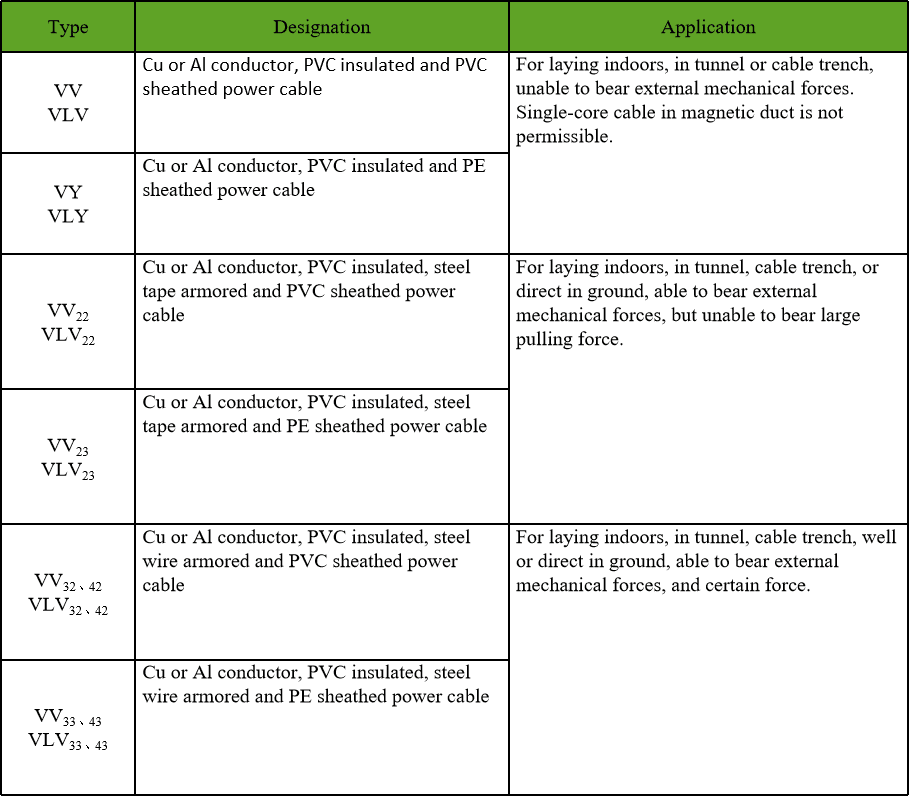
Letters in a cable type designation normally describe the insulation, the sheath material, the screening arrangement and any armor, while numbers describe voltage class, core count and cross-section. Two codes that differ by one letter can describe cables that behave very differently in the same trench.
Reading the code is how a buyer checks that the quotation, the datasheet and the drum label all describe the same product.
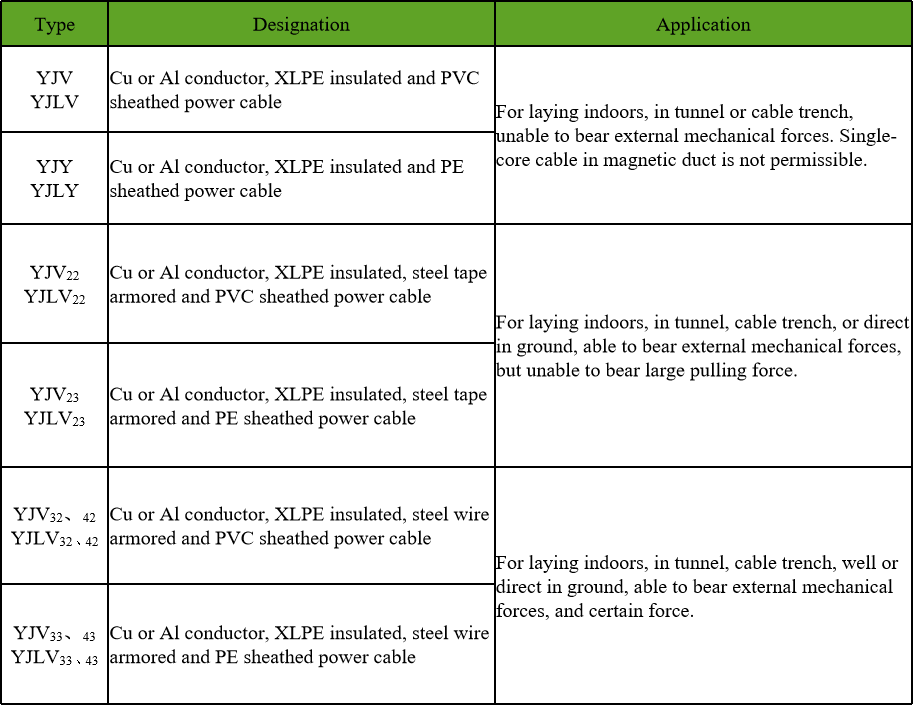
What Each Position Usually Stands For
Letter systems differ between manufacturers, but the positions follow a similar logic.
Insulation
The letters for the insulating compound, which set the temperature rating and the dielectric behaviour of the cable.
Conductor material
One letter often separates copper from aluminum, and that difference changes mass, diameter and termination.
Sheath and armor
Sheath material and armor type usually appear together, because both are selected for the same route conditions.
Screening
Screened and unscreened constructions carry different codes, and the screen is what makes a cable suitable for a given voltage class.
A cable type designation is a summary, so the letters and the written description have to agree before an order is released.
Reading a Code in Four Steps
Following the same four steps on every quotation makes codes comparable.
| Step | What to look at | Why it matters |
|---|---|---|
| 1 | Voltage class number | Sets insulation thickness and screen design |
| 2 | Insulation and conductor letters | Fixes temperature rating and material |
| 3 | Sheath and armor letters | Fixes route protection and drum mass |
| 4 | Core count and size | Sets current rating and practical drum length |
The same four steps applied to two quotations show whether they describe the same cable.
Cable code letters normally describe insulation, conductor material, sheath, screen and armor, while the numbers carry voltage class, core count and size.
Why One Letter Matters
Changing an insulation letter inside a cable type designation can move a cable from a general-purpose thermoplastic rating to a cross-linked compound that runs far hotter, which changes the price, the bend radius and the termination materials together.
Changing a sheath letter can move the finished cable from a light drum to one that needs a crane, which affects the delivery plan more than the price per metre does.
Because the letters carry the decisions, a quotation that leaves them out cannot be compared with one that states them.
A cable specification code copied from an earlier project is the most common source of a construction that does not match the route.
Where Mismatches Appear
Every one of these starts with a code that was never checked against the written description.
| Stage | Typical mismatch | Result |
|---|---|---|
| Enquiry | Code copied from an older project | The wrong voltage class is quoted |
| Order | Letters transcribed by hand | Wrong sheath or armor is built |
| Datasheet | Code and description disagree | Approval is delayed |
| Drum label | Label follows a different revision | Site rejects a cable that is actually correct |
The further a mismatch travels, the more expensive it becomes to correct.
Where insulation and sheath code letters change, the temperature rating, mass and termination materials change with them.
Checks Before the Order Is Released
Four checks catch most cable type designation errors.
- Read the code and the written description together, and confirm they describe the same construction.
- Compare the code against the standard named in the specification rather than against a previous project.
- Confirm the voltage class number matches the system, because it drives insulation and screen design.
- Ask the factory to restate the code in full on the order confirmation.
None of these take more than a few minutes at the enquiry stage.
Ask for the cable type designation in full on the order confirmation, and the drum label can be checked against the same string.
Case: A Letter That Changed the Drum Weight
Situation: A project reissued an enquiry with a type code copied from an earlier phase. The conductor size and core count were unchanged, and the first price came back close to the earlier figure.
Finding: The new route crossed a yard and needed armor that the earlier code did not include. The quotation matched the old code, and the omission surfaced during technical review rather than at delivery.
Decision: The enquiry was reissued with the code written beside the full description, and the factory restated both in the confirmation.
Result: The second quotation carried the armor, the drum weight was updated in the delivery plan, and the crane was booked before the first drum arrived.
Fields That Belong Beside the Code
A code is a summary, and a summary only works when the detail sits beside it.
| Field | Typical content | Who uses it |
|---|---|---|
| Voltage class | System voltage and earthing arrangement | Design |
| Construction | Insulation, screen, sheath and armor | Factory and approval |
| Conductor | Material, strand class and size | Procurement |
| Test evidence | Standard and test type required | Inspection |
Four fields turn a shorthand into something a reviewer can check.
Working With Different National Systems
Manufacturers in different regions use different letter systems, so a code that looks familiar may describe a different construction.
On international projects the safest route is to state the required standards and the construction in words, then let the code follow as a shorthand.
When both appear on the order, the written description should govern, because that is the part a reviewer can check without working with the code daily.
Questions That Resolve a Code Quickly
These questions settle most ambiguity in a single exchange.
- Which insulating compound and temperature rating does the code stand for?
- Is the sheath thermoplastic or cross-linked, and is armor included?
- Is the construction screened, and how is the screen arranged?
- Does the same code appear on the drum label and the test record?
The answers belong in the quotation, the order confirmation and the delivery documents.
Keeping the Code Consistent Through the Project
A cable type designation that drifts between documents creates rework.
One code per construction
Keep the code in the cable schedule rather than in email threads, so every document quotes the same string.
Version the schedule
Record when a code changes and why, so a delivered drum can be matched to the approved revision.
Mirror it in the datasheet
The datasheet, the order and the label should all carry the same code beside the same description.
Check one drum first
Compare a single drum label against the approved schedule before the rest of the delivery is released.
RFQ Inputs for Cable Type Designation
These details let the factory confirm the code rather than interpret it.
- the type code being quoted, written beside the full description
- the voltage class and earthing arrangement of the system
- the required insulation, screen, sheath and armor
- the conductor material, strand class and cross-section
- the core count, including any spare or pilot cores
- the standard the construction has to meet
- the drum length and the expected delivery programme
- the destination and packing requirements for the drums
Technical references such as IEC 60502, IEC 60228 and IEC 60332 can align cable construction and test terminology. The approved project specification, applicable local rules and qualified design authority still govern the final system decision.
JINCHUAN Cable Support for cable code review for enquiries, orders and drum labels
JINCHUAN Cable restates the cable type designation and its full description on the order confirmation, and supplies the same string on the drum label and test record.
Review the product range and the manufacturing profile, then send the code with the construction details so both can be confirmed together.
Write the code and the description together once, and every document on the project can be checked against the same pair.
FAQ
What does a cable type designation describe?
It summarises the voltage class, conductor, insulation, screen, sheath and armor of a construction, usually as a short string of letters and numbers.
Is the code the same for every manufacturer?
No. Letter systems differ between regions and factories, so the code should be read beside a written description rather than on its own.
Why does one changed letter matter?
A different insulation or sheath letter can change the temperature rating, the mass, the bend radius and the termination materials of the finished cable.
Which part of the order governs if the code and the text disagree?
On most projects the written description governs, and the code is treated as a shorthand for it.
Where do code errors usually start?
Most begin when a code is copied from an earlier project instead of being rebuilt from the current route and system conditions.
Should the code appear on the drum label?
Yes. The label, the datasheet and the order confirmation should all carry the same code beside the same description.
How can a buyer check a code quickly?
Read the voltage class, insulation and conductor letters, then the sheath and armor letters, and compare each with the written requirement.
Does the code include the conductor size?
In many systems the numbers carry voltage class, core count and cross-section, while the letters describe materials and construction.
What if two quotations use different codes?
Ask both suppliers to restate the construction in words, then compare the two descriptions before comparing the prices.
How does JINCHUAN Cable handle type codes?
JINCHUAN Cable confirms the code against the written construction and repeats both on the order confirmation, the datasheet and the drum label.