
Circuit Integrity Cable Selection for Fire Conditions
Circuit integrity depends on the complete installed circuit: cable, joints, supports, fixings, penetrations, protective devices and the required operating period. A fire resistant cable should therefore be matched to the system function and the specified test method, then installed with supports that remain effective under the same fire scenario.
Source note: IEC 60331-1:2018. IEC 60331-1:2018 specifies a fire-with-shock test at not less than 830 C for cables rated up to 0.6/1.0 kV whose overall diameter exceeds 20 mm. The IEC page directs smaller-diameter cables to IEC 60331-2, so the test reference on an RFQ has to match at least 3 product facts: voltage rating, overall diameter and the required fire condition.
"maintain circuit integrity when subject to fire and mechanical shock"
Attributed to IEC 60331-1:2018.
Most cable circuits are expected to stay in service. Life safety circuits are expected to stay in service under a specific and unpleasant condition: while a fire is burning in the building they serve.
The distinction matters because it changes what has to be proved. A cable that performs well in normal service may still fail early in a fire if its support collapses or its route passes through an unprotected opening.
The subject is not complicated, but it rewards attention to the whole installation rather than to the cable label alone.
Life Safety Circuits Are Judged in a Fire
The circuits that have to keep working are the ones supporting evacuation and firefighting. They include alarms, emergency lighting, fire pumps, smoke control and the communications used to coordinate a response.
Each of those has a period attached to it, derived from the building, its occupancy and the time needed to evacuate or to fight a fire in it. The period is a design decision and it precedes the cable choice.
Once the period is known, the rest of the requirement becomes specific: a construction that survives the conditions for that time, a support arrangement that holds it in place, and a route that keeps it away from the worst of the hazard.
Without the period, the specification tends to default to a phrase such as fire rated and leaves the important work undone.
Circuit integrity describes whether a circuit keeps functioning while a fire is developing, rather than whether it merely survives being burnt.
Function Categories and What the Circuit Must Do
Different life safety functions make different demands, and a single phrase will not cover all of them.
| Function | What it must do during the fire | What usually compromises it |
|---|---|---|
| Emergency lighting | Stay lit long enough for evacuation | Support failure and unprotected route sections |
| Fire alarm and detection | Continue to signal and to control other systems | Penetration sealing and shared containment |
| Fire pump supply | Keep the pump running while it is needed | Long routes through unprotected spaces |
| Smoke control | Maintain operation of fans and dampers | Heat exposure along the cable route |
The requirement is written in terms of the function and the period, and the product follows from that.
A fire resistant cable is one input into circuit integrity, and the support, the fixings and the penetrations are equally decisive.
Where Circuit Integrity Is Normally Required
Five situations that recur in almost every project with an evacuation strategy.
Routes serving evacuation
Circuits for alarms and emergency lighting that have to operate while people are still in the building.
Equipment for firefighters
Supplies to pumps, pressurisation and smoke control that the response depends on.
Control and communication
Signals that coordinate the response and that lose value if they stop early.
Crossings between fire compartments
Wherever a route passes out of the protected area it was designed within.
Critical process shutdown
Situations where an uncontrolled stop would add to the hazard, assessed case by case.
Emergency circuit behaviour is judged over a defined period, and the period belongs to the design rather than to the product alone.
Fire Performance Vocabulary and Test Methods
Standards describe different things. Some characterise how a cable behaves when it burns, which relates to flame spread and to the release of smoke and corrosive products along a route.
Others describe whether a circuit continues to function while it is exposed to fire, sometimes with mechanical shock and water applied at the same time. That is the family of tests behind the phrase circuit integrity.
The two families answer different questions, and a construction that satisfies one does not automatically satisfy the other. A specification that names a single test method for both is a specification that has not been thought through.
Because the testing conditions are severe and specific, the test report shows what was actually verified, and comparing that with the installation is the work of the designer rather than of the purchasing team.
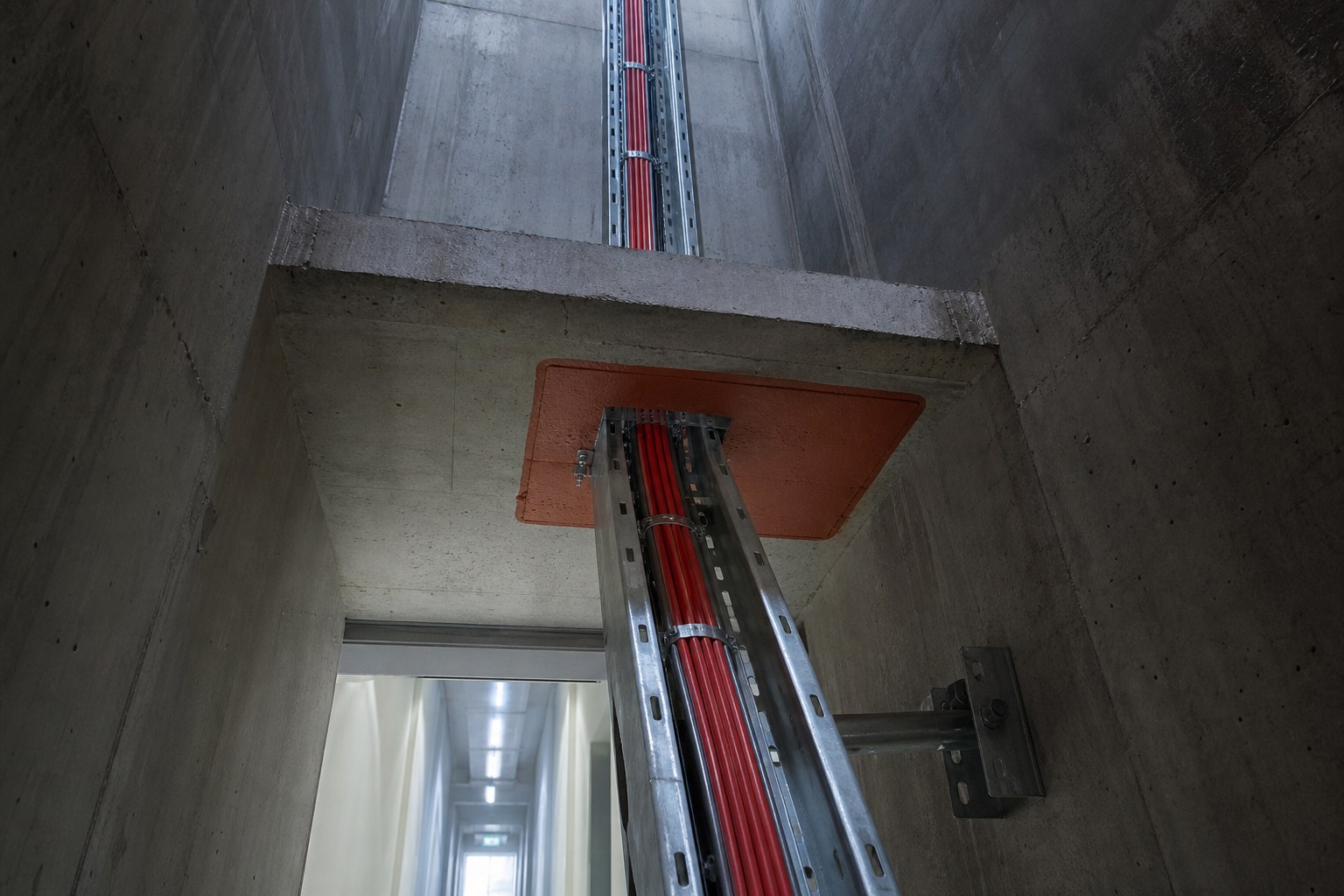
Cable support is the weak point in most failures, because a cable that survives the fire and loses its support has still lost its circuit.
Support, Fixing and Penetration Practice
Five details that decide whether the tested performance survives into the building.
- Support spacing and fixing type agreed for the fire condition, not only for the weight of the cable.
- Metal containment or supports that will not soften and release the cable as the temperature rises.
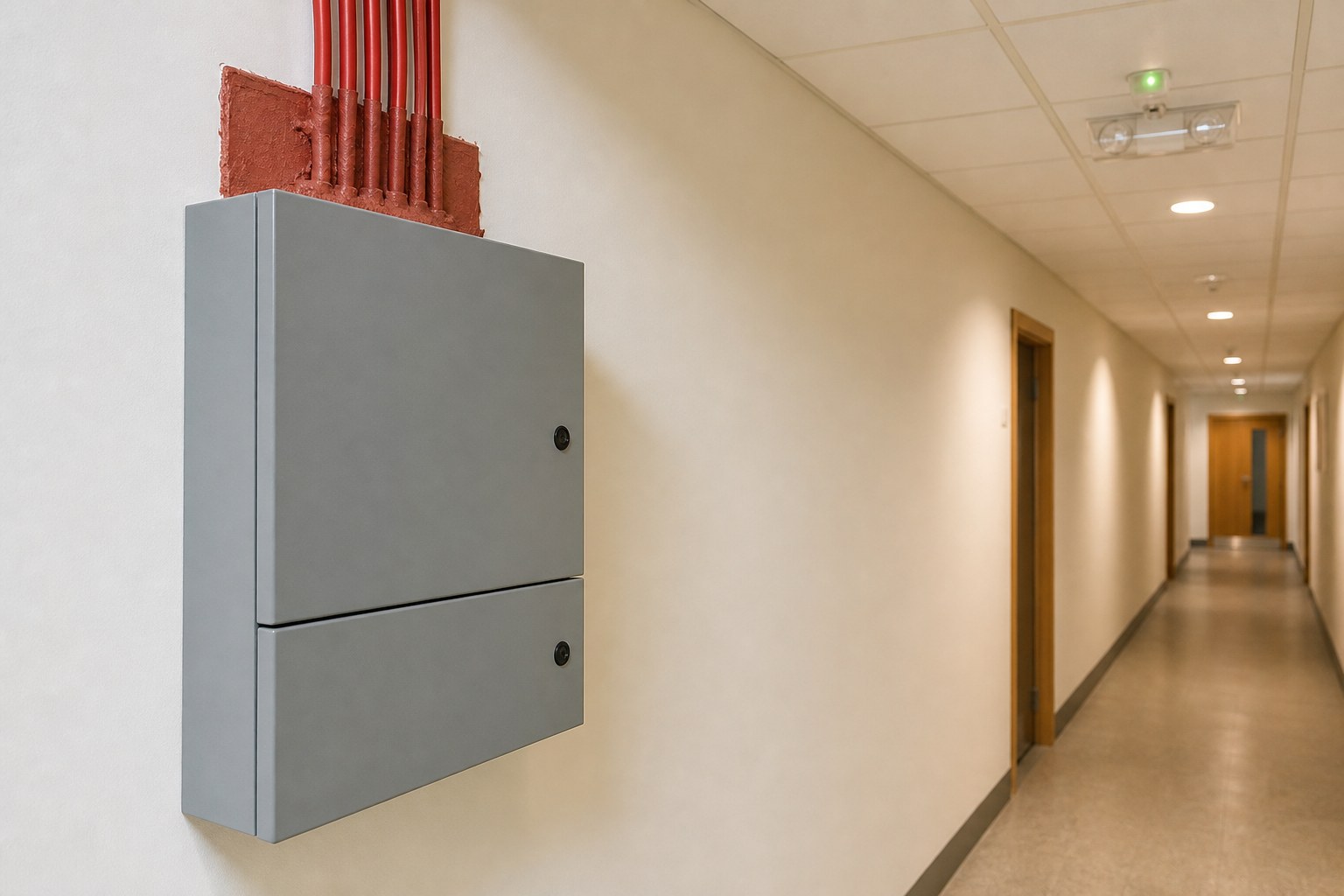
- Penetration seals matched to the construction of the wall or floor and to the cable passing through it.
- Route alignment that avoids sharing a containment system with circuits that need no protection.
- Fixing methods that have been checked after installation, since a support that was never tightened performs like no support at all.
Most documented failures of circuit integrity are failures of the arrangement rather than of the cable material.
Fire performance testing describes conditions applied to a system, and a component tested in isolation does not guarantee the assembled installation.
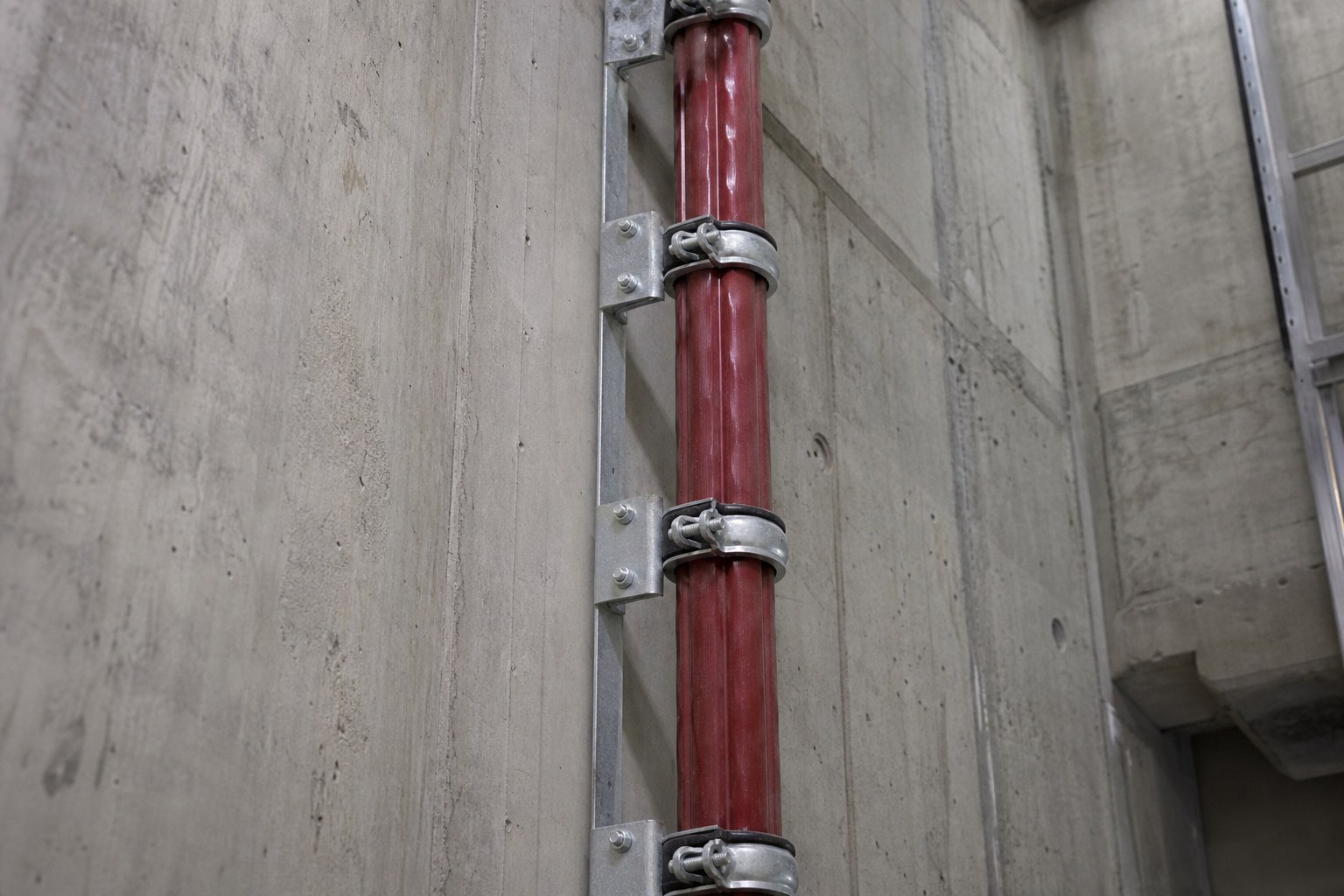
An Emergency Lighting Circuit That Failed Its Check
Situation: A completed building had emergency lighting installed on a fire resistant cable running from a distribution room to the escape routes. The installation passed its inspection and was signed off in the normal way.
Finding: During a functional check, the circuit performed correctly while the supply was healthy and failed when the route was subjected to a test that simulated the design condition. The cable was intact. Its support had released the cable in one section where it crossed a plant room, and the containment was shared with general power circuits.
Decision: The route was re-supported using fixings appropriate to the design condition, the shared section was separated, and the penetration where the route entered the protected zone was rebuilt to match its certification.
Result: The circuit then met its design requirement. The cable itself had never been the problem, and no amount of product documentation would have changed the outcome.
Common Specification Mistakes
The same four errors appear on project after project.
| Mistake | What it causes | Better practice |
|---|---|---|
| Rating quoted without a period | The design requirement is undefined | State the function and the time it must operate |
| Cable specified, arrangement ignored | Support and fixing become an on-site decision | Specify cable, support and penetration as one system |
| One test method for everything | Flame spread behaviour is confused with functional survival | Separate the two questions and cite the relevant test for each |
| No record of the installed route | Verification after handover becomes impossible | Record the route, the supports and the penetrations as installed |
Each of these costs more to correct after handover than to specify at design stage.
Documentation and Certification Questions
Before a protected circuit is ordered, three questions are worth asking of the supplier. Which test conditions does the construction satisfy? Which supporting components were included in that assessment? What installation constraints must be followed for the result to apply?
Answers to those questions allow the designer to compare an offer against the requirement. An offer that quotes a standard without stating the period or the arrangement is difficult to compare with anything.
Documents also need to reach the people who install. A specification sitting in a tender file while the containment is erected by a subcontractor who has not seen it is a familiar route to a protected circuit that protects nothing.
Resolve These Before Ordering
Four items that should be settled between the designer, the installer and the supplier.
The function and the period
Which circuits must operate, and for how long, written as a requirement rather than as a product description.
The system, not just the cable
Support type, spacing, fixings and penetrations described together, because they are assessed together.
The route as designed
Including the sections that leave a protected area, since those are where many installations quietly lose their justification.
The verification method
How the finished arrangement will be checked and recorded, agreed before installation rather than after.
Handing Over Records That Survive Scrutiny
Fire safety records are read by people who were not on the project, often years later and frequently in a hurry. What helps them is a route drawing that matches the building, a schedule of the constructions used, and evidence that the supports and penetrations were installed as specified.
Photographs taken before ceilings close are worth more than a page of description, because they show spacing, fixings and seals in a way that a specification cannot.
Kept with the test data, that set of records demonstrates that the design condition was considered and that the installed arrangement was built to meet it.
RFQ Details for Circuit Integrity
These details allow the cable, the support and the sealing to be reviewed as one installation rather than as three separate purchases.
- the circuits concerned and the function each one supports
- the period each circuit must operate for during a fire
- the route, including sections passing between fire compartments
- containment and support type proposed, with spacing and fixing details
- penetration details at each wall and floor crossing
- cable sizes, quantities and core configuration for each circuit
- the test conditions the design requires the system to satisfy
- the verification and record format the authority expects
Technical references such as IEC 60502, IEC 60228 and IEC 60332 can align cable construction and test terminology. The approved project specification, applicable local rules and qualified design authority still govern the final system decision.
JINCHUAN Cable Support for life safety and fire resistant circuits
JINCHUAN Cable manufactures cable for circuits with defined circuit integrity requirements and can state the test conditions each construction has satisfied.
Review the cable range and the manufacturing profile, then send the function and the required period so the construction can be matched to the design intent.
Read About JINCHUAN Cable or Contact JINCHUAN Cable with the project voltage, route and service conditions.
Agree the function, the period and the support arrangement before any protected circuit is ordered, because circuit integrity is a property of the installed system and never of the cable alone.
FAQ
What does circuit integrity mean?
It describes whether a circuit continues to function while exposed to fire conditions for a defined period, rather than whether the cable merely survives the fire.
Is it the same as fire resistant cable?
No. The cable is one component. Supports, fixings and penetration seals decide whether the installed arrangement behaves as tested.
How long must an emergency circuit keep working?
The period comes from the building's evacuation and firefighting strategy, and it is set at design stage before any product is selected.
Which circuits usually need this treatment?
Fire alarms, emergency lighting, fire pump supplies, smoke control and the communications used to coordinate a response.
Why is flame spread testing not enough?
It describes how a cable behaves when it burns and says nothing about whether the circuit continues to carry current.
What most often causes a protected circuit to fail?
Loss of support, an unprotected route section, or a penetration that was not built to the tested detail.
Can containment be shared with other circuits?
It can be done where the design accounts for it, and sharing with general power circuits is a common way of defeating the protection.
What should a supplier confirm?
The test conditions the construction satisfies, the supporting components included in that assessment, and any installation constraints that apply.
What records should be handed over?
The installed route, the constructions used, penetration details and photographs taken before ceilings or shafts were closed.
How does JINCHUAN Cable support this type of project?
JINCHUAN Cable manufactures cable for circuits with defined fire performance requirements and states the conditions each construction has satisfied.