
A purchase order for cable carries a length that has very little to do with the number of metres the route actually occupies. The ordered figure is a cutting instruction, and it is written before the ground is opened.
The gap between an ordered cut length and an installed length is where most site shortages come from. It is not a manufacturing problem, and it is not a design error. It is arithmetic that was never completed, because the pieces that go into it were never written down in one place.
Getting the numbers on the same page is dull work that takes an afternoon. Getting them wrong costs a shutdown, a joint that was not planned or a drum that is cut 40 metres short of the bay.
Three Lengths Behind Every Order
One order line hides three different figures, and each of them belongs to a different party.
| Length | What it describes | Who fixes it |
|---|---|---|
| Ordered cut length | One piece of cable, delivered as a single run | The buyer, from the design and the joint plan |
| Drum length | What sits on one drum when it leaves the factory | The manufacturer, within a stated tolerance |
| Installed length | What finally lies in the trench or on the tray | The contractor, from survey and joint positions |
Most disputes start when the installed length is used as the ordered figure, and the two are never identical.
A cut length is a length of cable ordered as one piece for a named route section, and it is never the same figure as the length of a drum.
Where the Manufacturing Tolerance Comes From
Cable length is measured as the product runs through the line, at speed, on a wheel that is calibrated and then trusted. A long piece also changes dimension slightly as it cools, and the tension on the take-up drum moves the reading again.
That is why an industry tolerance exists rather than an exact figure. A drum carrying a nominal 1000 metres can legitimately hold a little more or a little less, and the true figure is written on the label and repeated in the inspection document that travels with the drum.
None of this is a defect, and no supplier can make it disappear. The useful response is to order quantities that already contain the margin, rather than to expect the delivered result to land exactly on a round number.
Where a project genuinely cannot accept the standard band, that is a commercial point to raise before manufacture, not a complaint to raise when the drums arrive at the gate.
Every delivered drum length carries a manufacturing tolerance, which is declared rather than hidden, and the ordered quantity has to be chosen with that figure in mind.
What to Settle Before the Order Is Placed
Five items turn a route drawing into a cutting list that survives contact with a site.
A measured route, not a scaled one
Scaling a drawing gives a planning figure. A pull-through measurement or a surveyed alignment gives the one used for cutting.
Joint positions
Every joint creates two cut lengths where the drawing may show one, and it also creates the dress length that goes with it.
Dress length at each end
Switchgear, transformers and motor boxes rarely sit directly under the tray outlet, so the cable has to travel to reach them.
An allowance for pulling
Cutting the leading end square, losing a few metres in a snatch and discarding the dragged tail all consume cable that the route does not show.
A margin the project accepts
A deliberate percentage added once is easier to defend than three unplanned extra metres discovered at the end.
Dress length is the cable left at joints and terminations so the installer can form, bolt and test the connection, and it belongs in the cutting list.
One Bay, Two Lengths, One Long Afternoon
Situation: A pumping station project ordered two long power feeders using a scaled drawing and a joint position that had been moved twice during design review.
Finding: The drum labels matched the order, and the delivered lengths were inside tolerance. On site, the dress length at the transformer bay had never been included, and the second feeder needed 18 metres that did not exist in the ordered quantity.
Decision: The team ordered a short additional length in the same construction rather than attempting a joint in a location with no drainage and no access for future testing.
Result: The station was energised a week later than planned, and every subsequent order on the project carried a written cutting list with dress length shown as a separate line.
Spare cable held on site is cheaper than a second delivery of the same construction, especially on a project far from the factory.
Causes of a Shortfall on Site
Shortfalls are rarely sudden. They accumulate from small decisions that were never recorded.
- A route measured from a drawing that was revised afterwards.
- Dress length omitted from the order and added at the end.
- A wall, culvert or crossing that adds metres which the design never carried.
- Pulling waste at both ends when the cable is dragged rather than laid out.
- A joint bay moved late, changing two cut lengths at once.
Every item on that list is cheaper to prevent than to repair, and none of them is visible on the drum label.
The cutting list, the drum labels and the site measurement record are one document chain, and a break in that chain is what usually causes an argument.
When One Ordered Length Becomes Two Drums
Above a certain size a single long piece stops being practical, and the order has to be split deliberately.
| What changes | Effect on the order | What to decide |
|---|---|---|
| Mass of one piece | Transport and handling limits | The heaviest piece the site can move |
| Drum diameter | Space at the trench side and in the store | Whether the drum can be set down where it is needed |
| Number of pieces | Extra joints and extra dress length | Where the new joints are allowed to sit |
Splitting a length is therefore a joint decision, not a logistics decision taken on its own.
Dress Length at Joints and Terminations
Dress length is the cable left at a joint or a termination so the installer has room to work. It never appears on a route drawing, it is never optional, and it is the first figure to disappear when a cutting list is built in a hurry.
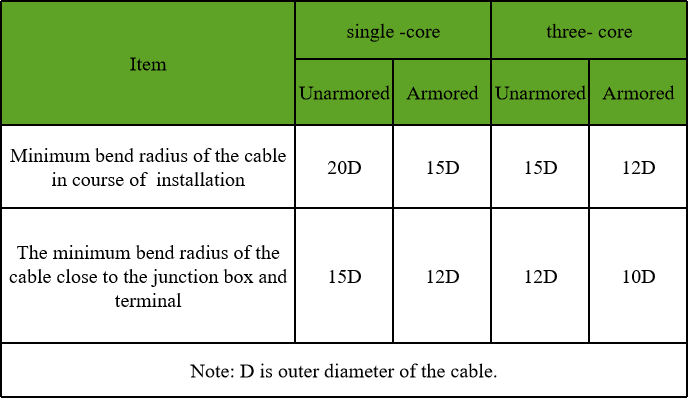
A motor terminal box, a transformer turret and a switchgear cubicle each sit some distance from where the cable leaves the support system. The cable has to reach the terminal, form the minimum bend and still allow the tool to be used.
The amount depends on the accessory and the voltage class. A small screened termination needs far less than a large single core end that has to be lifted, aligned and torqued into position by two people.
Writing the figure into the cutting list converts an unknown into a number. Leaving it out converts it into a site improvisation on the day the crane is booked.
What to Do When the Drums Arrive
Four habits on arrival prevent most of the arguments that would otherwise follow.
Check the label against the order
Size, construction, drum number and nominal length should all match the agreed cutting plan before the drum is moved.
Measure before cutting anything
A verified figure for the delivered length protects both sides when a shortfall appears three weeks later.
Record the figure where it will be found
The cutting list is the natural home. A note in a site diary is not.
Store the surplus by size
Labelled offcuts of the same construction are the fastest repair material a site can hold.
Why Surplus Cable Is Not Waste
A short length of every size used, kept dry, capped and labelled, is worth far more than its scrap value the first time a joint has to be rebuilt at short notice.
Surplus also has an evidential use. It allows a sample to be taken and tested later without cutting into a circuit that is already in service.
What has no value is an unlabelled coil in a container that nobody can identify on the morning it is needed, which is how usable surplus slowly becomes scrap.
What the Cutting List Should Show
A cutting list earns its name when it carries enough detail to be used twice: once for manufacture and once for the site.
- Each length as a separate line with its own identifier.
- The drum each length is expected to travel on.
- The joint or termination sitting at each end.
- The dress length included, and where it belongs.
- The route section, so later changes can be traced to a line item.
Built that way, the same sheet becomes the arrival record, the storage note and the basis of the final as-built document.
RFQ Inputs for Cutting Plans
These points let the cutting plan, the drums and the delivery sequence be settled before production is scheduled.
- each ordered cut length, listed as a separate line
- the route sections and joint positions behind those lengths
- the dress length expected at every joint and termination
- the heaviest piece the site can transport and handle
- any preference for drum size or drum type
- the tolerance the project expects, where it differs from the standard
- the marking and labelling required on each drum
- the spare cable to be held for commissioning and repairs
Technical references such as IEC 60502, IEC 60228 and IEC 60332 can align cable construction and test terminology. The approved project specification, applicable local rules and qualified design authority still govern the final system decision.
JINCHUAN Cable Support for cut lengths, drums and cutting plans
JINCHUAN Cable produces power cable to ordered cut lengths and confirms the drum lengths, drum sizes and tolerances that apply to the construction being supplied.
Review the cable range and the manufacturing profile, then send the cutting plan so the drums match the route.
Settle the cutting plan before production is scheduled, because a cut length that is short cannot be stretched and a drum that is long has already been paid for.
FAQ
What is a cut length?
It is the length of one piece of cable ordered for a named route section, as distinct from the length of a drum and from the length that finally lies installed.
Why does the delivered figure differ from the order?
Length is measured as the cable runs through the line, so a declared tolerance applies and a drum may carry slightly more or slightly less than the nominal figure.
Is a tolerance the same as a fault?
No. It is a normal part of manufacture and it is stated on the label and in the inspection document. Problems begin when the ordered quantity was built on the nominal figure alone.
How much dress length should be added?
Enough to reach the terminal, form the minimum bend and leave room for the tooling, which depends on the accessory and the voltage class.
Should spare cable be ordered?
It is usually worth holding a short length of each size in use, because a repair with matching cable is quicker than waiting for a new drum.
Who measures the route?
The design or construction team, from a survey rather than a scaled drawing, with the result checked against the joint positions.
Can one long length travel on a single drum?
Sometimes, but the mass of the piece, the drum diameter and the space available for setting the drum down often force the order to be split.
What can be done if one length is too short?
The choices are to join it, replace it or reroute it, and all three cost more than the few metres that would have avoided the situation.
Does the drum label matter?
It does. It carries the length, the drum number and the cable identification, and it is the reference used when the drums are checked on arrival.
How can JINCHUAN Cable support a cutting plan?
JINCHUAN Cable can produce to the ordered cut lengths, confirm the tolerance that applies and supply the drum and marking details the site needs.