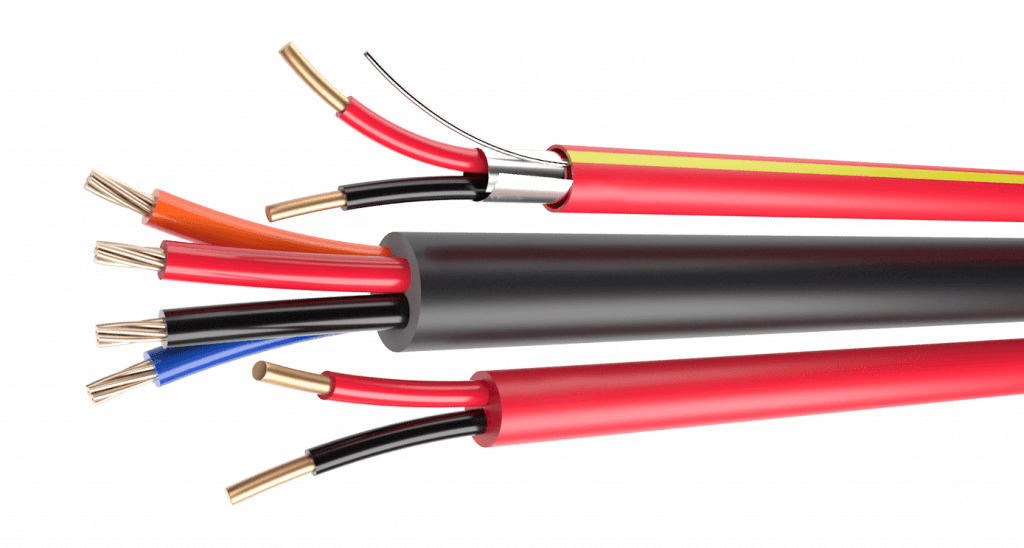

Factories built thirty years ago rarely hold a complete cable schedule. When a feeder fails, the replacement has to be identified from the cable itself rather than from a drawing.
That identification is the real work in a legacy cable replacement. Order the wrong construction and the drums arrive, the trench is open, and the cable does not fit the gland, the duct or the fault duty.
The order that works on a live site is simple: measure what is installed, confirm what the circuit has to do, and only then specify the replacement.
Measure Before You Specify
Every number taken on site reduces the chance of a second order.
Overall diameter
Measure across the sheath in at least two places, since an aged cable may be out of round.
Conductor size and form
Record strand count, strand diameter and whether the conductor is circular, sector shaped or compacted.
Insulation and screen
Note the insulation type, the wall thickness where it can be measured, and the screening arrangement.
Armour and sheath
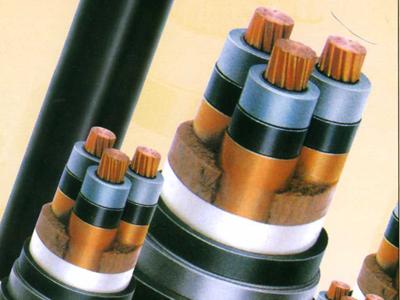
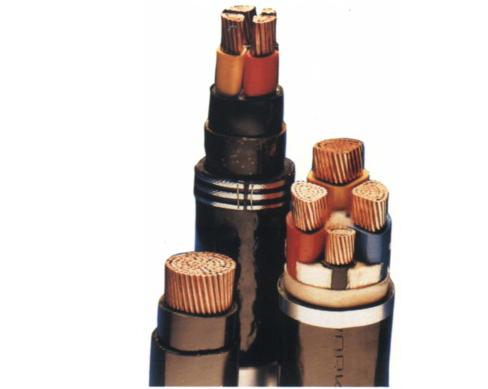
Identify armour material and form, bedding, and the oversheath material, including any marking still legible.
A legacy cable replacement starts with measurement, because the cable in the ground is the only reliable specification left.
Why the Old Cable Is Not Always the Right Answer
Matching the failed cable exactly feels safe, and sometimes it is. But every legacy cable replacement has to account for what changed around the cable: motors replaced, feeders extended, transformers uprated, and an original cable that may already sit close to its limit.
Load growth is the common case. A feeder sized for a small motor decades ago may now carry several additional loads added over the years, and replacing it like for like simply resets the clock on the same problem.
The reverse also happens. An old cable may be far larger than the circuit needs because it was ordered from available stock, and copying it wastes copper and duct space.
Cable identification survey work decides the outcome of a legacy cable replacement more than the quotation does.
What to Capture in a Cable Identification Survey
One sheet per feeder, filled in at the cable rather than in the office.
| Item | How to record it | Why it matters |
|---|---|---|
| Route length | Measured along the trench or duct | Sets drum lengths and joint positions |
| Conductor | Strand count, diameter and form | Confirms cross-section and class |
| Insulation | Type, wall measurement, condition | Sets voltage class and construction |
| Screen and armour | Material, coverage, earthing points | Affects fault duty and earth path |
| Ends and entries | Gland type, box entry, sealing method | Determines accessory compatibility |
| Route conditions | Duct, tray, buried, wet or hot sections | Drives sheath and protection choice |
The survey sheet becomes the specification, so it should be readable by someone who never visited the site.
When drawings are missing, a cable reorder from sample should still be checked against the fault level and the route conditions.
The Feeder That Was Oversized for a Reason
Situation: A plant replaces a failed 185 mm2 feeder and, after measuring, decides the cable looks larger than the load requires. A smaller cross-section is ordered to save cost.
Finding: The original cable was sized for volt drop on a long route and for a future extension that was never built. The smaller replacement meets the current load but not the voltage drop limit at the far end.
Decision: The plant recalculates volt drop over the measured route length, keeps the original cross-section and records the reason in the rebuilt file.
Result: The replacement performs as the original did, and the next engineer inherits an explanation rather than a puzzle.
Brownfield cable records rebuilt during a replacement save the next project from repeating the same investigation.
Traps in Replacing Cable From the 1980s or 1990s
Older installations carry assumptions that no longer hold.
- Insulation materials that are no longer produced in the same wall thickness.
- Conductor stranding that no longer matches any current class.
- Accessories sized for the old diameter rather than the new one.
- Ducts that were full when installed and have been used again since.
- Recorded route lengths that were estimated and never measured.
- Earthing arrangements that were altered during earlier repairs.
Each trap is manageable when it is found during the survey, and expensive when it is found during installation.
Include the legacy cable replacement survey data in the enquiry so the offer can be checked against the actual installation.
Match, Re-Specify or Upgrade
The decision follows the evidence, not the habit of the last project.
| Situation | Sensible decision | Evidence needed |
|---|---|---|
| Load and route unchanged | Match the original construction | Survey sheet and test results |
| Load has grown | Re-specify for the present duty | Load schedule and fault level |
| Route extended or rerouted | Re-check volt drop and pulling | Measured route and bends |
| Original construction obsolete | Upgrade and record the change | Current product data |
| Repeated failures on one feeder | Investigate the cause first | Failure history and joint records |
Write the chosen line and its reason into the file, because that sentence prevents the same debate next time.
Cutting a Sample and Reading the Construction
Where a spare length or a removed section exists, a short sample answers most questions. The layers can be identified, the conductor measured and the sheath material assessed far more reliably than from a photograph.
Take the sample from a position that represents the installed cable, label it with feeder, date and location, and keep it until the replacement is delivered. Disputes about construction are settled by the sample, not by memory.
Where no sample can be taken, the survey has to carry more weight, and the offer should state the assumptions it rests on.
Confirm the Route Still Accepts the Cable
A replacement that fits the box may still not fit the path to it.
Check duct occupancy
Confirm free cross-section along the whole route, including any ducts reused since the original installation.
Re-measure bends
Count and measure bends, because a longer route with more bends changes pulling tension and sidewall pressure.
Confirm joint positions
Decide where joints will sit before ordering drum lengths, and check access for the jointing work.
Check the entries
Verify gland plates, box entries and sealing arrangements against the new cable diameter.
Rebuild the File While the Trench Is Open
A replacement is the only moment when the whole feeder is visible at once. Photographs of the route, the entries, the joint positions and the cable markings cost almost nothing to take and cannot be recreated later.
Combine those photographs with the survey sheet, the new test certificate and the as-installed lengths to produce the record a legacy cable replacement should leave behind, and which the plant has been missing for years.
That rebuild is often the most valuable output of the job, because it turns one reactive repair into a documented circuit.
What the Manufacturer Needs to Quote
Send these with the enquiry and the offer can be checked rather than assumed.
- voltage rating and system earthing arrangement
- measured conductor size, strand form and insulation type
- armour, screen and oversheath requirements with the surroundings
- route length, bend count, duct condition and joint positions
- expected load, fault level and any spare capacity required
- accessory expectations for glands, joints and terminations
With this information, a legacy cable replacement can be quoted against the real installation instead of a guess.
RFQ Inputs for Replacements Without Records
Describe what is installed and what the circuit must do, so the offer can be checked against both.
- survey sheet with measured conductor, insulation and sheath data
- voltage rating, earthing arrangement and fault level
- measured route length, bends, duct condition and entries
- present load and any planned increase
- drum lengths and joint positions required
- sample availability and whether it can be sent for review
- accessory requirements for glands, joints and terminations
- installation window and the records to be issued afterwards
Technical references such as IEC 60502, IEC 60228 and IEC 60332 can align cable construction and test terminology. The approved project specification, applicable local rules and qualified design authority still govern the final system decision.
JINCHUAN Cable Support for brownfield cable replacement and records recovery
JINCHUAN Cable can review survey data and samples against its standard constructions, and flag where a measurement does not match a current product.
Review the power cable range and the production information, then send the survey sheet with the enquiry.
Survey the feeder properly, decide whether to match or re-specify, and the legacy cable replacement becomes a planned job.
FAQ
How do I replace a cable with no drawings?
Measure the installed cable, record the route and take a sample where possible, then specify against the present load and fault level rather than the old paperwork.
Can a sample be used to order a replacement?
It helps considerably. A short section shows conductor form, layer arrangement and sheath material, which photographs rarely capture reliably.
Should the replacement always match the original?
No. Match when load and route are unchanged; re-specify where load has grown, the route has changed or the original construction is obsolete.
What if the old cable is larger than needed?
Check volt drop and future plans before reducing size. Oversizing often has a reason that is not visible in the load list.
How long should a survey take?
It depends on route length and access, but the measurement work is short compared with the cost of ordering the wrong cable.
Do accessories need to be ordered with the cable?
Where the existing glands or boxes will be reused, confirm the new diameter and entry arrangement fits before ordering.
What records should be produced?
A survey sheet, photographs, as-installed lengths, joint positions, test results and the reason for any change from the original.
Can the plant keep running during the work?
Often yes, with temporary supply or staged replacement, but that decision belongs to the outage plan rather than the cable order.
What if measurements conflict with the old drawing?
Trust the measurement and note the difference, because drawings are frequently out of date after years of modifications.
How can JINCHUAN Cable support a replacement?
JINCHUAN Cable can check survey data against its constructions and advise where a measurement or requirement needs clarification.