
Not every conductor inside a power cable is there to carry power. Some are there to tell the protection what the power is doing.
A pilot cable is the part of an installation that carries signals, interlocks and indications between switchgear, and it can run as a separate cable or as auxiliary cores built into the power cable itself.
Either way it travels the same route as the power, and that is what makes the choice worth thinking about early.
What the Signal Cores Have to Do
Four jobs appear again and again.
Carry protection signals
Trips, interlocks and status indications travel between switchgear, and a lost signal is usually felt as a maloperation rather than as a dead circuit.
Survive the route
When the cores share a construction, they see the same mechanical handling, water and temperature as the power cable.
Tolerate induced voltage
Long runs in the same trench as power conductors pick up induced voltage, and the insulation and screening have to suit it.
Stay identifiable
Every core has to be recognised at each end and at every joint, which is a marking decision made at the works.
A pilot cable carries control and protection signals rather than load current, so its insulation and screening have to suit the induced voltage on the route.
Separate Cable or Built In
Four arrangements appear in specifications.
| Arrangement | Advantage | What to watch |
|---|---|---|
| Separate signal cable | Easy to replace on its own | Needs its own trench space |
| Cores built into the power cable | One route, one installation | Shared fault and thermal exposure |
| Cores with an overall screen | Better signal integrity | Termination arrangement at each end |
| Cores on a structure | Cheaper to reach | Exposed to damage and weather |
The choice is usually made on route space and signal behaviour rather than on price alone.
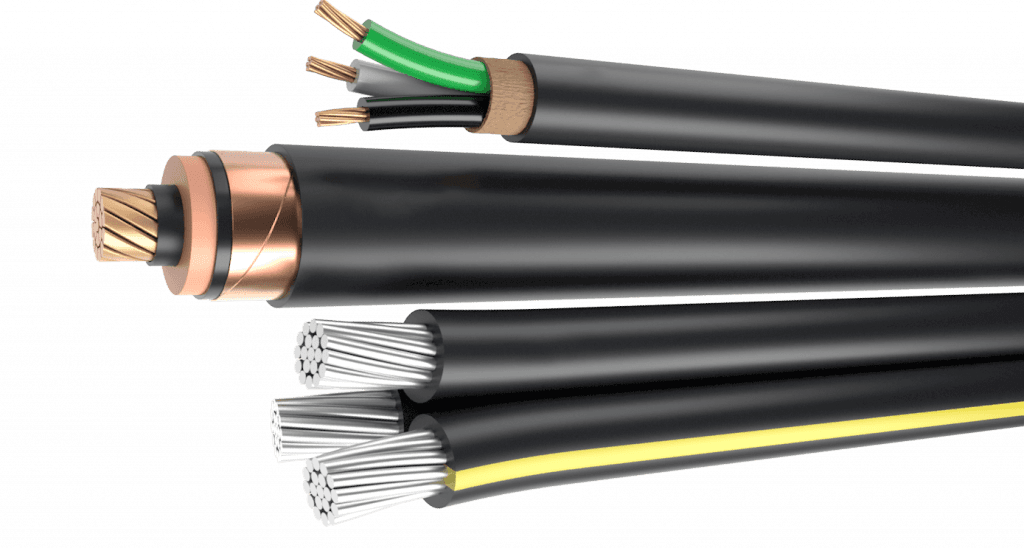
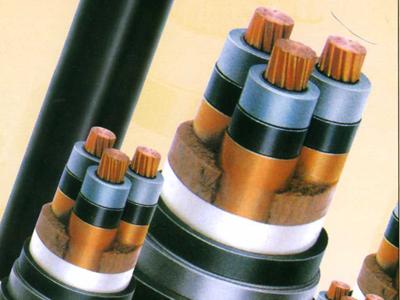
Auxiliary core cable built into the power cable saves trench space, and it also puts the signal conductors into the same thermal and fault environment as the power cores.
Why Induced Voltage Matters
A pilot cable running beside power conductors for kilometres sits inside the magnetic field those conductors produce. The result is a longitudinal voltage on the signal cores that grows with load and with route length.
That voltage does not care whether the cores are inside the power cable or in a cable beside it. What changes is how easily the circuit can be screened and how the terminations are arranged.
Where the signal circuit is sensitive, the arrangement at each end decides whether the pair behaves. Earthing one end or both changes the induced voltage rather than removing it.
Control pair in power cable arrangements need clear identification at every joint, because a crossed pair is far harder to find than a broken one.
Where Installations Go Wrong
The problems are practical rather than theoretical.
- Pairs crossed at a joint, which shows up later as an intermittent trip.
- A pilot cable pulled through the same duct as power cable with no attention paid to the screen or the earthing.
- Joint bays built with no room for the signal cores, so the joint is made under strain.
- Core identification lost at a mid route joint because the marking was recorded only at the ends.
None of those failures needs a design change, and all of them cost a call-out.
MV cable with pilot cores is common in mining and utility networks, where a separate signal route is difficult to justify.
Case: An Intermittent Trip That Was a Crossed Pair
Situation: A substation had intermittent protection operations that nobody could reproduce, and the power cable itself tested sound on every occasion.
Finding: A pilot cable had been re-jointed during earlier repair work, and two pairs had been crossed at one bay. The protection read a healthy circuit as a fault only under one particular switching arrangement.
Decision: The bay was reopened, the pairs were re-identified against the drawing, and the end to end check was repeated and recorded with the pair numbers written down at both ends.
Result: The spurious operations stopped, and the schedule for the signal cores now travels with the maintenance folder instead of living in one engineer's notes.
Protection signalling cable has to be proved end to end before energisation, and that check belongs in the commissioning programme rather than in a later visit.
What Gets Checked and When
Four checks, in the order they are usually needed.
| Check | What it proves | When |
|---|---|---|
| Continuity and identification | The right pairs are joined | At each joint and at handover |
| Insulation resistance | The cores are sound | Before energisation |
| End to end signal test | The circuit works as a whole | Commissioning |
| Screen and earthing check | The arrangement is as designed | Commissioning |
The first two rows are quick, and skipping them is how the third one surprises somebody.
Jointing Both Sides Together
Where the signal cores sit inside the power cable, every power joint is also a signal joint. The bay has to be sized for both, and whoever makes it has to be able to work on the signal cores without disturbing the power side.
Where the pilot cable runs separately, the two can be jointed at different times, which is easier to plan. The trade is a second route and a second set of drawings to keep current.
Either way the record matters. A joint that reforms correctly and loses its pair numbering has left a problem for whoever opens it next.
Settling It at Enquiry Stage
Four answers decide what gets manufactured.
How many cores are needed
Count the signals, add the spares the operator insists on, and decide whether they live inside the power cable or beside it.
What voltage the cores will see
Route length, load and the bonding arrangement all contribute to the induced voltage the insulation has to withstand.
How the screen should be arranged
Individual screens, an overall screen or both, and where each of them is earthed at the ends.
How the cores will be identified
Numbering, colour, and the marking that has to survive installation and jointing.
Why It Belongs in the Same Order
Power cores and signal cores are usually bought together because they are installed together. Buying them separately splits the delivery programme, the drum lengths and the responsibility for the joints.
A single order also means one set of records covering both, which is what a maintenance team needs when it opens a bay five years later.
Where the two are genuinely separate, with different routes and different programmes, saying so at the enquiry avoids a construction nobody intended.
What the Operator Ends Up Living With
Four things decide whether the arrangement is pleasant to maintain.
- A pilot cable schedule that matches what is actually installed.
- Identifiable cores at every joint, not only at the ends.
- Documented screen and earthing arrangements, so a fault can be analysed later.
- Spare cores, because adding one afterwards is not a maintenance activity.
None of those is expensive at the enquiry stage, and each of them is expensive later.
RFQ Inputs for Signal Cores
These details let power and signal conductors be ordered as one construction.
- the number of signal cores required, including spares
- whether the cores are built into the power cable or run separately
- the route length and the bonding arrangement on the power side
- the screening expected on the signal cores
- the identification and marking required at each end
- the joint arrangement where power and signal cores are joined
- the tests expected at handover, including end to end checks
- the records that have to be handed over with the installation
Technical references such as IEC 60502, IEC 60228 and IEC 60332 can align cable construction and test terminology. The approved project specification, applicable local rules and qualified design authority still govern the final system decision.
JINCHUAN Cable Support for signal and auxiliary cores for power cable installations
JINCHUAN Cable builds power cable with auxiliary cores where the construction allows, and supplies the core identification, screening and drum records that a signal core installation depends on.
Review the cable range and the manufacturing profile, then send the signal duty so the construction can be checked against it.
Count the signals and settle the screening before the order, because a pilot cable is easier to specify than to add later.
FAQ
What is a pilot cable used for?
It carries control, protection, interlock and indication signals between switchgear and control equipment rather than carrying load current.
Can signal cores be built into the power cable?
Yes, and it is common where route space is limited. The cores then share the installation, the joints and the thermal environment of the power cable.
Why does induced voltage matter on signal cores?
A long run beside power conductors picks up a longitudinal voltage that grows with load and route length, and the insulation and screening have to suit it.
Should the screen be earthed at one end or both?
It depends on the induced voltage and on what the signal has to do, and the decision belongs with the design rather than with whoever terminates the cores.
How are the cores identified at a joint?
By numbering or colour set at the works and recorded at every joint, so that a later repair does not have to guess.
What checks apply at handover?
Continuity and identification, insulation resistance, a screen and earthing check, and an end to end signal test.
Do signal cores need spare capacity?
Spares are usually specified, because adding a signal later means opening a joint rather than running a new wire.
What happens if a pair is crossed at a joint?
The protection may operate on a healthy circuit, or fail to operate on a fault, and the symptom often appears under only one switching arrangement.
Are these cores suitable for communication?
Some arrangements carry low speed signalling, and anything faster needs a cable designed for it rather than an auxiliary pair.
How can JINCHUAN Cable help with a signal core requirement?
JINCHUAN Cable can confirm whether auxiliary cores can be built into the construction and supply the identification and screening detail a pilot cable installation needs.