
A feeder that has run for fifteen years can be gone in an hour, and what disappears is usually the conductor rather than the whole cable.
Cable theft is a design problem as much as a security problem, because the route, the construction and the time the cable spends on site before it is energised all decide how attractive it looks.
None of the measures that follow stops a determined thief. Together they change the effort and the return, which is the part a design team can actually influence.
Case: A Site That Was Hit Three Times
Situation: A construction site had three separate thefts in one season, each taking a part installed length of single core copper cable from an open trench at night.
Finding: The trench was open across a public boundary, the drums stood in the same compound, and the sections had been laid but not energised, so nothing was live and nothing was alarmed.
Decision: The remaining sections went into duct as they were laid, the drums moved to a locked store and were released by workfront, and the open trench was backfilled each week instead of at the end of the job.
Result: There was no further loss that season. The cable theft cost more to recover from than to prevent, because each incident also meant re-preparing and jointing the cut ends.
Cable theft rarely happens where the cable is hardest to reach, so route and burial choices matter more than a fence on its own.
What Makes a Route Attractive
Four conditions make a route worth the walk.
- Copper conductor in a size that is easy to handle and easy to sell.
- An exposed alignment, whether aerial, on a low wall or in an open trench.
- A site with no lighting, no monitoring and no reason for anyone to be there at night.
- Cable that has been laid but not energised, so there is nothing to trip and nothing to alarm.
Take away any one of those and the calculation changes.
Copper theft follows the scrap value of the conductor, and an aluminium conductor changes that calculation on a route that cannot be protected.
Design Choices and What They Change
Four levers belong to the design team rather than to the security contractor.
| Choice | What it changes | Limitation |
|---|---|---|
| Buried instead of aerial | Access effort | Needs route and wayleave |
| Duct or encasement | Time needed to extract | Cost and thermal effects |
| Aluminium conductor | Scrap value | Larger size for the same current |
| Fewer visible joint boxes | Number of easy targets | Access for maintenance |
Cable theft is reduced by combining rows, not by relying on one of them.
Cable security during construction is often weaker than after energisation, because drums and part installed lengths sit open on site for weeks.
What an Aluminium Conductor Changes
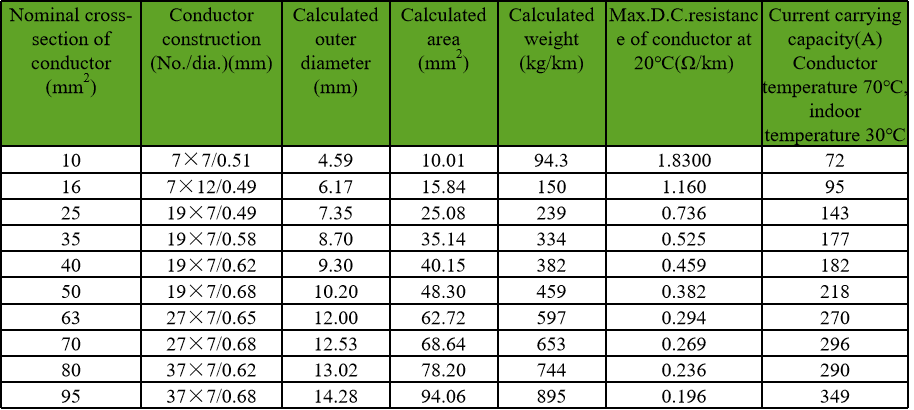
Aluminium carries less current than copper for the same cross section, so a substitution usually means going up in size and re-checking the installation all the way through, including the terminations.
What it changes most is the return. A conductor worth less per kilogram, of which more is needed to do the same job, is a far less attractive target.
That is not an argument for aluminium everywhere. It is an argument for asking the question on routes that cannot be protected, where the alternative is a repair programme.
A buried cable route with no visible joint boxes and no length left at the surface gives a thief far less to work with.
Measures That Actually Help
Five measures cover most of what a project can control.
Choose the less accessible route
Where there is a genuine choice between an exposed alignment and a buried one, the buried route has already removed most of the opportunity.
Close the trench as the work proceeds
Backfilling each week instead of at the end of the job removes an open invitation and protects the cable from site traffic at the same time.
Control the drums
Cable that is not on site cannot be taken, so release drums against the workfront rather than storing the whole order in an open compound.
Energise and monitor as you go
A circuit that is live and monitored is a different proposition from one still waiting for commissioning.
Make the cable identifiable
Marking and asset records do not stop a theft, and they do help with recovery and with the insurance process afterwards.
Aluminium conductor cable needs a larger cross section for the same current, so substituting it is a design decision rather than a like for like swap.
Where the Exposure Sits
Theft happens at different moments, and each one needs a different response.
| Stage | Exposure | Usual measure |
|---|---|---|
| Delivery to site | Drums in an open compound | Controlled release |
| Laying | Open trench or aerial span | Weekly backfill and ducting |
| Before energisation | Installed but dead | Progressive commissioning |
| In service | Link boxes and cabinets | Locking and monitoring |
Most of the exposure sits before energisation, which is also when attention is elsewhere.
What Usually Gets Missed
The gaps repeat from project to project.
- A route chosen on cost with the security question never asked.
- Drums left in the same compound for the whole installation programme.
- A buried route whose link boxes stay open and unsecured through commissioning.
- Earthing conductors taken along with the main cables, because they are the easiest conductive material on the site.
Cable theft rarely stops at the cable. The earthing and the terminations go with it.
Recovering From an Incident
A cable theft is rarely resolved by replacing the metres that went missing, and the repair is usually larger than the stolen length. Cut ends have to be re-prepared, joints have to be made, and the test programme has to be repeated on the affected section.
That is where the record earns its place. Knowing the construction, the drum lengths and the joint positions lets a replacement section be ordered quickly instead of being measured after the fact.
Where a length was replaced in a different conductor material, the joint arrangement has to suit both, which is another reason the substitution decision belongs in the design file rather than in a site instruction.
What to Send With the Enquiry
Three details change what can be offered.
How exposed the route is
Aerial, buried, ducted or on structure, and any length that cannot be hidden from view.
How long the cable will sit on site
A programme that leaves drums in the open for months changes the risk as much as the alignment does.
Whether a substitution is on the table
If aluminium is a possibility, the sizes, terminations and joints change with it.
Designing for the Risk You Have
Safety, thermal duty and cost all come before security in the design sequence, and they should. Security still deserves a place in that sequence rather than arriving after the first incident.
The useful question is not whether a site can be made theft proof. It is which parts of the route are worth protecting, and what the cheapest way of changing the effort would be.
A project that answers that question on paper usually spends less than one that answers it while filling in a claim.
RFQ Inputs for Exposed Routes
These details let the construction be matched to the risk on the route.
- the alignment, and which sections are exposed or hidden
- whether the route is aerial, buried, ducted or on structure
- the conductor material being considered and the sizes involved
- the construction and drum lengths needed for each workfront
- the joint and termination arrangement at each end
- whether earthing conductors run alongside the main cable
- the storage arrangement and how long drums will stay on site
- the identification and marking the operator wants applied
Technical references such as IEC 60502, IEC 60228 and IEC 60332 can align cable construction and test terminology. The approved project specification, applicable local rules and qualified design authority still govern the final system decision.
JINCHUAN Cable Support for route and construction choices for theft exposed installations
JINCHUAN Cable supplies copper and aluminium conductor constructions, and can confirm what each option changes in size, terminations and jointing so cable theft risk can be weighed against the rest of the design.
Review the cable range and the manufacturing profile, then send the route and the risk so the construction can be selected against both.
Ask the security question while the route is still a drawing, because cable theft is cheaper to design out than to repair afterwards.
FAQ
Why is cable stolen?
For the conductor. Copper has a scrap value, and a part installed length in an open trench is easy to remove and easy to sell. Cable theft is driven by that resale value rather than by the cable itself.
Does burying the cable prevent theft?
It removes the easiest opportunity rather than stopping a determined attempt, and changing the effort required is what most designs can influence.
Is aluminium cable a security measure?
It is one factor. Aluminium is worth less per kilogram and needs a larger cross section for the same current, so it reduces the return for a thief.
When is a site most exposed?
Usually between laying and energisation, when the cable is installed but dead and attention has already moved to the next workfront.
Do fences and lighting help?
They do, and they are the measures most often listed. Route and construction choices usually change the outcome more.
What should be done with drums on site?
Release them against the workfront and keep the remainder in a controlled store rather than leaving the whole order in an open compound.
What does a repair involve after a theft?
Re-preparing the cut ends, making joints, and repeating the test programme on the affected section, which is usually more than the stolen length.
Are earthing conductors targeted as well?
Yes. They are often the easiest conductive material on a site, and they are frequently taken at the same time as the main cable.
Does marking help?
It does not prevent a theft, and it does support recovery and the insurance process afterwards.
How can JINCHUAN Cable help with an exposed route?
JINCHUAN Cable can supply copper or aluminium conductor constructions and confirm what each option changes in size, terminations and jointing.